


Discover all of the podcasts in our network, search for specific episodes, get the Optimal Living Daily workbook, and learn more at: OLDPodcast.com.
Episode 2816:
Derick Van Ness from BigLifeFinancial.com emphasizes the critical role of systematic saving in financial success. He highlights how saving, though not glamorous, is the foundational habit that differentiates the wealthy from those living paycheck to paycheck. Building wealth starts with consistently saving a portion of every income, which enhances financial security and confidence.
Read along with the original article(s) here: https://www.biglifefinancial.com/blog/2017/9/4/the-most-important-financial-habit & https://www.biglifefinancial.com/blog/2019/11/7/why-simple-financial-strategy-works
Quotes to ponder:
"Learning to systematically save is literally the difference between people who become incredibly wealthy and those who live paycheck to paycheck."
"Before you can build wealth and invest effectively, you must learn to save."
"Saving isn't the only component of building wealth, but without it, you’ll never even get out of the parking lot!"
Learn more about your ad choices. Visit megaphone.fm/adchoices
[00:00:01] [SPEAKER_01]: This complex financing talk is very exciting. Do I get my depot ever?
[00:00:06] [SPEAKER_02]: But you already have a depot.
[00:00:08] [SPEAKER_01]: No.
[00:00:09] [SPEAKER_02]: Yes, you have the Vodafone Gigadepot.
[00:00:11] [SPEAKER_01]: That's right! And I have myself in the hand how big my depot is.
[00:00:15] [SPEAKER_02]: Now with the Vodafone Gigadepot and the data volume of use in the next month. Go on in the 5G network of Vodafone. Vodafone. Together we can.
[00:00:26] [SPEAKER_00]: Have you ever noticed how a calm mind can really set the stage for a good night's sleep?
[00:00:31] [SPEAKER_00]: That's the idea behind our new podcast, Good Sleep.
[00:00:35] [SPEAKER_00]: Greg, our host from Optimal Relationships Daily, is here to help ease you into a peaceful night's rest with some positive affirmations.
[00:00:43] [SPEAKER_00]: And these affirmations aren't just comforting. They can help ease anxiety and nurture positive thoughts, setting you up for true good sleep.
[00:00:52] [SPEAKER_00]: So press play on good sleep tonight, because a good tomorrow starts with a good night's sleep.
[00:00:58] [SPEAKER_00]: Just search for Good Sleep in your podcast app and be sure to pick the one from Optimal Living Daily.
[00:01:06] [SPEAKER_00]: This is Optimal Finance Daily, the most important financial habit and why a simple financial strategy works.
[00:01:14] [SPEAKER_00]: Both by Derek Van Ness of BigLifeFinancial.com.
[00:01:18] [SPEAKER_00]: And I'm your host and personal finance enthusiast, Diana Merriam.
[00:01:22] [SPEAKER_00]: For now, let's get right to it as we optimize your life.
[00:01:29] [SPEAKER_00]: The most important financial habit by Derek Van Ness of BigLifeFinancial.com.
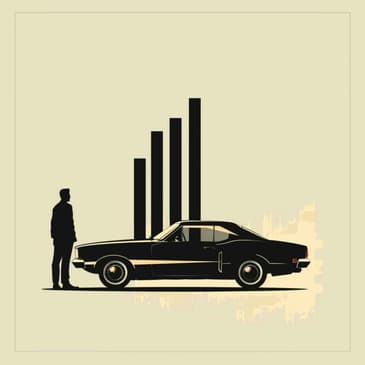
[00:01:36] [SPEAKER_00]: Imagine you just bought your dream car.
[00:01:38] [SPEAKER_00]: How would it feel to sit behind the wheel with your windows rolled down and the fresh wind blowing across your skin?
[00:01:44] [SPEAKER_00]: The rumble of the engine tickling you as your favorite song plays on the radio, making you want to sing at the top of your lungs.
[00:01:51] [SPEAKER_00]: And you can't believe how great it feels to lean into the incredibly comfortable seat.
[00:01:56] [SPEAKER_00]: Everywhere you go, people see your car and gaze in admiration at how beautiful it is rolling down the road.
[00:02:02] [SPEAKER_00]: Then suddenly, the engine stops cold.
[00:02:05] [SPEAKER_00]: Not even a gurgle as it freezes and leaves you sitting in a lifeless, soundless hunk of metal going nowhere.
[00:02:13] [SPEAKER_00]: Just 30 seconds ago, you were living the good life.
[00:02:16] [SPEAKER_00]: But now you're wondering how you're going to get anywhere.
[00:02:18] [SPEAKER_00]: What changed?
[00:02:20] [SPEAKER_00]: The engine stopped, that's what.
[00:02:23] [SPEAKER_00]: In a car, your engine is everything.
[00:02:26] [SPEAKER_00]: Without it, you can't move anywhere.
[00:02:28] [SPEAKER_00]: The windows don't work and even the radio stops.
[00:02:30] [SPEAKER_00]: The engine is the entire foundation of what makes a car go.
[00:02:34] [SPEAKER_00]: Your financial life is the same thing.
[00:02:37] [SPEAKER_00]: It has a lot of fluffy bells and whistles that can be exciting.
[00:02:40] [SPEAKER_00]: But without the engine, none of it works.
[00:02:43] [SPEAKER_00]: So what's the financial engine in your life?
[00:02:46] [SPEAKER_00]: Learning to save.
[00:02:48] [SPEAKER_00]: I know, I know, that's not very sexy.
[00:02:51] [SPEAKER_00]: But it's incredibly important.
[00:02:53] [SPEAKER_00]: To think about it, if you never saved any money, how would you grow your business?
[00:02:57] [SPEAKER_00]: How would you invest?
[00:02:59] [SPEAKER_00]: How would you ever go on vacation, buy a house, or do anything that costs more than a single paycheck?
[00:03:04] [SPEAKER_00]: Learning to systematically save is literally the difference between people who become incredibly wealthy and those who live paycheck to paycheck.
[00:03:12] [SPEAKER_00]: Yes, even if you make a lot of money.
[00:03:15] [SPEAKER_00]: I've worked with thousands of small business owners, and I've seen this play out in every single case.
[00:03:21] [SPEAKER_00]: I've helped people who make less than $50,000 a year and are building wealth.
[00:03:26] [SPEAKER_00]: And I've worked with too many people that make $50,000 a month and are broke.
[00:03:32] [SPEAKER_00]: The broke ones spend every penny they make and live in constant fear.
[00:03:37] [SPEAKER_00]: How is that possible?
[00:03:39] [SPEAKER_00]: Because they never learn to save.
[00:03:41] [SPEAKER_00]: That's it.
[00:03:42] [SPEAKER_00]: Seriously, the broke ones are smart people, and they are doing a lot of things right.
[00:03:47] [SPEAKER_00]: But they never figured out how to set aside money from each payday, and it's killing them.
[00:03:53] [SPEAKER_00]: It's hard on their health, it strains their marriage, and it will be very hard on them when life throws a curveball and they have nothing to fall back on.
[00:04:01] [SPEAKER_00]: Before you learn to run, you must learn to walk.
[00:04:04] [SPEAKER_00]: Before the windows and radio work in the car, the engine has to be firing.
[00:04:08] [SPEAKER_00]: Before you can build wealth and invest effectively, you must learn to save.
[00:04:14] [SPEAKER_00]: If you aren't already, start setting aside at least 10% of every dollar you make.
[00:04:19] [SPEAKER_00]: Unless you are absolutely broke already, you should be able to do that quite easily.
[00:04:24] [SPEAKER_00]: Then, once you're used to 10%, bump it up to 15%, and then 20%.
[00:04:29] [SPEAKER_00]: You'll be amazed at how quickly the money builds up.
[00:04:32] [SPEAKER_00]: Guess what else builds up?
[00:04:34] [SPEAKER_00]: Your confidence, your abundance, your optimism.
[00:04:37] [SPEAKER_00]: Somehow the world looks a lot rosier when you've got financial strength, and I want you to experience it.
[00:04:44] [SPEAKER_00]: Saving isn't the only component of building wealth, but without it, you'll never even get out of the parking lot.
[00:04:54] [SPEAKER_00]: Why a Simple Financial Strategy Works by Derek Van Ness of BigLifeFinancial.com
[00:05:01] [SPEAKER_00]: In life and in finances, simplicity is underestimated.
[00:05:06] [SPEAKER_00]: The truth is simple things get done, and the complex usually doesn't.
[00:05:11] [SPEAKER_00]: In the end, results matter, so getting things done isn't optional.
[00:05:16] [SPEAKER_00]: Within finances, having a complex master plan can be overwhelming and lead to paralysis,
[00:05:22] [SPEAKER_00]: not to mention it's unnecessarily costly.
[00:05:25] [SPEAKER_00]: Rather than fixating on the massive master plan, simply take the first step or begin with the most important action.
[00:05:33] [SPEAKER_00]: By getting the first step right, you'll be setting yourself up to powerfully take the second step.
[00:05:39] [SPEAKER_00]: Said another way, doing the most important and obvious things first, you lay a solid foundation.
[00:05:45] [SPEAKER_00]: Anything large starts as something small.
[00:05:47] [SPEAKER_00]: In fact, the complex is merely made up of many simple interlocking parts.
[00:05:54] [SPEAKER_00]: In finance, the first steps may be obvious, but not glamorous.
[00:05:58] [SPEAKER_00]: Take them anyway.
[00:05:59] [SPEAKER_00]: For example, begin saving 10% or more of your income and never stop.
[00:06:05] [SPEAKER_00]: As your income increases, your 10% savings should too.
[00:06:08] [SPEAKER_00]: This seems obvious, but many won't take the time to carry it out.
[00:06:12] [SPEAKER_00]: If you don't have one, then use that money to build up your emergency fund.
[00:06:16] [SPEAKER_00]: Start with one to two months worth of expenses so that you can begin building peace of mind and confidence.
[00:06:23] [SPEAKER_00]: Next comes another simple step.
[00:06:25] [SPEAKER_00]: If you have inefficient debts, anything over a 7% interest rate, begin using that savings to pay off the debts.
[00:06:33] [SPEAKER_00]: Paying off a 17% credit card has the same impact on your bottom line as earning 17% in an investment with no risk.
[00:06:42] [SPEAKER_00]: Paying off bad debt isn't sexy, but it's incredibly effective.
[00:06:46] [SPEAKER_00]: Don't skip this step.
[00:06:48] [SPEAKER_00]: Once the bad debts are paid off, continue to save until you have three to six months worth of expenses.
[00:06:54] [SPEAKER_00]: Again, this is simple, but it continues to build your confidence and help your mindset become one of abundance rather than fear or scarcity.
[00:07:02] [SPEAKER_00]: This is a huge shift.
[00:07:04] [SPEAKER_00]: If you simply continue to save 10% to 20% of your income and never invested a penny, you'd still end up ahead of 80% of the people in our country by retirement.
[00:07:14] [SPEAKER_00]: It won't make you uber rich, but this plain and simple practice will single-handedly change your life.
[00:07:20] [SPEAKER_00]: It takes time, but even with no other action, it works.
[00:07:25] [SPEAKER_00]: Of course, once you've begun to build up savings, things can get more complex, but only if you let them.
[00:07:31] [SPEAKER_00]: You'll want to put your money to work earning for you, but that can be a large learning curve.
[00:07:35] [SPEAKER_00]: The truth is, developing a financial strategy doesn't have to be tricky.
[00:07:40] [SPEAKER_00]: But with so many people looking to help you manage your money, it can be difficult to determine which way to go.
[00:07:46] [SPEAKER_00]: Some will show you intricate plans with many moving pieces and in-depth flow charts.
[00:07:51] [SPEAKER_00]: Others will ask you to hand them your money and never look at it until retirement.
[00:07:55] [SPEAKER_00]: Neither of these is a good idea because if you don't understand what's happening, it's easy to lose confidence or get bamboozled.
[00:08:03] [SPEAKER_00]: The good news is that you can keep wealth building simple and allow yourself to focus on what's really important.
[00:08:10] [SPEAKER_00]: Your loved ones, your health, and your work.
[00:08:13] [SPEAKER_00]: If you get those right, you'll be winning the game of life.
[00:08:20] [SPEAKER_00]: You just listened to the post titled,
[00:08:22] [SPEAKER_00]: The Most Important Financial Habit and Why a Simple Financial Strategy Works,
[00:08:27] [SPEAKER_00]: both by Derek Van Ness of BigLifeFinancial.com.
[00:08:31] [SPEAKER_00]: And I'll be right back with my commentary.
[00:08:33] [SPEAKER_00]: Buy low, sell high.
[00:08:36] [SPEAKER_00]: It's easy to say, hard to do.
[00:08:39] [SPEAKER_00]: For example, high interest rates are crushing the real estate market right now.
[00:08:44] [SPEAKER_00]: Demand is dropping and prices are falling, even for many of the best assets.
[00:08:49] [SPEAKER_00]: It's no wonder the Fundrise flagship fund plans to go on a buying spree,
[00:08:55] [SPEAKER_00]: expanding its billion-dollar real estate portfolio over the next few months.
[00:08:59] [SPEAKER_00]: You can add the Fundrise flagship fund to your portfolio in just minutes and with as little as $10 by visiting fundrise.com slash OFD.
[00:09:10] [SPEAKER_00]: That's F-U-N-D-R-I-S-E dot com slash OFD.
[00:09:16] [SPEAKER_00]: Carefully consider the investment objectives, risks, charges, and expenses of the Fundrise flagship fund before investing.
[00:09:26] [SPEAKER_00]: This and other information can be found in the fund's prospectus at fundrise.com slash flagship.
[00:09:33] [SPEAKER_00]: This is a paid advertisement.
[00:09:36] [SPEAKER_00]: I love the great reminder here that we need to prioritize saving and make it a mindless habit.
[00:09:43] [SPEAKER_00]: I see many people, when they start getting interested in personal finance,
[00:09:47] [SPEAKER_00]: immediately jump into investing or focus on increasing their income.
[00:09:51] [SPEAKER_00]: And don't get me wrong, these are very important aspects of personal finance.
[00:09:55] [SPEAKER_00]: But I believe the place to start is getting very clear on the gap between your income and expenses.
[00:10:02] [SPEAKER_00]: That gap is your savings, and the key to financial freedom is growing and investing that gap.
[00:10:09] [SPEAKER_00]: You can grow the gap by increasing your income, reducing your expenses, or better yet, both.
[00:10:15] [SPEAKER_00]: Now you've got some bandwidth to pay down high-interest debts,
[00:10:19] [SPEAKER_00]: build an emergency fund, or an emergency slash opportunity fund, as I like to call it,
[00:10:24] [SPEAKER_00]: and yes, invest for your future.
[00:10:27] [SPEAKER_00]: If you only focus on increasing your income and aren't mindful about lifestyle creep and its effect
[00:10:33] [SPEAKER_00]: on your expenses, you simply aren't minding the gap.
[00:10:37] [SPEAKER_00]: I also appreciate how this second article reminds us that we don't need to overcomplicate our financial
[00:10:42] [SPEAKER_00]: plans.
[00:10:43] [SPEAKER_00]: Yes, there are plenty of opportunities to overcomplicate it, but we can also keep our finances
[00:10:48] [SPEAKER_00]: pretty straightforward.
[00:10:50] [SPEAKER_00]: Pay down debts, hold some cash for emergencies, and save and invest in low-fee index funds for
[00:10:55] [SPEAKER_00]: retirement.
[00:10:56] [SPEAKER_00]: Easy peasy.
[00:10:58] [SPEAKER_00]: That'll do it for another edition of Optimal Finance Daily.
[00:11:02] [SPEAKER_00]: Thank you for continuing to listen.
[00:11:04] [SPEAKER_00]: Have a great start to your weekend, and I'll see you tomorrow where your optimal life awaits.