


Discover all of the podcasts in our network, search for specific episodes, get the Optimal Living Daily workbook, and learn more at: OLDPodcast.com.
Episode 2838:
Managing money creates freedom, not restrictions, as Steve Martile emphasizes in his practical guide on using the JARS system for budgeting. By organizing finances into specific categories, Martile demonstrates how simple changes can lead to significant financial growth, peace in relationships, and even the ability to enjoy life’s luxuries without guilt.
Read along with the original article(s) here: https://www.getrichslowly.org/learning-to-budget-with-the-jars-system/
Quotes to ponder:
"Managing money doesn’t restrict freedom, it creates freedom."
"Once we started to manage our money, I sold the 350Z. After our first year, our net worth increased by a surprising 45%."
"The real trick to managing your money is not what you do - it’s how you do it."
Episode references:
Secrets of the Millionaire Mind: https://www.amazon.com/Secrets-Millionaire-Mind-Mastering-Wealth/dp/0060763280
Learn more about your ad choices. Visit megaphone.fm/adchoices
[00:00:30] [SPEAKER_00]: With a Money Jar System by Steve Martile with GetRichSlowly.org and I'm your host and personal finance enthusiast, Dianomarium.
[00:00:40] [SPEAKER_00]: Without further ado, let's get right to today's post and continue optimizing your life.
[00:00:49] [SPEAKER_00]: Learning to budget with a Money Jar System by Steve Martile with GetRichSlowly.org.
[00:00:57] [SPEAKER_00]: Managing Money doesn't restrict freedom, it creates freedom.
[00:01:02] [SPEAKER_00]: While that's probably not the first time you've heard this, you've got to start managing your money if you want to create financial abundance.
[00:01:09] [SPEAKER_00]: I've started doing so in 2006 after reading T. Harve Echers Secrets of the Millionaire Mind.
[00:01:17] [SPEAKER_00]: Before then, my wife and I were pretty random with our spending habits.
[00:01:21] [SPEAKER_00]: We ran a pretty high tab every month and had nothing to show for it.
[00:01:25] [SPEAKER_00]: At the time, I was driving a brand new Nissan 350Z which cost me an $800 payment each month.
[00:01:34] [SPEAKER_00]: That didn't include insurance or gas that was just the payment on the car.
[00:01:40] [SPEAKER_00]: Jars, The Money Jar System
[00:01:42] [SPEAKER_00]: Then we started using the Jars Money Management System discussed in Secrets of the Millionaire Mind.
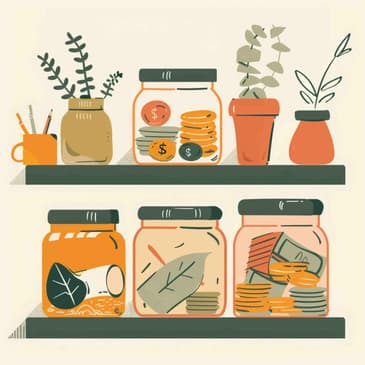
[00:01:49] [SPEAKER_00]: And what are the Jars? The Jars are just that, plastic jars.
[00:01:55] [SPEAKER_00]: The Jars themselves aren't actually that important.
[00:01:58] [SPEAKER_00]: What's more important is the Money Management System behind them.
[00:02:02] [SPEAKER_00]: We actually bought the Jars as a visual reminder of where to put our money when we manage it,
[00:02:07] [SPEAKER_00]: but we manage it from a set of bank accounts.
[00:02:11] [SPEAKER_00]: Managing your money reaps rewards.
[00:02:14] [SPEAKER_00]: Once we started to manage our money, I sold the 350Z.
[00:02:18] [SPEAKER_00]: After our first year without any significant change in our income,
[00:02:22] [SPEAKER_00]: and all expenses being treated equal, our net worth increased by a surprising 45%.
[00:02:29] [SPEAKER_00]: When we learned how to apply this system, we realized it was very simple and didn't require a lot of our time.
[00:02:36] [SPEAKER_00]: Here are the results we produced after using the Jars for 12 months.
[00:02:41] [SPEAKER_00]: Our net worth increased by 45%.
[00:02:44] [SPEAKER_00]: We bought our first home for $337,000.
[00:02:49] [SPEAKER_00]: We created $800 a month in passive income by renting out our one bedroom basement apartment.
[00:02:57] [SPEAKER_00]: We earned $200 in interest from our savings accounts.
[00:03:01] [SPEAKER_00]: We used ING Direct Savings Accounts, which were clocking about 3.5% interest at the time.
[00:03:08] [SPEAKER_00]: ING Direct became capital 1 360 in 2013.
[00:03:13] [SPEAKER_00]: And we created more peace in our money relationship because my wife and I have our own play money.
[00:03:21] [SPEAKER_00]: The real trick to managing your money is now what you do, it's how you do it.
[00:03:26] [SPEAKER_00]: How to use the Jars system.
[00:03:29] [SPEAKER_00]: Here are the jars and a short description of each one.
[00:03:33] [SPEAKER_00]: Number 1, necessity account.
[00:03:36] [SPEAKER_00]: Any C 55%.
[00:03:39] [SPEAKER_00]: This account is for managing your everyday expenses and bills.
[00:03:43] [SPEAKER_00]: This would include things like your rent, mortgage, utilities, bills, taxes, food, clothes, etc.
[00:03:52] [SPEAKER_00]: Basically it includes anything that you need to live the necessities.
[00:03:57] [SPEAKER_00]: Number 2, Financial Freedom Accounts, FFA 10%.
[00:04:02] [SPEAKER_00]: This is your golden goose.
[00:04:05] [SPEAKER_00]: Therefore this jar is your ticket to financial freedom.
[00:04:08] [SPEAKER_00]: The money that you put into this jar is used for investments and building your passive income streams.
[00:04:15] [SPEAKER_00]: You never spend this money.
[00:04:16] [SPEAKER_00]: The only time you would spend this money is once you become financially free.
[00:04:21] [SPEAKER_00]: Even then, you would only spend the returns on your investment.
[00:04:24] [SPEAKER_00]: Never spend the principal.
[00:04:26] [SPEAKER_00]: Number 3, Education Account.
[00:04:30] [SPEAKER_00]: EDU 10%.
[00:04:31] [SPEAKER_00]: Money in this jar is meant to further your education and personal growth.
[00:04:36] [SPEAKER_00]: Since you are your most valuable asset, an investment in yourself is a great way to use your money.
[00:04:42] [SPEAKER_00]: I've used education money to purchase books, CDs, courses, or anything else that has educational value.
[00:04:51] [SPEAKER_00]: Number 4, long-term saving for spending account.
[00:04:56] [SPEAKER_00]: LTSS 10%.
[00:04:57] [SPEAKER_00]: The money in this jar is for the bigger, nice-to-have purchases.
[00:05:02] [SPEAKER_00]: As a result, my wife and I have used the money from this account to go skiing in the Rockies in Whistler, British Columbia.
[00:05:10] [SPEAKER_00]: We also use this money last September for a trip to Italy and Switzerland.
[00:05:15] [SPEAKER_00]: The only reason we've been able to make this happen is because we've accumulated a nice sum each month in our LTSS.
[00:05:23] [SPEAKER_00]: A small monthly contribution can go a long way.
[00:05:26] [SPEAKER_00]: Number 5, Play Account.
[00:05:30] [SPEAKER_00]: Play 10%.
[00:05:32] [SPEAKER_00]: This is my favorite account.
[00:05:34] [SPEAKER_00]: Play money is spent every month on purchases you wouldn't normally make.
[00:05:39] [SPEAKER_00]: The purpose of this jar is to nurture yourself.
[00:05:42] [SPEAKER_00]: You could purchase an expensive bottle of wine at dinner.
[00:05:45] [SPEAKER_00]: Get a massage or go on a weekend get away.
[00:05:49] [SPEAKER_00]: Play can be anything your heart desires.
[00:05:52] [SPEAKER_00]: My wife and I each receive our own play money.
[00:05:54] [SPEAKER_00]: And here's the best part.
[00:05:56] [SPEAKER_00]: We're not allowed to ask what the other person spends their money on.
[00:06:00] [SPEAKER_00]: And number 6, The Give Account.
[00:06:03] [SPEAKER_00]: Give 5%.
[00:06:05] [SPEAKER_00]: Finally, the money in this account is for giving away.
[00:06:09] [SPEAKER_00]: Trisha and I give money every month to the sick kid's hospital foundation.
[00:06:14] [SPEAKER_00]: In addition, we use the money in this jar to give to family and friends on birthdays, special occasions and holidays.
[00:06:21] [SPEAKER_00]: You can also give away your time as opposed to giving away money.
[00:06:25] [SPEAKER_00]: You could house set for a neighbor, take a friend's dog for a walk or volunteer in your community.
[00:06:32] [SPEAKER_00]: How the jar's money jar system works.
[00:06:35] [SPEAKER_00]: Here's a sketch of how we use the jars.
[00:06:38] [SPEAKER_00]: Actually, we don't use jars at all.
[00:06:40] [SPEAKER_00]: All of our accounts are electronic savings accounts with our necessity and you see account being the only exception.
[00:06:48] [SPEAKER_00]: It's a checking account.
[00:06:49] [SPEAKER_00]: Trisha and I deposit all of our personal income into our necessity account.
[00:06:54] [SPEAKER_00]: The money in our necessity account pays for all of our expenses,
[00:06:58] [SPEAKER_00]: and the remaining money is distributed into five other accounts.
[00:07:02] [SPEAKER_00]: I learned very early in the process that the jar percentages are not critical.
[00:07:07] [SPEAKER_00]: To guarantee your financial success, just start using the system and build the habit.
[00:07:13] [SPEAKER_00]: This is the key.
[00:07:14] [SPEAKER_00]: It doesn't have to be perfect when you start.
[00:07:16] [SPEAKER_00]: Furthermore, you could even start by splitting $10 every month into the jars.
[00:07:22] [SPEAKER_00]: There's an inspiring story in secrets of the millionaire mind.
[00:07:26] [SPEAKER_00]: One woman started splitting $1 into the jars every month.
[00:07:30] [SPEAKER_00]: In her first month, she put 10 cents into her play, 10 cents into her FFA,
[00:07:36] [SPEAKER_00]: 10 cents into her LTSS and so on.
[00:07:40] [SPEAKER_00]: Later that month, she used her play money to buy a piece of bubble gum.
[00:07:43] [SPEAKER_00]: She received a mini comic with the bubble gum package that she bought with her play.
[00:07:49] [SPEAKER_00]: She read the comic and got a laugh.
[00:07:52] [SPEAKER_00]: Two years later, she deposited a $10,000 check into her FFA account.
[00:07:57] [SPEAKER_00]: Now who's laughing?
[00:07:59] [SPEAKER_00]: I highly recommend the jar system to anyone who wants to make the most out of their money.
[00:08:04] [SPEAKER_00]: If you're looking for a simple way to budget, then start using the jar system.
[00:08:08] [SPEAKER_00]: Remember, managing money doesn't restrict freedom.
[00:08:12] [SPEAKER_00]: It creates freedom.
[00:08:17] [SPEAKER_00]: You just listen to the post titled,
[00:08:19] [SPEAKER_00]: Learning to Budget with the Money Jar System by Steve Martial with GetRitchSlowly.org
[00:08:25] [SPEAKER_00]: And I'll be right back with my commentary.
[00:08:28] [SPEAKER_00]: Bilo, sell high, bilo, sell high.
[00:08:32] [SPEAKER_00]: It's a simple concept, but not necessarily an easy concept.
[00:08:37] [SPEAKER_00]: Right now, high interest rates have crushed the real estate market.
[00:08:40] [SPEAKER_00]: Prices are falling and properties are available at a discount,
[00:08:45] [SPEAKER_00]: which means fund rise believes now is the time to expand the fund rise flagship funds
[00:08:50] [SPEAKER_00]: billion-dollar real estate portfolio.
[00:08:54] [SPEAKER_00]: You can add the fund rise flagship fund to your portfolio in minutes by visiting fund rise.com-oft.
[00:09:02] [SPEAKER_00]: That's FUND.
[00:09:04] [SPEAKER_00]: R-I-S-E.com-slash-oft.
[00:09:09] [SPEAKER_00]: Carefully consider the investment objectives, risks, charges and expenses
[00:09:15] [SPEAKER_00]: of the fund rise flagship fund before investing.
[00:09:19] [SPEAKER_00]: This and other information can be found in the funds prospectus at fund rise.com-oft.
[00:09:27] [SPEAKER_00]: This is a paid advertisement.
[00:09:30] [SPEAKER_00]: There are lots of different ways to budget.
[00:09:33] [SPEAKER_00]: You could use a tool like you need a budget, often referred to as YNAB.
[00:09:37] [SPEAKER_00]: You could use cash envelopes or a spreadsheet or a system like described today with targets for spending categories.
[00:09:46] [SPEAKER_00]: You could give every dollar a job, often referred to as zero-based budgeting.
[00:09:52] [SPEAKER_00]: Or you could just save a certain percentage of your income and not really track how you spend the rest of it.
[00:09:58] [SPEAKER_00]: If you find budgeting restrictive, it's likely because you haven't found a style that works for you.
[00:10:04] [SPEAKER_00]: You're desire to reach a financial goal, pales, in comparison to your desire for immediate gratification.
[00:10:12] [SPEAKER_00]: Or you have an income problem.
[00:10:14] [SPEAKER_00]: If your income is too low, there is no amount of budgeting that's going to fix that.
[00:10:19] [SPEAKER_00]: But if you don't have an income problem and you're focused on managing your money better,
[00:10:24] [SPEAKER_00]: budgeting is just the simple act of paying attention to where your money's going in some capacity.
[00:10:30] [SPEAKER_00]: A lot of the time, just paying attention can alter behavior.
[00:10:35] [SPEAKER_00]: Think about dieting and exercise.
[00:10:38] [SPEAKER_00]: When you track what you're eating and how you're exercising, you're able to see progress
[00:10:42] [SPEAKER_00]: and improvement over time, which can help you keep going.
[00:10:47] [SPEAKER_00]: But it also helps you make better decisions in the moment.
[00:10:51] [SPEAKER_00]: But that'll do it for today's episode, have a happy rest of your day,
[00:10:54] [SPEAKER_00]: and I'll be back with you again tomorrow, where your optimal life awaits.