


Discover all of the podcasts in our network, search for specific episodes, get the Optimal Living Daily workbook, and learn more at: OLDPodcast.com.
Episode 3027:
Barney of The Escape Artist explores the psychological and financial impact of taking on a large mortgage, highlighting how debt can limit your freedom and choices. With a mix of personal experience and sharp financial insights, he emphasizes the importance of reducing mortgage debt strategically to regain control, build wealth, and ultimately, achieve financial independence.
Read along with the original article(s) here: https://theescapeartist.me/2014/05/27/mortgages-and-the-bankers-jar/
Quotes to ponder:
"If ever in your life you get the urge to do something risky, exciting, different or adventurous, chances are you will not because you won’t have the balls to do it."
"A mortgage is like a chainsaw. It's a powerful but slightly scary tool to be used carefully for a short period of time in a domestic situation. If you get it wrong, it might lop off a limb or two."
"There is an optimal level of mortgage fear. A little edge of unease can be helpful as motivation to get out of the hole as quickly as possible. Too much fear, however, can paralyze and persistent debt worries will eat away at you."
Learn more about your ad choices. Visit megaphone.fm/adchoices
[00:00:00] [SPEAKER_00] Stay sharp, save time, and let your money work harder with The Average Joe, a free daily newsletter that breaks down stock market news and personal finance tips into quick, easy-to-digest insights. Each issue helps you invest smarter and manage your money better, all in five minutes or less. It's clear, actionable, and won't cost you a dime.
[00:00:22] [SPEAKER_00] Join 250,000 readers, 20% of which have hit seven figures, who are already building a brighter financial future. Subscribe now. Sign up at readthejoe.com slash subscribe dash swap. That's readthejoe.com slash subscribe dash swap. Level up your money game. Subscribe to The Average Joe now.
[00:00:50] [SPEAKER_00] Have you ever noticed how a calm mind can really set the stage for a good night's sleep? That's the idea behind our new podcast, Good Sleep. Greg, our host from Optimal Relationships Daily, is here to help ease you into a peaceful night's rest with some positive affirmations. And these affirmations aren't just comforting. They can help ease anxiety and nurture positive thoughts, setting you up for true good sleep.
[00:01:16] [SPEAKER_00] So press play on good sleep tonight, because a good tomorrow starts with a good night's sleep. Just search for Good Sleep in your podcast app, and be sure to pick the one from Optimal Living Daily. This is Optimal Finance Daily. Mortgages and the Banker's Jar by Barney of the escapeartist.me.
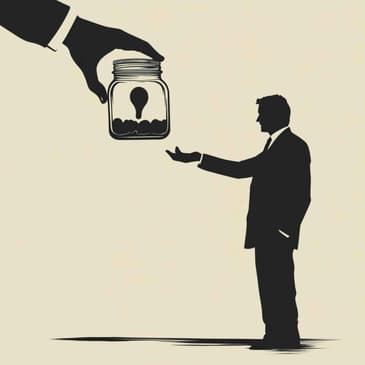
[00:01:40] [SPEAKER_00] Imagine you're a young guy and you want to buy a house. You go to the bank to borrow 250,000 pounds. After all, everyone else is doing it. How hard could it be? You're 25 and have the rest of your life to pay it back.
[00:01:54] [SPEAKER_00] The manager looks at you, checks that you have a job, wearing a tie helps here, and that you're not a convicted criminal, shakes your hand, and tells you 250,000 pounds will not be a problem. Well, that was easy. But as Steve Bidolph tells the story in manhood, there's just one problem. Something else happens that you weren't expecting and wasn't in the adverts.
[00:02:19] [SPEAKER_00] The bank manager takes out a jar. You have to leave behind one **** in the jar, which is then locked away in the banker's safe for the next 25-year mortgage term, along with all the others. Now you have future interest payments to meet. The other nasty side effect is this. Quote, If ever in your life you get the urge to do something risky, exciting, different, or adventurous, chances are you will not, because you won't have the **** to do it.
[00:02:49] [SPEAKER_00] Somehow, to be a free man, you have to escape this trap. You could live in a country where houses cost less. You could stop competing with your neighbors and drive the oldest car in your street. You could give your children more of your time instead of a private school education. Even reducing this, claiming back some of your money and time, you can be a freer man. End quote. This captures the essence of what I'm talking about on this blog.
[00:03:15] [SPEAKER_00] When I bought my first house, age 26, the logic went something like this. Number one, my girlfriend said we should buy a house. Number two, everyone else says you can't go wrong with bricks and motor. And prices seem to be going up. That's getting quick. Number three, am I not an upwardly mobile tycoon of the future? Yes, indeed I am. I will therefore need a house that is befitting of my status.
[00:03:40] [SPEAKER_00] Number four, I therefore want to own the best, read most expensive, house possible. Number five, to buy the most expensive house, I'll borrow as much as the bank will lend me. And number six, I will then be happier because everyone knows that having more **** makes us happier. Please note here the absence of any original thought, logic, or financial analysis to back up one of the most important financial decisions of my entire life.
[00:04:10] [SPEAKER_00] Lemmings have jumped off cliffs with more analysis to back up their decision than this. Now, here is one of the ironies of life. I ran a lousy decision-making process, but thanks partly to luck, got a good outcome. So how did this end up working out okay for me? Firstly, a house is a productive asset. It provides shelter, security, and a store of value that tends to rise over time, along with growth in the economy.
[00:04:38] [SPEAKER_00] But be careful of the stuff that people associate with a house purchase. For the avoidance of doubt, plasma TVs, Xboxes, and pink fluffy cushions do not count as productive assets. Second, a mortgage can be an effective motivational tool. Once we moved in, I gradually realized the implications of what I'd signed up for. I feared default and eviction. I channeled this fear into action.
[00:05:04] [SPEAKER_00] This helped me focus on work and chasing the next pay raise and bonus. I respectfully submit to you that if you have a large mortgage and you're not at least a little scared, then you do not fully understand your situation. There's an optimal level of mortgage fear. A little edge of unease can be helpful as motivation to get out of the hole as quickly as possible. Too much fear, however, can paralyze and persistent debt worries will eat away at you.
[00:05:33] [SPEAKER_00] Repaying the mortgage provided a clear, achievable goal. I set aside a regular monthly amount, in addition to the minimum payment required by the banks, for paydown. Every time I went to the bank to do this, they would run off a little slip that showed me the new reduced monthly payment. Ker-ching! All the bonuses and any other spare money that I could scrape together got thrown at reducing that mortgage. Slowly but surely, this created a virtuous cycle.
[00:06:01] [SPEAKER_00] The more I reduced the mortgage, the lower the monthly interest became. The lower the monthly interest became, the more free cash flow I had available to throw at reducing the mortgage. The potential escape artist pays themselves first. In other words, put the mortgage overpayment savings on autopilot with a direct debit that comes out of your current account straight after you're paid.
[00:06:25] [SPEAKER_00] This has a helpful side effect of helping to create an artificial environment of scarcity for the rest of the month that helps you control your spending. In contrast, the sucker waits until the end of the month and says they'll save whatever is left. Guess how much that will be? Third, having a mortgage always meant that I had a great investment opportunity in front of me. No need to scour annual reports, research companies, or read the Financial Times.
[00:06:53] [SPEAKER_00] At an interest rate of, say, 6%, I always had a tax-efficient and risk-free way to put money to work by paying down the mortgage. Tax-efficient because the income from mortgage repayments, that is, lower interest costs, is tax-free. Whereas if I had saved the spare cash flow into a savings account, I would have to pay income tax on it. For a 40% taxpayer, this turns a 60% net return investment into an equivalent of a 10% gross return investment.
[00:07:24] [SPEAKER_00] On reflection, risk-free is probably the wrong description for mortgage repayment as an investment choice. It makes it sound like it is risk-neutral. Actually, it's much better than that. You have reduced your leverage, reduced your stress, and increased your robustness to future shocks. There's a healthy debate to be had here for savers. Should they pay off the mortgage or should they use the cash to buy other productive assets or shares in an SIPP or ISA?
[00:07:53] [SPEAKER_00] There is no single right answer to this. The most important thing is to focus on saving as much as you can. Whether you invest it into a pension or ISA, property or shares is a secondary consideration. For me, the priority was to focus on smashing the mortgage while paying into a workplace pension and buying shares to learn as much as I could about investing. There's no one right answer for everyone.
[00:08:20] [SPEAKER_00] But if you invest while you still have a mortgage, this is equivalent to borrowing money to buy shares. The potential escape artist prioritizes their attention on the big wins and the quick wins. Housing costs, such as mortgage interest, are the big one for most people. So this is a good place to start looking to attack your cost base. My view is this. A mortgage is like a chainsaw.
[00:08:45] [SPEAKER_00] It's a powerful but slightly scary tool to be used carefully for a short period of time in a domestic situation. If you get it wrong, it might lop off a limb or two. If you're in the hole with a large mortgage, the good news is that you can climb out. So start now. You just listened to the post titled Mortgages and the Banker's Jar by Barney of the escapeartist.me.
[00:09:15] [SPEAKER_00] You sign up for something, forget about it after the trial period ends, then you're charged month after month after month. The subscriptions are there, but you're not using them. In fact, I learned that 85% of people have at least one paid subscription going unused each month. Thanks to Rocket Money, you can see all your subscriptions in one place and cancel the ones you're not using anymore, saving more money.
[00:09:40] [SPEAKER_00] Rocket Money is a personal finance app that helps find and cancel your unwanted subscriptions, monitors your spending, and helps lower your bills so you can grow your savings. See all of your subscriptions in one place and know exactly where your money's going. Rocket Money has over 5 million users and has saved a total of $500 million in canceled subscriptions, saving members up to $740 a year when using all of the app's premium features.
[00:10:09] [SPEAKER_00] Cancel your unwanted subscriptions and reach your financial goals faster with Rocket Money. Go to rocketmoney.com slash OFD today. That's rocketmoney.com slash OFD. Rocketmoney.com slash OFD. This article highlights the age-old question, should I invest or pay off my mortgage? This continues to be an ongoing debate because the answer is going to be unique to your preferences and circumstances.
[00:10:39] [SPEAKER_00] If the interest rate on your mortgage is less than 5%, you'll likely make a higher return on interest from investments than the money you would save in interest by aggressively paying off your mortgage. However, many people feel peace of mind by owning their house outright, especially if it's the home they plan to be in when they retire. I personally have chosen not to pay off my mortgage early for a number of reasons. Firstly, I don't look at my primary residence as an investment,
[00:11:07] [SPEAKER_00] and I don't want my money held up in a tangible asset. I prefer the liquidity of stocks. The argument for the peace of mind on being mortgage-free doesn't appeal to me because my mortgage is $600 per month. So this is an expense that is easily met, especially because I don't have a car payment or any other debt. If you have a high monthly mortgage, I can see the peace of mind of not having a mortgage being more attractive. I also don't know how long I will live in this house,
[00:11:36] [SPEAKER_00] but I do plan to keep it and rent it out after I move on. So why not let the tenants pay the mortgage? I like the advice from my friend Frank Vasquez over at Risk Parity Radio, who recommends to have no more than 10 to 20% of your net worth in your residence so that you can put the bulk of your money into income-producing assets. This debate also makes me think of an OFD listener who reached out to me asking if I thought she had enough money to retire early.
[00:12:04] [SPEAKER_00] While she had over a million dollars, a large majority of that was in her house, so she couldn't really live off that in retirement unless she sold the house. I'll leave it there for today. That's a wrap for another Sunday show. Have a great rest of your day, and I'll be back tomorrow where your optimal life awaits.