


Discover all of the podcasts in our network, search for specific episodes, get the Optimal Living Daily workbook, and learn more at: OLDPodcast.com.
Episode 3552:
Jackie Beck breaks down how balance transfers can help reduce high-interest debt and potentially accelerate your payoff timeline when used wisely. She highlights both the benefits of low or 0% introductory rates and the hidden pitfalls that can derail progress if you’re not careful. Understanding the strategy and its risks can help you decide whether it fits into a smarter, more disciplined approach to getting out of debt.
Read along with the original article(s) here: https://www.jackiebeck.com/what-are-balance-transfers/
Quotes to ponder:
"Balance transfers are a type of offer from credit card companies, banks, or credit unions. They let you move debt from one account to another."
"The idea behind doing a balance transfer is to reduce the interest rate you’re paying on credit card debt."
"They can be used as part of a larger debt reduction strategy, but shouldn’t be the only tool you use."
Learn more about your ad choices. Visit megaphone.fm/adchoices
[00:00:00] Dell PCs with Intel inside are built for the moments that matter. For the moments you plan and the ones you don't. Built for the busy days that turn into all night study sessions. The moment you're working from a cafe and realize every outlet's taken. The times you're deep in your flow and the absolute last thing you need is an auto update throwing off your momentum.
[00:00:22] That's why Dell builds tech that adapts to the way you actually work. Built with long lasting batteries so you're not scrambling for the closest outlet. And built in intelligence that makes updates around your schedule, not in the middle of it. They don't build tech for tech sake. They build it for you. Find technology built for the way you work at dell.com slash dellpcs. Built for you.
[00:00:47] This is Optimal Finance Daily. What are balance transfers by Jackie Beck of JackieBeck.com.
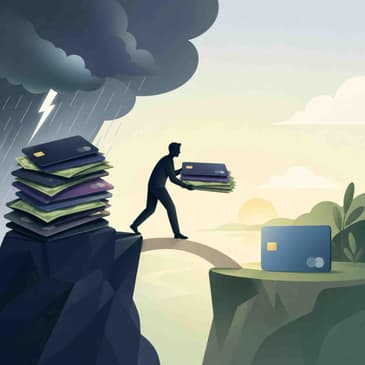
[00:01:00] Balance transfers are a type of offer from credit card companies, banks or credit unions. They let you move debt from one account to another. Usually balance transfers are used to move high interest credit card debt to a new low interest credit card. But they can also be used to move other types of loans and debt to a credit card. They also can be used to move higher interest card. They also can be used to move higher interest credit card. They can also be used to move higher interest credit card. They also can be a way to consolidate multiple debts without taking out a debt consolidation loan. The idea behind balance transfers.
[00:01:29] The idea behind doing a balance transfer is to reduce the interest rate you're paying on credit card debt. That way, you can pay it off faster or easier. In that sense, they can offer some relief from expensive debt. People normally try to get 0% balance transfer offers. That way, their whole monthly payment goes towards reducing debt instead of a big chunk of it going to pay interest.
[00:01:51] For example, if your current credit card charges 16% interest and you have a $5,000 balance, transferring that to a 0% card would save you a bundle. If everything goes well. But there are some downsides too, especially if you don't repay the full balance before the intro period ends. Make sure to understand the pros and cons of balance transfers before applying for one. What to look for in a balance transfer card.
[00:02:20] Lately, 0% balance transfers are getting harder to find. But if you're looking to do one, you should still consider good balance transfer cards that offer 0% or low interest rates, have a long introductory period where you get the lower interest rates, have low balance transfer fees, you're likely to be approved based on your credit scores, and you don't have a penalty APR.
[00:02:46] Make sure that the card you choose has terms and rates that are good enough to offset what it will cost in fees. How to do a balance transfer. You can do this by transferring the amount you owe from one credit card to a low or no interest credit card. The steps to do a balance transfer are, number one, get an idea of your credit score so you know if you're likely to qualify. You usually need good or excellent credit.
[00:03:12] Number two, research to find the best balance transfer offers. Number three, make sure you understand the terms and fees involved, and that you avoid deceptive offers. Number four, apply for the offer you want. Number five, if you're approved, start the balance transfer within the required timeframe. Depending on the card, you may do that online, by calling or with balance transfer convenience checks.
[00:03:39] Number six, continue paying the minimum payment on your old card while you wait for the transfer to happen. Number seven, once it goes through, be sure to make timely payments to the new card. And number eight, to avoid new debt, stop using the old card and do not use the new one for anything else. Finally, if your goal is to get out of debt, use the debt snowball method. Common questions related to balance transfers.
[00:04:08] This article explains what a balance transfer is and how to do one, but people sometimes have related questions too. What happens to your old credit card's balance? You may be wondering what happens to your old card when you transfer the balance. The short answer is usually nothing. Your old card will remain open until you or the credit card company closes it. It'll just no longer have a balance on it once the transfer goes through, assuming you transfer the whole amount.
[00:04:37] Again though, you'll still need to make your minimum payment on the old card until the balance transfers to the new one. Since that can take some time, be sure you don't miss a payment while you're waiting for it to finish. Multiple transfers. Sometimes people want to do multiple balance transfers, which could mean one of two things. In one case, maybe the intro period is up and you want to avoid the new higher interest rate. You can look for another offer and repeat the process.
[00:05:04] Just be aware that it affects your credit each time you apply for a credit card or other loan. It's best to pay them off before the intro period expires if possible. In another case, you may want to transfer more than one debt to a single new card. Whether that's possible depends on the card you've chosen. So if that's your goal, make sure to choose a card that allows it. You'll usually have to complete all of the transfers within a set time period. The bottom line.
[00:05:32] The bottom line is that balance transfers are a way to move debt around from one account to another. They can be used as part of a larger debt reduction strategy, but shouldn't be the only tool you use. Be sure to avoid the pitfalls that come with them as well. You just listened to the post titled, What are balance transfers? By Jackie Beck of JackieBeck.com. Summer's almost here.
[00:06:01] And honestly, I want to be planning a vacation, not stressing about whether I can actually afford it. That's why I keep my finances organized with Monarch. So I can enjoy my summer knowing my money's taken care of. Monarch is the personal finance app that tracks everything. Accounts, investments, savings, goals, and spending. Get your first year of Monarch for half off, just $50 with promo code optimal.
[00:06:27] What I love is that Monarch monitors your money so you don't have to. Their AI recap can even catch a spending spike before it becomes a problem. It's like having a financial advisor in your pocket. I can ask the AI assistant, Can I afford this vacation without touching savings? And get a real answer. Use code optimal at Monarch.com to get your first year half off at just $50.
[00:06:53] That's 50% off your first year at Monarch.com with code optimal. Most leaders have a clear picture of how work is supposed to get done, but almost no visibility into how it's actually happening. So decisions about what to fix end up being based on gut feel, not data. I've been there with the EconoMe. Pretty sure a process was slower than it should be, but with no numbers to prove it, nothing moves. Traditional process mapping takes months and is outdated before it's finished.
[00:07:23] That's what today's sponsor, Scribe, was built to solve. Scribe Optimize passively captures how your team works across approved business apps, then uses AI to surface inefficiencies and improvement opportunities. No interviews, no manual discovery, and trusted by 80,000 plus enterprises, including nearly half of the Fortune 500. The dashboard shows in real time where time is going across tools. Start in Salesforce, finish somewhere else.
[00:07:49] It flags inefficiencies, suggests AI-powered fixes with estimated time savings, and keeps user data anonymized. It's the kind of visibility that used to take months. Now it's always on. To see what Optimize could look like for your organization, visit scribe.how.ofd. That's S-C-R-I-B-E dot how slash O-F-D.
[00:08:12] Utilizing an introductory 0% interest credit card isn't a bad idea, as long as you're very strategic about it. When I first started cleaning up my finances, I found myself in 30 grand of debt, and half of that was credit card debt. It took me about 11 months to get out of this debt because I was very aggressive about it, and I did use a balance transfer with a 0% introductory APR to consolidate my credit card debt over the last six months of my payoff.
[00:08:42] However, I think the only reason why this worked for me is that I first curbed any temptation I had to overspend. I proved to myself that I had the ability to throw every available dollar at my debt, and my desire for debt freedom was way stronger than my desire for luxuries. If there is any chance that you're just going to charge up that new card instead of using it as a strategy to pay off debt, don't bother.
[00:09:11] A friend of mine recently had his income cut in half, and when we talked about how he was going to navigate this challenge, he thought about opening a 0% card to help him with about $3,000 of expenses until he could replace his income. He was confident that he could pay it back before the rate shot up to 17%. But I reminded him that he has a very healthy emergency fund, and this situation is exactly what the emergency fund is for.
[00:09:40] $3,000 in either case, whether he put it on the card or pulled from his savings, was not that much money in the grand scheme of his specific financial situation. So while he felt weird tapping into his savings, he ultimately agreed with me that he's much more careful about the money he's spending now from his savings account versus money that he convinced himself would be easy to pay off in a year.
[00:10:06] In general, playing with credit cards isn't a great idea, unless you're 100% sure you can pay the balance in full every month. And that should do it for today. Thank you for being a subscriber or follower of the show and sharing it with others. It really goes a long way to keep this podcast going. Have a great rest of your day, and I'll see you tomorrow, where your optimal life awaits.