



Discover all of the podcasts in our network, search for specific episodes, get the Optimal Living Daily workbook, and learn more at: OLDPodcast.com.
Episode 2177:
In "How to Know Who Loves You Best" by Dr. Kelly Flanagan, a heartwarming tale unfolds as a father observes the nuances of belonging and love through everyday moments with his family. Dr. Flanagan's insights into how our loved ones understand and accept us, despite our imperfections, illuminate the profound connections that define our closest relationships.
Read along with the original article(s) here: https://drkellyflanagan.com/how-to-know-who-loves-you-best/
Quotes to ponder:
"When my love has been an escalator, they’ve known I meant it to be an incubator."
"A place of belonging happens when someone receives the words we’ve already said or the things we’ve already done and, sometimes, understands their meaning even better than we do."
Learn more about your ad choices. Visit megaphone.fm/adchoices
[00:00:00] Now, before we start, you might want to check out our other podcasts covering topics like
[00:00:04] personal development and minimalism, money, health, relationships, and more. So, to optimize
[00:00:10] your life in other areas, just search for Optimal Living Daily in your podcast app.
[00:00:15] Now onto the show. This is Optimal Relationships Daily, episode 2177,
[00:00:22] How to Know Who Loves You Best, by Dr. Kelly Flanagan of DrKellyFlanagan.com.
[00:00:29] Hello everybody and welcome back to another installment of Optimal Relationships Daily,
[00:00:34] hosted and narrated by me, Greg Audino. And the article we have today for you comes from
[00:00:39] Dr. Kelly Flanagan. It's all about seeing beneath people's actions and rather observing their
[00:00:45] intentions. That's my interpretation of it at least, yours might be different. More on that
[00:00:50] in my commentary at the end. But for now, let's get into this post and start optimizing your life.
[00:00:59] How to Know Who Loves You Best, by Dr. Kelly Flanagan of DrKellyFlanagan.com.
[00:01:06] It's spring again in Illinois, and that means a lot of things. Green soft grass,
[00:01:13] pollen everywhere, thunderstorms, soccer games, and the countdown to summer. It also means a big
[00:01:20] empty box sitting in the foyer of my daughter's preschool, advertising the countdown until the
[00:01:25] chicks hatch. We arrive at the school on day zero and peer over the edge of the box. Nothing yet.
[00:01:32] I ask her where the eggs are. My daughter looks at me somberly and says,
[00:01:38] the chicks don't have a mama, so we needed to keep them warm in an escalator.
[00:01:43] I think about telling her it's called an incubator, but I know what she means,
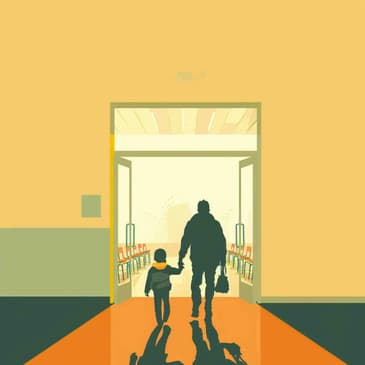
[00:01:49] and not every moment needs to be a teaching moment. I smile. She smiles and grabs my hand,
[00:01:56] and we walk into her class together. How do we know when we belong? The people we belong to
[00:02:03] know what we mean. Escalators. I've seen it countless times over the years.
[00:02:10] In the middle of a marital or family therapy session, someone will say something gutsy and
[00:02:15] loving, and I know exactly what he or she means. But it's stated clumsily and with an ounce or
[00:02:22] more of protectiveness and defensiveness. As an objective observer, I can see the tenderness
[00:02:28] through the messiness. I hold my breath, hoping I'm not the only one who knows what was meant.
[00:02:34] And then I cringe a little inside when the meaning of the words is missed altogether.
[00:02:39] The heart of a loved one isn't known or trusted or believed in. I cringe because showing that
[00:02:44] good heart took courage, and now it will probably go more deeply into hiding.
[00:02:50] But then there are other moments. Moments in which the heart stumbling through the words is seen,
[00:02:55] and its goodness is trusted, and its beauty is believed in. There are other moments in which a
[00:03:02] partner or a family member sees the incubator through the escalator. A place of belonging
[00:03:07] is not the place where someone can read our mind or anticipate what we might say.
[00:03:13] A place of belonging happens when someone receives the words we've already said,
[00:03:17] or the things we've already done, and sometimes understands their meaning even better than we do.
[00:03:24] Napkins. Recently, my wife and I were having lunch in a fast food restaurant. We were talking
[00:03:30] about the many things happening in our life when I realized we had forgotten napkins.
[00:03:36] Mid-thought, I got up, retrieved a napkin for myself, and sat back down. My wife looked at me
[00:03:42] and said, in equal parts amusement and annoyance,
[00:03:46] Were you planning to get me a napkin too? I smiled sheepishly and retrieved one.
[00:03:52] When I sat back down, she looked at me and said,
[00:03:55] I know in your heart you want to get me a napkin. You want to think of me and show me love.
[00:04:00] But sometimes your anxious brain doesn't cooperate.
[00:04:04] In a fast food restaurant, my wife knew what I meant. In a fast food restaurant, I belonged.
[00:04:12] Incubators. In two weeks, my family will be moving to a new town,
[00:04:17] where we will work and live and love and keep growing up. We'll be leaving our town,
[00:04:23] but far more importantly and painfully, we'll be leaving our people. The people we belong to.
[00:04:30] How do I know we belong to them? Because they know what we mean.
[00:04:34] Over the years, I have been messy and angry and distracted and absent and sad and confrontational
[00:04:43] and withdrawn and overjoyed and clueless and scared and a little too brave. And I've made
[00:04:51] mistakes and I've hurt feelings and I've cared well for the people I love. And I've cared poorly
[00:04:56] for them too. But when my love has been an escalator, they've known I meant it to be an
[00:05:02] incubator. It takes time and courage and not a little bit of luck to find a community like that.
[00:05:09] Even more, it takes time to trust and believe the way they see you is for real. To trust it isn't
[00:05:15] going to go away. To trust that they will be there for you, especially when you're at your sloppiest.
[00:05:21] Our family's transition this month is more pronounced than some,
[00:05:25] but I think most of us are in some way moving between places of belonging. We're always leaving
[00:05:31] some people, taking others with us and meeting new people along the way. So perhaps the words
[00:05:38] of gratitude I feel right now are words we all need to share with the people we have,
[00:05:43] do and will belong to. To those we are leaving behind, words fail the gratitude we feel for
[00:05:50] the ways you have loved us, even when we used the wrong words. To those who will remain with
[00:05:56] us along the way, thank you for standing by our side and loving us in the midst of our crazy.
[00:06:02] And to those we are moving toward, thank you for being patient with us.
[00:06:06] We are going to show ourselves to you. We hope you can see who we are, underneath all our mess.
[00:06:13] When we say escalator instead of incubator, we hope you know what we mean. You just listened
[00:06:23] to the post titled, How to Know Who Loves You Best by Dr. Kelly Flanagan of drkellyflanagan.com
[00:06:31] and I'll be back with my commentary in just a sec. And thank you so much to Dr. Kelly for this
[00:06:36] piece which really comes down to intentionality right? Knowing and trusting the intentions of
[00:06:42] others. Indeed it is a great way to know who loves you best, but at the same time it's also
[00:06:48] a sign of someone who is particularly secure within themselves or the situation at hand.
[00:06:54] This is to say that correlation doesn't always equal causation. For example, someone might be
[00:07:00] able to see your intention, which might seem like love, but really they're just secure enough to
[00:07:06] not be offended by what's transpired. Or on the other hand, someone who loves you very deeply
[00:07:12] may in a moment not be able to see your intention if your action has triggered an issue they're
[00:07:16] really struggling with. So while I do love this article and I do think it's a great observation
[00:07:21] made by Dr. Kelly, I would advise you to not rely on single moments like these when sorting out who
[00:07:28] loves you best, but rather a series of moments with the same person. Do they keep seeing what
[00:07:34] you mean, even when it might hurt them? And in the times that they don't, are you too able to
[00:07:39] communicate about the disconnect and recover once things have settled? That'll tell you who loves
[00:07:45] you best. But that's it for now everyone. So thank you so much for spending part of your weekend
[00:07:50] with us, enjoy the rest of it if you're listening in real time, and I'll see you in the Monday show
[00:07:54] tomorrow, where your optimal life awaits.