



Discover all of the podcasts in our network, search for specific episodes, get the Optimal Living Daily workbook, and learn more at: OLDPodcast.com.
Episode 2496:
Chris Reining explores the idea that true happiness comes not from constantly chasing more but from recognizing and embracing "enough." He discusses how redefining success, simplifying life, and focusing on what genuinely matters can lead to greater fulfillment. By shifting the mindset from accumulation to appreciation, it's possible to break free from the cycle of endless desire and find lasting contentment.
Read along with the original article(s) here: https://chrisreining.com/joy-of-enough/
Quotes to ponder:
"Enough means you don’t need to keep proving yourself. It means you can stop running, stop searching, stop trying so hard."
"When you learn to love what you already have, the wanting disappears."
"You don’t need more. You need enough."
Learn more about your ad choices. Visit megaphone.fm/adchoices
[00:00:00] Hello, everybody, and welcome back for another Sunday bonus episode of ORD. I am Greg Audino, the host of the show. But as is the case in all of our bonus episodes, today we'll be hearing from someone else. This time we'll be sharing a post from Optimal Finance Daily, hosted by Diana Merriam. The article she'll be narrating is called The Joy of Enough. And for me, it really blends finance and relationships together. So we want to make sure it's heard by both audiences as it's sure to offer great information for both.
[00:00:29] So with that, I'm going to let Diana take it away with her narration as we optimize your life. The Joy of Enough by Chris Reining of ChrisReining.com Halbox is a tiny island in the Gulf of Mexico. I was there on holiday in 2009 and liked it so much I returned 10 years later, but discovered the sleepy fishing village had transformed into a packed tourist trap.
[00:00:59] At dinner one night, I overheard a guy complaining how congested the island had become. This is our second time here, but last year there weren't many tourists. It's completely changed. That got me thinking about perspective. Me and this other guy were both looking at the same thing, but from wildly different perspectives. It's like that parable about a Mexican fisherman.
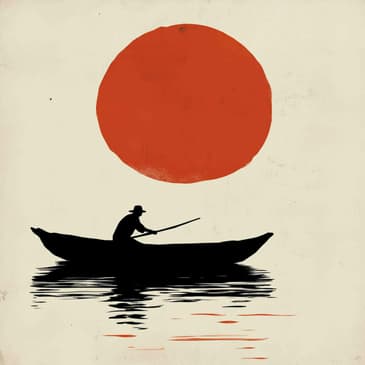
[00:01:22] An American investment banker was at the pier of a small coastal Mexican village when a small boat with one fisherman docked. Inside the boat were several yellowfin tuna. The American complimented the Mexican on the quality of his fish and asked how long it took to catch them. Only a little while. Well, why didn't you stay out longer and catch more fish? This is enough to support my family's needs. But what do you do with the rest of your time?
[00:01:50] I sleep late, play with my children, take siestas with my wife, and stroll to the village each evening where I sip wine and play guitar with my amigos. I have a full and busy life. Well, I have an MBA from Harvard and can help you. Oh yeah? You should spend more time fishing and with the money buy a bigger boat. With a bigger boat, you can make more money and now you can buy several boats and eventually have a fleet.
[00:02:17] Instead of selling your fish to a middleman, you sell directly to the processor and eventually open up your own cannery. You control the product, processing, and distribution. Of course, you leave this small village and move to Mexico City, then to LA and eventually New York City where you run your company. Well, how long will all this take? Oh, 20 years or so. Well, then what? That's the best part. When the time is right, you take the company public and become very, very rich.
[00:02:47] Well, then what? Well, then you can retire. You move to a small coastal village where you sleep late, fish a little, play with your children, take siestas with your wife, and stroll to the village in the evenings where you sip wine and play guitar with your amigos. Those. True joy comes from knowing what's enough and that you don't need more. That more won't make you happier. Don't believe me? Take the four guys from an Esquire article linked in this post.
[00:03:14] They make anywhere from $7 per hour to a million dollars a year. Here's how they responded when asked how happy they were on any given day on a scale from 1 to 10. 8 or 9. 9. 8. I'd say a 7 or 8. It's easy to think that having more money or stuff or status will make you happier, but life's usually good. It's a 7.
[00:03:38] In fact, one of the first things psychologists did when they started studying happiness was a similar experiment. They took people and gave them beepers. And whenever the beeper went off, each person was to stop what they were doing, eating lunch or watching TV, working, whatever, and write two things. Number one, what are you doing? Number two, how happy are you on a scale from 1 to 10? They collected thousands of responses from hundreds of people, and what they discovered wasn't very surprising at all.
[00:04:07] Pretty much everyone was writing 7 all the time. Sure, bad things happened, and people got upset, and the score would dip to the 2 to 5 range. But eventually, it bounced back to 7. It cuts the other way, too. When super exciting things happen, the rating would rise, but then settle back down to 7. Life is usually good. The 7. The problem is people get tripped up thinking if only they could have a little bit more, they'd reach a permanent 10.
[00:04:36] Like in my 20s, I thought if I had more money, I'd be happier. I got a better paying job. Then I thought, if only I had a bigger apartment. I got a bigger apartment. Next, it was driving a fancier car. I bought a German. What I noticed was the brain has this nasty habit of always finding other things it wants. And these wants keep getting pushed higher as soon as you reach a lower level. It didn't take long before I was plotting how to buy a mansion and an Italian car.
[00:05:05] Whenever you get what you want, you'll want something else. It's rare to be satisfied with things as they are for long. So now when I get that icky craving for more, I remind myself there's food in the refrigerator, clothes in the dresser, a house to live in, and money in the bank. Life's good. It's a 7. It's just a shift in perspective, knowing what's enough, and that you already have it. Just like that Mexican fisherman.
[00:05:36] You just listened to the post titled, The Joy of Enough by Chris Reining of chrisreining.com. I think Chris does a great job here describing the concept of hedonic adaptation, which is the tendency of humans to quickly return to a relatively stable level of happiness despite major positive or negative events.
[00:05:57] Left unchecked, this constant urge for more and anticipation that it will lead to lasting happiness can actually leave us quite disappointed. But how much money or material possessions is enough? That's going to be different for each person. But I think the trick is that no matter how much you have, you can never have enough gratitude for it.
[00:06:19] Socrates said that the secret of happiness is not found in seeking more, but in developing the capacity to enjoy less. And that is a skill set, my friends. We live in a consumerist culture that is constantly telling us we need more stuff, more money, more friends, and on and on and on and on and on. Advertisers can't benefit from your sense of contentment in what you already have. But you certainly can.
[00:06:49] And that's a wrap for another Monday show. Have a great rest of your day and start to your week. And I'll be back tomorrow where your optimal life awaits.