



Discover all of the podcasts in our network, search for specific episodes, get the Optimal Living Daily workbook, and learn more at: OLDPodcast.com.
Episode 2530:
Self-talk isn’t just about positive affirmations, it’s a powerful tool for shaping your mental and emotional well-being. Dr. Allison Niebes-Davis explains how the unconscious dialogue in your head influences your thoughts, emotions, and actions, and why learning to respond with balanced, constructive self-talk is critical. Plus, she shares five practical strategies to keep your cool when emotions run high, helping you navigate stress with intention and control.
Read along with the original article(s) here: https://drallisonanswers.com/self-compassion/self-talk-isnt-some-fluffy-concept/ & https://drallisonanswers.com/anger/when-youre-about-to-lose-your-cool/
Quotes to ponder:
"Self-talk isn’t just about saying nice things to yourself. It isn’t about constant pep talks or pie in the sky encouragement. Self-talk is about changing the conversation that’s already happening in your head."
"If you let the unconscious dialogue in your head run the show, it will. If you let your thoughts go unchecked, you’re in trouble."
"You can’t control what life throws your way, but you can absolutely control how you respond."
Learn more about your ad choices. Visit megaphone.fm/adchoices
[00:00:00] Now before we start, you might want to check out our other podcasts covering topics like personal development and minimalism, money, health, relationships, and more. So to optimize your life in other areas, just search for Optimal Living Daily in your podcast app. Now on to the show. This is Optimal Relationships Daily. Self-Talk Isn't Just a Fluffy Concept, It's Critical by Dr. Allison Niebus-Davis of DrAllisonAnswers.com
[00:00:30] We live in a time where mental and emotional health seem to be getting more attention than ever. People are talking more openly about their struggles and emotions. People are more open about their decision to seek therapy. And words like self-care, mindfulness, and gratitude are showing up more than ever. But there's something that hasn't quite gained the traction it deserves. There's something that not enough people are talking about. And if they are, it's not really with the depth or focus it deserves.
[00:00:57] But I'm bound and determined to bring this issue and skill to the table and to the front of your mind. Because I honestly believe that it's one of the most underrated things for your mental health. I'm talking about self-talk. Now, before you roll your eyes and say, yeah, yeah, I get it, hear me out. Self-talk isn't just about saying nice things to yourself. It isn't about constant pep talks or pie-in-the-sky encouragement.
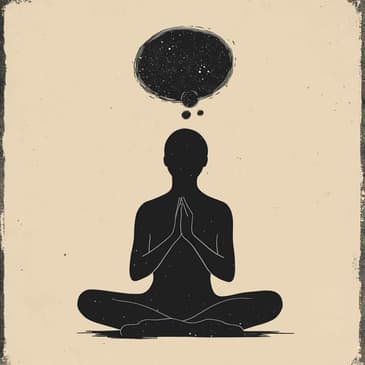
[00:01:23] Self-talk is about changing the conversation that's already happening in your head. It's about changing the narrative that's playing, even when you don't realize it. You're a human, which means you have a brain. And one of the brain's primary functions is to generate thought. You've got a constant dialogue going on in your head as your brain works to make sense of the world and your place in it. It's just what brains do. But that doesn't mean your brain does this perfectly.
[00:01:50] Just like any other part of the body, the brain can misfire, mess up, and make mistakes. It generates thoughts that aren't true. It draws conclusions that are inaccurate. It interprets things incorrectly. Mix this with your baggage, past hurts, fears, and insecurities, and your inner dialogue can go off the rails pretty quickly. This is where self-talk comes in. Self-care talks back. Self-talk changes the conversation in your head.
[00:02:18] Self-care responds to automatic thoughts with more helpful and balanced thoughts. When your anxious thoughts say, it's too hard, you can't do this, your self-talk says, this is tough, and you can do this. When your critical thoughts rev up after you make a mistake, calling you an idiot or a fool, your self-talk kicks in, reminding you that you're a human and you're allowed to make mistakes. When you think about trying something outside your comfort zone, fear pops up.
[00:02:46] Your thoughts convince you to avoid, stay safe, and retreat to comfort. But, here comes your self-talk, reminding yourself that you can do hard things, and that discomfort is necessary for growth. If you let the unconscious dialogue in your head run the show, it will. If you let your thoughts go unchecked, you're in trouble. You can't always control what initial thoughts pop up, but you can control how you respond. In fact, you must.
[00:03:13] Self-talk isn't just some fluffy self-help tool. It's a critical skill for your mental and emotional health. Like anything else, it's new and different, which means it'll take some practice. But, don't all good things? Five Ways to Respond When You're About to Lose Your Cool By Dr. Allison Nebus Davis of DrAllisonAnswers.com You know those moments when you can feel your blood boiling?
[00:03:41] You can almost feel the emotion welling up inside of you, ready to lose your cool. Those moments can be overwhelming, and sometimes a little scary. Thankfully, you have a choice in how you respond. Try these five strategies to help you keep your cool. Number one, take a timeout. Timeouts aren't just for toddlers. Timeouts are perfect for those moments when you're about to lose your cool. Timeouts provide physical space between you and the stressor, giving you a break before you overheat.
[00:04:10] Timeouts limit the damage you might do by losing your cool in the heat of the moment, also giving you a temporary break from the stressor. Timeouts provide a chance to gather your thoughts, thinking about how you want to proceed. Ideally, timeouts last between 10 minutes and 2 hours, depending on the situation. Any longer than 2 hours, and it goes from a break to an act of avoidance. Also, be careful not to use timeouts to simmer and stew, thinking about all the things you're going to fire back with once the timeout is over.
[00:04:39] Number two, breathe. This tip usually warrants people giving me the stink eye. It sounds so simple. How could it possibly be helpful? Well, that depends on how you breathe. If you take a big huff in and a big puff out, then it won't be helpful, because that's not a deep breath. That's an exasperated sigh. Instead, take a slow, deep breath in through your nose, briefly pause, and hold your breath for a few seconds,
[00:05:06] and then slowly exhale through your mouth. This is one of the fastest and easiest ways to calm down working at a physiological level. Number three, don't vent. It's so tempting to think that a quick vent session will help keep you from losing your cool. However, research has shown the exact opposite to be true. Venting just replays the stressful situation, prompting you to re-experience the event as well as all the emotions that come with it.
[00:05:34] Number four, speak slowly and softly. Did you know that humans have a tendency to mirror one another? Meaning that as one person raises their voice, so does the person they're talking with. And as one person talks faster, so then does the other person. You can imagine how quickly things can escalate. So, to use this concept of mirroring in your favor, intentionally slow down the pace of your speech and talk slower.
[00:06:00] It may feel absolutely ridiculous, but trust me, it helps. I do this often with clients who are particularly anxious, talking faster and faster. I intentionally slow down and soften my speech, and without realizing it, they start to slow down as well. Think of this as your Jedi mind trick for the day. Number five, remember that the other person is human. You know that phrase, be kind for everyone you meet is fighting a hard battle? Well, it's true.
[00:06:29] You never know what someone else is going through. So, even though you're frustrated and about to lose your cool, do your best to remember that they are a human. They could have been up all night with a sick kid. They could be waiting on some scary health news. They could be brand new at their job or struggling after a breakup. Flex your empathy muscles and remember that most people are doing their best. I say this often and I will say it again. You can't control what life throws your way, but you can absolutely control how you respond.
[00:06:59] So, when you feel like you're about to lose your cool, step back and challenge yourself to proceed thoughtfully. Be intentional about how you respond. Your body and brain will thank you. You just listened to the posts titled, Self-Talk Isn't Just a Fluffy Concept, It's Critical, and Five Ways to Respond When You're About to Lose Your Cool, both by Dr. Allison Nebus Davis of DrAllisonAnswers.com.
[00:07:29] And a couple of great reads from Dr. Allison today. Awesome to hear from her again. There was one line that struck me in particular, that being from the first article, when she referenced how self-care promotes balanced thoughts. Obviously, healthy self-talk is not easy for everyone to fall into. It does take practice, as she said. But sometimes it helps to remember that balanced thoughts or thoughts of self-care, they aren't just about blind positivity. And I think that's where a lot of people get tripped up
[00:07:58] when they tie the two together. Of course, we like to think of ourselves as logical and intelligent people, right? But to me, one way of bringing logic to self-talk means entertaining both preferable and non-preferable possibilities. Negative self-talk, though we might consider it to be realistic, doesn't do due diligence to positive outcomes that are possible. It ignores the many times in which things that we were initially displeased by ended up working out for the best.
[00:08:28] So when you're paying attention to your own self-talk, try to be mindful of whether or not you're bringing a balanced approach. Which isn't blind positivity, nor is it a bleak, uninspired sense of caution and constantly preparing for the worst. It's entertaining the possibility of both, because life is full of both. You might also be trusting your ability to adapt when things don't turn out the way you want to, as you've done many times before. Things to consider. Okay, folks, time to get out of here. It's been a great Monday show.
[00:08:57] Thank you for stopping in. I hope this episode got your week off on the right foot, and of course I hope to see you again tomorrow, where I will be reading more great relationship content for you. That's where your optimal life awaits.