



Discover all of the podcasts in our network, search for specific episodes, get the Optimal Living Daily workbook, and learn more at: OLDPodcast.com.
Episode 3055:
Dr. Lisa Firestone explains how our earliest attachment experiences create internal “working models” that shape who we choose as partners, how we behave in relationships, and what we expect from others. By understanding these patterns and creating a coherent narrative of our childhood experiences, we can develop greater security, break unhealthy cycles, and build stronger, more fulfilling relationships.
Read along with the original article(s) here: https://www.psychalive.org/where-relationship-patterns-come-from/
Quotes to ponder:
"The way we experienced relationships in our very early lives creates an “internal working model” for how we view relationships throughout our lives."
"The good news is, we are not doomed to repeat the patterns of our past. We can change our model, but we have to identify it, so we can challenge it."
"If we’re wondering why certain dynamics keep playing out or patterns keep developing in our relationships, it’s important to consider the working models we’re bringing to the table."
Learn more about your ad choices. Visit megaphone.fm/adchoices
[00:00:00] Iconic Vibes zum besten Preis. Wow geht mit Euphoria in die dritte Staffel. Ein paar Jahre nach der Highschool wusste ich nicht, ob das Leben so war, wie ich es wollte. Streame ab dem 13. April parallel zum US-Start. Wöchentlich eine neue Folge. Das Problem ist, wenn du einen Pakt mit dem Teufel schließt, gibt es kein Zurück mehr. Freu dich außerdem auf weitere Highlights wie House of the Dragon und Wicked. Alles ab nur 2,98 Euro im Monat. Streaming war noch nie so wow.
[00:00:30] Streaming, Yoga, Joggen, nichts entspannt mich. Echt? Mich entspannt meine Steuer total. Steuer? Wie Finanzamt? Die Steuererklärung? Ja, ich habe ganz locker über 1000 Euro zurückbekommen. Hast du geheime Connections? Nö, nur die Visu-Steuer-App. Wow! Und das ist einfach? Klar, die macht fast alles automatisch. Plötzlich fühle ich mich so entspannt. Hol dir dein Geld zurück. Tiefenentspannt mit Visu-Steuer. Das ist Optimal Relationships Daily.
[00:01:00] Where our relationship patterns come from. By Dr. Lisa Firestone of PsychAlive.org What makes us act and react the way we do when it comes to love? In an ideal world, we would all be born with perfectly attuned parents who love us truly and are there for us whenever we need them, but who also give us just the right amount of space and independence to flourish and fully develop our unique selves.
[00:01:28] Parents would provide a solid base from which we could venture out as separate individuals. They'd make us feel safe, seen and soothed, and therefore secure. While all this sounds great, Dr. Ed Tronick, an associate professor of pediatrics at Harvard University, has found in his research that even the best parents, the ones who form secure relationships with their kids, only get it right about 30% of the time.
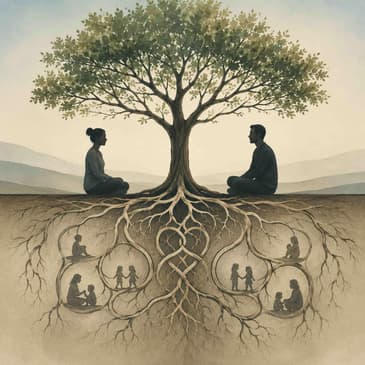
[00:01:55] For pretty much everyone, relationships with our early caretakers are complex and likely include some frustration and pain. Yet, whether we grew up with a secure or insecure attachment pattern, one thing is for sure. Our present relationships are heavily influenced by our earliest attachments. The way we experienced relationships in our very early lives creates an internal working model for how we view relationships throughout our lives.
[00:02:25] In other words, our past relationships affect everything, from who we choose as a partner to how we are likely to interact with them and what behavior we will elicit from them. Our early relationships provide a template for how relationships go. Can I depend on others? Will they soothe me when I need it? Will they see me for who I really am? How we adapted to our relationships, the defenses we formed, also shape how we will behave toward romantic partners.
[00:02:55] For example, do you believe you are better off not depending on others and taking care of yourself? Or do you believe the opposite, that you need to get your significant other to take care of you, and therefore you are preoccupied by getting their attention? Are you trapped in a double bind of being afraid to get close to anyone, yet terrified of being alone? In many ways, the attachment style we formed early on impacts how we behave in relationships, and how we expect others to behave.
[00:03:24] If we're wondering why certain dynamics keep playing out, or patterns keep developing in our relationships, it's important to consider the working models we're bringing to the table. The early attachment styles we experienced shape these internal working models. For example, many people grow up with an avoidant attachment to a parent. They may not have felt that they could get their needs met easily by that parent, and therefore adapted to become more self-contained and self-sufficient.
[00:03:54] As adults, they carry this model with them. They may not think people will be there for them, so they rely on themselves and resist trusting or getting too close. On the other hand, many people grow up with an ambivalent attachment style, in which they felt they had to cling to their parent or caretaker in order to get their needs met. Their parent may have been available and attuned some of the time, and then all of a sudden they'd be neglectful or rejecting.
[00:04:20] The parents may even become emotionally hungry at times, attempting to get their own needs met by their child. As a result, these people may grow up feeling desperate, insecure, and clingy toward a romantic partner. Our working models affect the way we see the world. We often perceive people as reflections of our past, assuming they will think and behave in certain patterns.
[00:04:44] We may also unconsciously choose partners who fit these patterns, whose own attachment styles complement or mesh with ours. For example, if we grew up feeling ignored, we may find ourselves in relationships with people who are unavailable, aloof, cold, or flat-out rejecting. If we felt intruded on as kids, we may choose people who are controlling, jealous, or demanding.
[00:05:11] When two people come together, they both have their own working models that affect each other. Both partners may engage in behaviors that push or provoke each other in ways that encourage each other to play the other half of these old, familiar dynamics. As couples play out their side of the model, their relationships can start to look more and more like those of their past. This reinforces each partner's working model, confirming what they already believe about love and relationships.
[00:05:39] The good news is, we are not doomed to repeat the patterns of our past. We can change our model, but we have to identify it so we can challenge it. Because our expectations and ideas about relationships form from our early experiences, it's necessary to make sense of those experiences in order to create healthier relationships in the present. Allowing our past to consume us emotionally does not work, but neither does burying the past and pretending like it doesn't affect us.
[00:06:09] What does work is creating a coherent narrative. Attachment researchers speak of the importance of creating a coherent narrative as a technique for developing inner security, which allows us to form more healthy adult relationships. Through the adult attachment interview, developed by Mary Main and her colleagues, researchers found that by assessing how well people are able to make sense of and convey their life story, it is possible to predict the attachments they will form with their children.
[00:06:39] It turns out that no matter how difficult a person's childhood was, if they're able to make sense of and feel the full feeling of what they experienced as children, they are better able to form healthier ties with people close to them in the present. In the online course I co-lead with Dr. Daniel Siegel, Making Sense of Your Life, he and I discuss how to go about the steps of creating a coherent narrative.
[00:07:02] We encourage people to explore their attachment history and understand the large and small early life events that shape who they are today. This endeavor is one that doesn't just benefit our romantic relationships, but every relationship we form in life. As Dr. Siegel has said,
[00:07:45] You just listened to the post titled, Where Our Relationship Patterns Come From, by Dr. Lisa Firestone of psychalive.org. Kaffee in seiner besten Form mit der neuen Qubo One Kapselmaschine von Chibo. In jeder Qubo Kapsel steckt Spitzenkaffee aus besonderen Anbaugebieten. Für Espresso, Kaffeekremer oder Kaffeekrande auf Knopfdruck.
[00:08:11] Die neue Qubo One überzeugt mit Premium Design, kompakter Größe und kleinem Einstiegspreis ab 29 Euro. Dank innovativer Press-Brew-Technologie wird jede Tasse besonders aromatisch mit samtiger Crema. Entdecke jetzt die Qubo Kapselmaschinen in deiner Chibo Fiale und auf Chibo.de. Ein perfekter Frühlingstag. Sonne. Park. Picknick. Und so viele Pollen. Shop Apotheke sagt Tschüss Allergie und Hallo Frühling.
[00:08:40] Hier findest du alles, um unbeschwert durch die Allergiezeit zu kommen. Als Neukunde sparst du sogar 10% ab 35 Euro Bestellwert. Mit dem Code NEU10. Du hast ein E-Rezept? Einfach Shop Apotheke App runterladen und direkt einlösen. Gutschein-Bedingungen auf shop-apotheke.com slash Gutscheine. And thanks so much to Dr. Lisa for another great and informative post. Needless to say, this one has a lot of information to chew on.
[00:09:06] But perhaps what I liked best is the note that it ended on, about how we are not incapable of escaping the relationship patterns we were raised into. You know, so many of the articles we read on this show address how we are predisposed to certain attributes as adults because of how we grew up. But predisposition and fate are not the same thing.
[00:09:29] So whether it's your attachment style, your introversion, your extroversion, your sensitivity, your jealousy, whatever it might be, these types of articles are written to inform you of where many of these tendencies might come from. And in the better written ones, like today's, they offer tools and or reassurance for you to overcome them should you want to. But these articles are not written to seal your fate. And if you're worried about these parts of yourself,
[00:09:59] then I caution you to not look to these types of write-ups as verification that you are limited to the circumstance you were born into. You know, sometimes it can feel easier to sulk and say that we have no choice in the matter. Don't let yourself extract that from an article like this. That is not what they're saying. It's not the point. And it's certainly not true. You do have the power to change your blueprint in a lot more ways than you probably realize. We all do.
[00:10:27] But with that, we are going to wrap things up for today, everyone. Thank you so much for tuning in and making another episode possible. Enjoy your Saturday and be sure to come back tomorrow for our bonus episode, as well as our regularly scheduled episode. That's where your optimal life awaits. We'll be right back.