



Get the 200+ Page Optimal Living Daily Workbook (PDF) — Free.
Want to turn today’s episode into an actionable plan? Join the Optimal Living Weekly newsletter and I’ll send you our 200-page digital workbook immediately. It’s packed with the best takeaways from the show, formatted for easy reading and implementation at home.
Get your free PDF workbook here: https://oldpodcast.eo.page/join
Discover all of the podcasts in our network, search for specific episodes and learn more at: OLDPodcast.com.
Episode 3064:
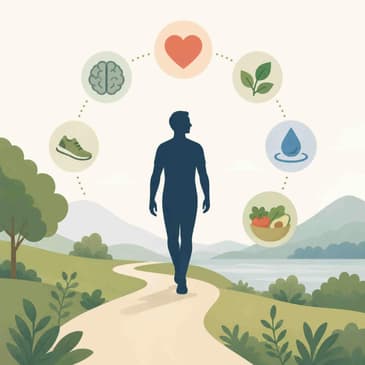
Susan Kolon shares how small, sustainable habits can help prevent and manage chronic conditions such as heart disease, diabetes, depression, and arthritis. Her practical advice on nutrition, sleep, and daily movement offers simple ways to improve both physical and mental well-being and make healthy aging more attainable.
Read along with the original article(s) here: https://kolonperformancestrategies.com/2021/01/12/do-this-for-your-body-and-brain/
Quotes to ponder:
"The foundation of good health is, and always has been, what you put in your body and how (and how often) you move from a sitting position to an active one."
"Take a 10-minute walk, ideally outdoors, to release endorphins and other “feel good” brain chemicals."
"During sleep, your brain acts like a dishwasher each night, clearing out harmful toxins, so getting at least seven hours is recommended."
Learn more about your ad choices. Visit megaphone.fm/adchoices
[00:00:02] Oh, fühlt sich das nach Sommer an! Die neue Sommerwäsche von Chibo Cubo One begeistert mit leuchtenden Farben und fröhlichen Trints. Feine Spitze, leichte Mikrofaser und sommerliche Schnitte sorgen für pures Wohlgefühl, selbst an heißen Tagen. Entdecke jetzt die neue Wäschekollektion von Chibo Cubo One und finde deine Lieblingsstücke für den Sommer.
[00:00:33] Wieso Steuer ist sehr gut? Das sagen ganz viele! Wer sagt das? Stiftung Warentest, Computerbild, Focus Money, Chip, Finanztipp, such dir was aus! Mega! Aber das ist doch bestimmt kompliziert! Nö! Einfach Foto von der Lohnsteuerbescheinigung machen und fertig! Klingt sehr gut! Ist sehr gut! Mit Wieso Steuer? Bis zum 31. Juli abgeben!
[00:00:53] Hello, everybody, and thank you so much for joining me here on another weekly bonus episode of ORD. I'm your host, Greg Audino, and in this week's Sunday Extra, we're going to be sharing an old episode from Optimal Health Daily. I think you're going to like this one. So without further ado, let's hear Dr. Neil's narration and commentary as we optimize your life.
[00:01:17] Do This for Your Body and Brain by Susan Colon of colonperformancestrategies.com You have a surprising amount of control in preventing and managing chronic disease. Chronic disease is defined as a health condition lasting a year or longer, requires ongoing medical attention, and limits the activities of your daily life. In other words, no fun. Be fueled by this one statistic.
[00:01:44] 80% of adults have at least one chronic disease. And 68% have at least two or more. To age well and maximize the years ahead, consider adopting a small steps mindset to preventing and managing chronic disease. Take on just one habit of health at a time until it is integrated into your daily life. I have confidence you will find it easily blended into your daily routine. So let's give it a try.
[00:02:13] At the top of the list, your arteries and a healthy heart. Last year, 58% of older adults were treated for high blood pressure, a condition that involves both how much blood your heart pumps as well as the resistance in your arteries. Knowing your number, your blood pressure reading, is vital to good health. As we age, the arteries can start to narrow due to plaque buildup, which can disrupt the flow of blood to the heart.
[00:02:41] This, in turn, can cause our blood pressure to rise. And long-term effects of high blood pressure are heart disease and even heart failure. Symptoms of high blood pressure can include feeling tired, lightheaded, or having a rapid heartbeat. Certain racial and ethnic groups are more likely to have high blood pressure and are more likely to die from heart disease or stroke. So it's important to know your risks.
[00:03:06] Now you can build on these daily lifestyle habits toward better health. For example, reduce sodium. This includes more than just table salt. Read food labels and calculate your daily intake. No more than 2300mg for most adults is the recommendation, unless your physician advises even less. Also, maintain a healthy weight. Your heart works harder if you carry extra weight.
[00:03:32] Also, get some daily movement for your body and brain, including functional fitness. Sleep 7-8 hours each night. Your heart needs the rest. And of course, follow doctor's orders around medication compliance. Bring down that cholesterol. Another way for your arteries to get clogged with plaque is through high cholesterol, an excess of bad fats in the blood that then clog your arteries.
[00:03:58] An astonishing 47% of older adults are treated for high cholesterol. So integrate these daily dietary habits for better health. One, eat protein-rich foods like fish, which contain omega-3 fatty acids. Also, minimize saturated fats like red meat and high-fat dairy. And increase the number of whole grains you consume like high-fiber cereals and breads. Your brain and your mood affect your mental health.
[00:04:28] It's common for older adults to seek treatment for depression. If you are experiencing persistent feelings of hopelessness, difficulty making decisions, changes in appetite, or a loss of interest in activities, contact your primary care physician who may talk to you about medication or psychotherapy. Try one of these daily well-being habits for better health. Stay social by phone, online, or in person if safe to do so, even if you initially don't feel like it.
[00:04:57] 15 minutes can do a world of good. Also, the foods you put into your body can affect your mood. So refrain from comfort or processed foods that only momentarily dull the feelings of stress. Instead, shop the perimeter of the grocery store for nature's foods like fruits, vegetables, lean proteins, high-fiber grains, and low-fat dairy products. These will benefit your brain with lots of essential vitamins and minerals. Also, watch your consumption of excess alcohol,
[00:05:26] getting too much caffeine, and consumption of artificial sweeteners, because these can negatively affect your brain and mood. Also, take a 10-minute walk, ideally outdoors, to release endorphins and other feel-good brain chemicals. Puzzles, adult coloring books, board games, and digital apps for good brain health will also boost your self-confidence and self-worth. And during sleep, your brain acts like a dishwasher each night, clearing out harmful toxins.
[00:05:55] So, getting at least 7 hours is recommended. Bone health and arthritis. Arthritis is inflammation of your joints that causes pain and stiffness, and can greatly affect daily movement. Now, this condition is more common in women, and it's likely due to hormones. But about 31% of older adults were treated for arthritis last year. So, here are some suggested daily physical habits for better health. Now, while it may seem counterintuitive,
[00:06:24] exercising at least 5 times per week for 20 minutes will improve function and decrease pain. Try to include a mixture of aerobic, strength-building, and stretching movements, like tai chi and gentle yoga. Also, maintain the recommended weight for your body frame, losing just 1 pound of excess weight can remove 4 pounds of pressure on your knees. Also, make sure your back, legs, and arms are always supported when you sit or lie down.
[00:06:52] And if you smoke and can dramatically reduce your smoking habit or quit altogether, this will be really helpful. This is because smoking interferes with tissue regeneration. Monitoring your blood sugar and diabetes. Insulin is a hormone used to get energy from the food you eat. When you have diabetes, the sugar or glucose from the food stays in your blood, resulting in high blood sugar. This can be a dangerous situation,
[00:07:20] but can be managed through medication and lifestyle actions. The risk of having diabetes increases after the age of 45. Last year, about 27% of older adults were treated for diabetes. As a starting point to help regulate blood glucose, choose one of these daily wellness habits for better health. Fill half your plate with high fiber fruits and vegetables. Emphasis on the veggies. Also, hydrate. Many older adults simply do not drink enough water.
[00:07:50] Drinking a full 8 ounce glass of water first thing in the morning sets you on a good pace for the day. Also, daily exercise to keep your blood glucose levels in check and to control weight gain. Try not to miss two days in a row. And finally, losing just 5-7% of your body weight can reap tremendous health benefits. For example, if a 200-pound person were to lose just 5-7% of their body weight, that'd be about 10 pounds. Power your better health potential.
[00:08:20] The foundation of good health is, and always has been, what you put into your body and how, and how often, you move from a sitting position to an active one. When it comes to your heart, your brain, or your joints, these factors can be a game changer in preventing and managing chronic disease. Start by making one small choice for your wellness each day. Build from there, and you are well on your way to better health.
[00:08:49] You just listened to the post titled, Do This for Your Body and Brain by Susan Colon of colonperformancestrategies.com. Hey, it's Justin from Optimal Living Daily. Before we start, I wanna share a super powerful practice I use called NSDR, or Non-Sleep Deep Rest. In just about 10 minutes or so, this yoga nidra practice leaves you feeling as refreshed as after a nap, without actually sleeping. Experience it for yourself on our guided podcast.
[00:09:18] Search NSDR, and look for the one from Optimal Living Daily. Dr. Neil here for my commentary. Susan is absolutely right. We have quite a bit of control over our health. Scientists have found patterns among hundreds of thousands of people, and discovered that there are certain behaviors that tend to not only lower our risk for developing a chronic disease, but better managing those diseases if we were to ever get diagnosed with one.
[00:09:46] And luckily, preventing and managing chronic disease doesn't have to be complicated. Even if we consistently do just one of the things that Susan mentioned in her post, we can dramatically reduce our risk of developing a chronic disease. Or, if you're like me, and are already a statistic because we have a chronic disease, simply performing one or more of these behaviors consistently can help us feel so much better. And in my case, I actually was able to reduce my medications.
[00:10:16] So which behaviors did I end up sticking to? Well, in the beginning, it was diet and exercise. Eating more nutritious foods and performing regular exercise changed my life. It changed my life so much, I actually went back to school just so I could help others realize how these two behaviors could change their lives too. I went from being a psychology major to now a dietician and having my doctorate degree in public health. Changing lives is also why I host this podcast.
[00:10:46] Well, that and thanks to my brother Justin and his business partner Lee of Optimal Living Daily, of course. So it would bring me a true sense of purpose if you really took my example, if you took these words to heart and learned from my experiences. So which one behavior are you going to try today? All right, that's it for today. I hope you have a wonderful Tuesday. Thank you so much for listening. I'll be back here tomorrow as usual.
[00:11:13] So I'll see you there where your optimal life awaits.