



Get the 200+ Page Optimal Living Daily Workbook (PDF) — Free.
Want to turn today’s episode into an actionable plan? Join the Optimal Living Weekly newsletter and I’ll send you our 200-page digital workbook immediately. It’s packed with the best takeaways from the show, formatted for easy reading and implementation at home.
Get your free PDF workbook here: https://oldpodcast.eo.page/join
Discover all of the podcasts in our network, search for specific episodes and learn more at: OLDPodcast.com.
Episode 3067:
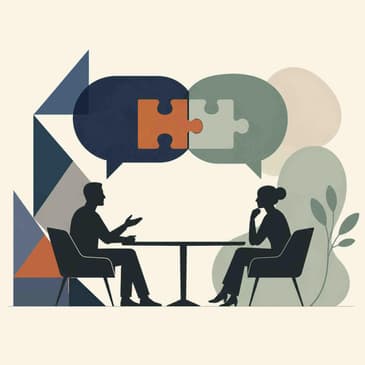
Seth Sinclair explores how your natural approach to conflict shapes the way you negotiate and why becoming aware of those tendencies can lead to better outcomes. By learning when to shift between competing and accommodating styles, you can avoid unnecessary stalemates, protect important relationships, and negotiate with greater confidence and intention.
Read along with the original article(s) here: https://michaelmehlberg.com/blog/2016/10/24/how-to-win-more-negotiations-by-changing-your-conflict-style
Quotes to ponder:
"A negotiation is a type of conflict, a situation where your concerns and interests are not aligning with those of another person, and you are actively seeking a solution."
"Understanding your tendencies in responding to conflict, and how you may need to adjust them, will give you an advantage as you work through a negotiation."
"There is nothing inherently right or wrong about either of these modes. They both have benefits and costs depending on the situation."
Episode references:
Harvard Program on Negotiation: https://www.pon.harvard.edu/
Thomas-Kilmann Conflict Mode Instrument (TKI): https://kilmanndiagnostics.com/overview-thomas-kilmann-conflict-mode-instrument-tki/
Getting to Yes: Negotiating Agreement Without Giving In: https://www.amazon.com/Getting-Yes-Negotiating-Agreement-Without/dp/0143118757
Learn more about your ad choices. Visit megaphone.fm/adchoices
[00:00:02] Oh, fühlt sich das nach Sommer an! Die neue Sommerwäsche von Chibo begeistert mit leuchtenden Farben und fröhlichen Trints. Feine Spitze, leichte Mikrofaser und sommerliche Schnitte sorgen für pures Wohlgefühl, selbst an heißen Tagen. Entdecke jetzt die neue Wäschekollektion von Chibo und finde deine Lieblingsstücke für den Sommer.
[00:00:33] Wieso Steuer ist sehr gut? Das sagen ganz viele! Wer sagt das? Stiftung Warentest, Computerbild, Focus Money, Chip, Finanztipp, such dir was aus! Mega! Aber das ist doch bestimmt kompliziert! Nö! Einfach Foto von der Lohnsteuerbescheinigung machen und fertig! Klingt sehr gut! Ist sehr gut! Mit Wieso Steuer? Bis zum 31. Juli abgeben!
[00:00:53] Das ist Optimal Relationships Daily, How to Win More Negotiations by Changing Your Conflict Style, bei Seth Sinclair of michaelmelberg.com. Wenn ein Conflict arises, most people have a default approach for how they handle the situation. Many of us are not conscious of our Conflict Style. We respond automatically without giving thought to the circumstances. This is significant in the context of Negotiations.
[00:01:20] A negotiation is a type of conflict, a situation where your concerns and interests are not aligning with those of another person, and you are actively seeking a solution. Understanding your tendencies in responding to conflict, and how you may need to adjust them, will give you an advantage as you work through a negotiation. If you can assess each conflict and negotiation situationally, you can intentionally utilize the style that will be most beneficial to you. Conflict Styles
[00:01:49] As defined by Kenneth Thomas and Ralph Killman, authors of the widely utilized Thomas Killman Conflict Mode Instrument, TKI, there are two basic dimensions of conflict behavior. Assertiveness, the degree to which you try to satisfy your own concerns, and cooperativeness, the degree to which you try to satisfy the other person's concerns. Your personal conflict style reflects your balance between these two dimensions.
[00:02:14] Some people are highly assertive in conflict, while others are highly cooperative. Others fall somewhere in between. The Thomas Killman model defines five conflict handling modes, each of which has varying degrees of assertiveness or cooperativeness. They are avoiding, competing, accommodating, compromising, and collaborating.
[00:02:36] We'll fully explore each style in future posts, but for now, let's take a closer look at the two most extreme styles in terms of assertiveness and cooperativeness. Competing. The competing style is highly assertive. Those who employ a competing approach to conflict seek to satisfy their own concerns, and they are willing to do so at the expense of others. And accommodating. The accommodating style is highly cooperative. Those who accommodate are willing to sacrifice their own concerns to appease the needs of others.
[00:03:06] And there's nothing inherently right or wrong about either of these modes. They both have benefits and costs depending on the situation. Now, for those of you who are familiar with the concepts of principled negotiation, you'll quickly note that these modes align very closely with the hard and soft approaches of positional bargaining. Hard bargaining means pursuing your position at all costs to achieve a victory. Soft bargaining is giving up whatever is necessary to reach an agreement.
[00:03:33] How can you apply this knowledge of conflict modes to get better results from negotiations? First, reflect on your experiences with conflict and become more conscious of your tendencies and how you respond. Ask yourself, are you more likely to compete, be aggressive in pushing your viewer demand, or accommodate, let things go to avoid a difficult situation? Once you understand your natural response, consider how you might intentionally change your style and approach depending on the situation.
[00:04:03] Here are two real-life examples. For someone who tends to compete. The situation. You have a disagreement with an important supplier over the timing of a delivery, and you need to negotiate a resolution. Your initial reaction is to assert your position aggressively. You feel strongly that you are in the right, and decide that you need to prevail in this argument to prove a point. You are committed to forcing the supplier to accept your viewpoint and solution. Consider the benefits and costs.
[00:04:32] By pressuring the supplier into accepting your position, you may coerce them to concede and earn a quick victory. However, your approach may result in diminished trust and long-term damage to the relationship. It may also result in a stalemate that harms your business operations. What you might try instead. Slow things down before jumping directly to a competing approach. Make an honest assessment of your demands. Are they reasonable?
[00:04:59] Ask yourself, is there a reason why the supplier is taking their position? Take off your blame hat and replace it with your problem-solving hat. Is it possible that there are strategies that may lead to a mutually agreeable resolution? It's likely that you can find a better solution. One that solves the problem while preserving the relationship, by engaging the issue with a more curious mindset. For someone who tends to accommodate. The situation.
[00:05:26] Your business partner is pushing a strategic decision that you do not agree with. While you've lightly mentioned a few points of disagreement, your partner seems intent on moving ahead. Your natural instinct is to withhold your true feedback, let this go, and hope that things work out in the long run. Consider the benefits and costs. This approach will ease any tension around the decision. After all, it's your partner and you'd rather not strain the relationship.
[00:05:51] However, giving in means you're holding in your thoughts and feelings on an important issue. Your partner may see you as a pushover. What you might try instead. Before you concede and worry about restoring harmony, consider the true cost slash benefit of accommodating your partner on this decision. Ask yourself, is smoothing things over in the short run worth potential resentment and further dissension in the long run? Does this set a precedent for appeasement in the future?
[00:06:20] If you sense that you'll regret withholding your view down the road, engage your partner in an honest discussion where you share your concerns. Look at the situation through the eyes of partnership, not conflict. Guide yourself to a successful result. Both scenarios highlight opportunities to assess your natural instincts and to decide whether they will serve you well. If not, be intentional about taking a different path that employs other approaches and conflict modes.
[00:06:52] You just listened to the post titled, How to Win More Negotiations by Changing Your Conflict Style by Seth Sinclair of michaelmelberg.com Big thanks to Seth for a really nice breakdown of the different types of conflict styles and of course for the examples of how to put them into practice. Everything's better with examples, certainly in our articles. Now essentially what Seth is encouraging us to do, and what we should do, is to take a mindful approach of negotiation and conflict.
[00:07:22] And some might say that those who are being more cooperative are especially mindful already. And while this is true, the type of mindfulness Seth is talking about is the ability to look long term. Whether it's extreme accommodation or extreme competition, both approaches are seeking short term gain. A normal response when under particular stress. As he showed though, this will have negative repercussions down the road. Normally in the form of a damaged relationship,
[00:07:52] whether it be because you bullied the other person, or because you let them walk all over you too much. So, consider some of the long term effects he mentioned for both extremes, and start your disagreement off from a very neutral standpoint, that allows both parties to be forward about what they want and why. Something along the lines of, why don't you tell me exactly what you need and why, and I'll be quiet. Then when you're done, I'll tell you exactly what I need and why, and I hope you'll listen to me.
[00:08:21] This really initiates mutual respect, concern for the other, deliberate listening, and an opportunity to be heard. It also shows calmness, which is important if you're overly attached to winning this conflict. Starting on a calm note is likely to keep the conversation going calmly, or it at least ensures that you've done your part to keep it calm, assuming you do give your counterpart the due diligence of hearing them out fully, rather than formulating a response prematurely. So, thanks again to Seth,
[00:08:51] and thanks to all of you for being here, as we sign off on this edition of ORD. Come on back tomorrow though, as we will have another great post for you as usual. Hope to see you there. Where your optimal life awaits.