



Discover all of the podcasts in our network, search for specific episodes, get the Optimal Living Daily workbook, and learn more at: OLDPodcast.com.
Episode 1579:
Jeff Goins shares how he transitioned from a traditional job to full-time writing by growing an audience, listening to their needs, and launching digital products strategically. His journey proves that with patience, consistency, and the right mindset, turning your passion into a profitable business is possible.
Read along with the original article(s) here: https://goinswriter.com/get-paid-passion/
Quotes to ponder:
"I never intended to make money doing this. I didn't think it was possible. But that doesn't mean any of it 'just happened,' either."
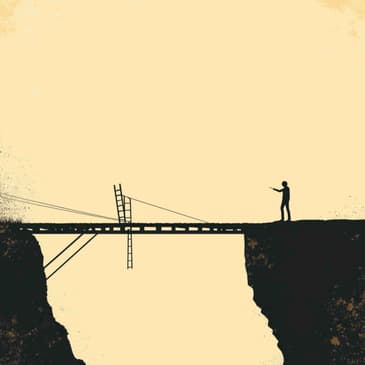
"When people hear this story, they often tell me how 'risky' it sounds. But the truth is it felt a lot more like building a bridge than making a leap."
"Some of our biggest successes can't be planned, but they can be anticipated."
Episode references:
Sean Platt: https://sterlingandstone.net
Learn more about your ad choices. Visit megaphone.fm/adchoices
[00:00:00] This is Optimal Work Daily. How I Started Getting Paid for My Passion by Jeff Goins of GoinsWriter.com. People often ask me how I made the transition from full-time employee to full-time writer. Some want to know the steps I took to get paid for my passion, while others are interested in how I managed to make a living writing. But here's the truth. I never intended to make money doing this. I didn't think it was possible. But that doesn't mean any of it just happened either.
[00:00:28] When I started this blog, I thought at most I'd be able to publish some books, if I was lucky, and collect a few meager royalties. All while holding down a day job for the rest of my life. In less than two years, though, I found myself at a crossroads. My blog, which accounted for less than 10 hours per week, was now contributing more income than my full-time job, which took up at least 40 hours a week. Within three months, I had not only replaced my wife's salary, but had surpassed both of our incomes combined.
[00:00:56] It was mind-blowing, and it meant that I had to make a decision. Making the leap This put us in a strange position. I wondered, should I keep my job and play it safe, or make the leap into full-time self-employment? I liked my job, but I'd felt for a while that it was time to move on. At the same time, my family was relying on me now. Was my dream worth the risk? After some discussion and prayer, my wife and I concluded that the success of my side gig was God's way of saying it was time to jump.
[00:01:26] So, that's what we did. In a matter of just a few months, my wife and I went from two steady incomes to no steady incomes, and a job description that was hard to describe. Well, you see, he writes for a website and sells stuff that you can't hold in your hands. And no, we're not living in a cardboard box. When people hear this story, they often tell me how risky it sounds. But the truth is, it felt a lot more like building a bridge than making a leap.
[00:01:52] And the reason for that lies in how I made the transition to full-time self-employment. I did it gradually. Perhaps not as slowly as some, but certainly not as quickly either. Two years is a long time to wait when you feel a strong tugging at your heart. So, when transition time came, there was a lot of security, both financially and emotionally, in that decision. We knew we would be okay. Because this was something I built gradually over time, the leap of faith felt more like taking the next step.
[00:02:21] The practical parts. Or how I actually did it. So, that's how I made the transition to full-time writing. But how did I even get to that point? How did I start getting paid for my passion in the first place? Here's what I did. One, I built the audience first. First. I'd heard stories of people like Brian Clark, who built their audiences long before they tried to sell. And I thought that sounded smart.
[00:02:44] For more than a year, I wrote a lot of free and helpful content, like e-books, newsletters, blog posts, guest posts, webinars, and more, and shared it with my audience. The result was a tremendous amount of trust, to the point that people started begging me to sell them something. Two, I asked my audience what they wanted. Sean Platt told me to do this, recommending a survey to ask people what they'd buy from me, even how much I should charge them.
[00:03:11] Over a thousand people responded, many indicating, to my utter shock, they would indeed pay for something I created. That gave me the confidence to try something. Three, I experimented with an initial offering. My first product was a $2.99 e-book, which I seriously doubted people would buy. Based on the concept of a minimum viable product, I put together an offering that required minimal effort to create, and then put it out there to see if people would buy it.
[00:03:39] The money I made from the first weekend it was released paid for my email marketing service for an entire year, about $1,500. After that, everything changed. A hobby became a business. And four, I learned how to launch things. After that first e-book, I released another e-book, but with three different price points, based on Chris Gillibow's advice, and a few other tweaks. This generated 10 times the sales that the first product did, in a matter of a few weeks.
[00:04:08] It also taught me how to harness the power of an online product launch, which I've since used on my book and online course. Learning how to launch was the golden nugget I was missing that led to sustainable, repeatable success in my business. Dreams don't just happen. It's worth repeating, I didn't plan for any of this to happen, but that doesn't mean it was an accident. I saw an opportunity, and I took it, which may be the biggest takeaway from the past two years.
[00:04:35] Some of our biggest successes can't be planned, but they can be anticipated. This means if you want to do something similar, you'll need to be patient but also vigilant, paying attention to the opportunities that come. And when the right one presents itself, be ready to take it. You won't be able to plan for it, but you will be able to recognize it if you know what to look for. Until then, the best course of action is to be generous and build trust like there's no tomorrow.
[00:05:07] You just listened to the post titled, How I Started Getting Paid for My Passion, by Jeff Goines of GoinesWriter.com. And thank you to Jeff for giving us permission to narrate from his blog, and you can come visit his site, which I have linked in this episode's description and at oldpodcast.com. He's a super popular writer that you might have already heard of. He's the best-selling author of five books, including The Art of Work and Real Artists Don't Starve.
[00:05:32] On Jeff's site, you can hear his thoughts on writing, life, and creative work, and you're going to hear him narrated as well across a few of our shows. And if you're looking to share your work but you're afraid of becoming the starving artist, his site is definitely for you. Lots of great advice there, so come check it out at GoinesWriter.com, and thanks again to Jeff for letting us share his work. And that's going to do it for the Sunday episode. Hope you enjoyed it, and I'll see you right back here tomorrow, where your optimal life awaits.