



Discover all of the podcasts in our network, search for specific episodes, get the Optimal Living Daily workbook, and learn more at: OLDPodcast.com.
Episode 2430:
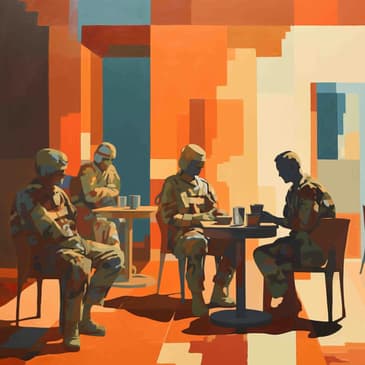
Tyler Tervooren of Riskology.co explores how our environment significantly influences our habits. Drawing on historical examples like the Vietnam War soldiers overcoming heroin addiction, Tyler illustrates that changing one's environment can dramatically alter behaviors. He emphasizes that our surroundings can trigger specific habits, both good and bad, and suggests strategies for creating more productive environments to foster desirable habits.
Read along with the original article(s) here: https://www.riskology.co/habit-environment/
Quotes to ponder:
"Your Habits Are A Product Of Your Environment."
"To Change A Habit, Change Your Environment."
Episode references:
Notion: https://www.notion.so
Learn more about your ad choices. Visit megaphone.fm/adchoices
[00:00:00] [SPEAKER_00]: Hey, you with the podcast in your ear!
[00:00:02] [SPEAKER_00]: Just a moment!
[00:00:03] [SPEAKER_00]: Have you already activated your mobile happy hour?
[00:00:05] [SPEAKER_00]: So you have an unlimited data volume every day for at least one hour.
[00:00:10] [SPEAKER_00]: It's quite new and for everyone who is now getting mobile-function plus internet for home at Telekom.
[00:00:16] [SPEAKER_00]: Now Magenta 1 customers will activate the mobile happy hour in the My Magenta app
[00:00:21] [SPEAKER_00]: and it's already off!
[00:00:22] [SPEAKER_00]: The Telekom 5G network.
[00:00:24] [SPEAKER_00]: So don't wait!
[00:00:25] [SPEAKER_00]: Now get in and activate the My Magenta app on Telekom.
[00:00:30] [SPEAKER_02]: This is Optimal Health Daily, episode 2430.
[00:00:33] [SPEAKER_02]: Engineer Your Environment for More Productive Habits by Tyler Tervooren of Riskology.co
[00:00:40] [SPEAKER_02]: and I'm Dr. Neal, your host.
[00:00:42] [SPEAKER_02]: Hey there and welcome back to another bonus Sunday episode.
[00:00:46] [SPEAKER_02]: This is where I share an episode from one of the other podcasts in our network
[00:00:49] [SPEAKER_02]: where we read articles to you.
[00:00:51] [SPEAKER_02]: Today's post comes from my brother's podcast, Optimal Living Daily
[00:00:55] [SPEAKER_02]: where articles covering mindfulness, personal development and minimalism are read to you every day.
[00:01:01] [SPEAKER_02]: You can find and subscribe to or follow that podcast
[00:01:04] [SPEAKER_02]: by searching for Optimal Living Daily wherever you're listening to this.
[00:01:09] [SPEAKER_02]: And with that, here's my brother Justin as we optimize your life.
[00:01:17] [SPEAKER_01]: Engineer Your Environment for More Productive Habits by Tyler Tervooren of Riskology.co
[00:01:25] [SPEAKER_01]: 1970s America faced a big problem.
[00:01:28] [SPEAKER_01]: The Vietnam War was winding down and the troops were coming home, addicted to heroin.
[00:01:34] [SPEAKER_01]: There was widespread panic and a plan was concocted.
[00:01:38] [SPEAKER_01]: Addicted troops would be held until they'd sobered up, then sent home with methadone prescriptions
[00:01:43] [SPEAKER_01]: and carefully monitored for relapses.
[00:01:46] [SPEAKER_01]: But the plan was never really implemented.
[00:01:49] [SPEAKER_01]: Turns out it wasn't necessary.
[00:01:51] [SPEAKER_01]: The troops came home and for the most part, kicked their addictions
[00:01:55] [SPEAKER_01]: and reintegrated into society.
[00:01:58] [SPEAKER_01]: Less than 5% of them ever relapsed.
[00:02:01] [SPEAKER_01]: A simple change of scenery cured their addiction.
[00:02:05] [SPEAKER_01]: Decades of follow-up research has uncovered why.
[00:02:08] [SPEAKER_01]: The environment you exist in, what you're surrounded by,
[00:02:12] [SPEAKER_01]: has a profound impact on the way you behave.
[00:02:15] [SPEAKER_01]: Different environments encourage different habits.
[00:02:18] [SPEAKER_01]: Your habits are a product of your environment.
[00:02:21] [SPEAKER_01]: What do you think about when you sit down at your computer to read your email?
[00:02:25] [SPEAKER_01]: Probably nothing.
[00:02:27] [SPEAKER_01]: Once you've done something enough times in the same place,
[00:02:30] [SPEAKER_01]: your brain can offload all the work it takes to remember how to do it.
[00:02:34] [SPEAKER_01]: Checking your email seems like the simplest task, but it really isn't.
[00:02:38] [SPEAKER_01]: To understand why, imagine you time traveled here from 100 years ago.
[00:02:43] [SPEAKER_01]: You've never seen a computer.
[00:02:44] [SPEAKER_01]: What are all the steps, movements and information you'd have to learn
[00:02:49] [SPEAKER_01]: before you could read your email?
[00:02:51] [SPEAKER_01]: How long would it take just to figure out how to turn your computer on?
[00:02:54] [SPEAKER_01]: Yet, here you are.
[00:02:56] [SPEAKER_01]: When you sit down at your desk, your habit takes over
[00:02:59] [SPEAKER_01]: and you're inside your inbox before you know it.
[00:03:02] [SPEAKER_01]: That's the way habits work.
[00:03:04] [SPEAKER_01]: At the same time, if you're not in front of your computer
[00:03:06] [SPEAKER_01]: and your phone is put away, you're probably not thinking about email.
[00:03:10] [SPEAKER_01]: You can go all day in fact without it crossing your mind.
[00:03:13] [SPEAKER_01]: But as soon as you sit down at your computer again, boom.
[00:03:17] [SPEAKER_01]: There you are reading your email.
[00:03:20] [SPEAKER_01]: There's a special connection between the things you do
[00:03:22] [SPEAKER_01]: and the places you do them.
[00:03:25] [SPEAKER_01]: This is critical to know if you have a bad habit you want to break
[00:03:27] [SPEAKER_01]: or a productive one you'd like to start.
[00:03:31] [SPEAKER_01]: To change a habit, change your environment.
[00:03:35] [SPEAKER_01]: I keep a pretty strict work schedule.
[00:03:37] [SPEAKER_01]: I'm able to make progress on my most important projects every day
[00:03:40] [SPEAKER_01]: despite not having a boss to dictate my priorities or set deadlines.
[00:03:45] [SPEAKER_01]: Of course, some days are easier than others
[00:03:47] [SPEAKER_01]: and on the hard ones there's one place I can always go to work without struggle
[00:03:51] [SPEAKER_01]: a coffee shop.
[00:03:53] [SPEAKER_01]: Over time, I've created some psychological link
[00:03:55] [SPEAKER_01]: between being in a coffee shop and being productive.
[00:03:59] [SPEAKER_01]: When I show up,
[00:04:00] [SPEAKER_01]: priorities magically become more clear
[00:04:02] [SPEAKER_01]: and hard work becomes easier.
[00:04:04] [SPEAKER_01]: I usually find myself feeling this way at Starbucks,
[00:04:07] [SPEAKER_01]: it's convenient, but it could be any similar cafe.
[00:04:11] [SPEAKER_01]: Time and again, I've turned to a coffee shop
[00:04:13] [SPEAKER_01]: in my most desperate moments of procrastination.
[00:04:16] [SPEAKER_01]: Eventually, my body and mind got used to being productive in those spaces.
[00:04:21] [SPEAKER_01]: If I had turned to a bathtub or a nightclub instead,
[00:04:25] [SPEAKER_01]: those places probably would have produced the same result.
[00:04:28] [SPEAKER_01]: Habits both good and bad
[00:04:30] [SPEAKER_01]: can also be tied to the feelings and circumstances
[00:04:33] [SPEAKER_01]: that come with an environment.
[00:04:34] [SPEAKER_01]: Wendy Wood, one of the lead researchers of the heroin-addicted soldiers of the 70s,
[00:04:40] [SPEAKER_01]: makes the case that once certain feelings associated with an environment,
[00:04:44] [SPEAKER_01]: it can drive your behavior whether you want it to or not.
[00:04:48] [SPEAKER_01]: We don't feel sort of pushed by the environment, Wood says,
[00:04:51] [SPEAKER_01]: but in fact, we're very integrated with it.
[00:04:54] [SPEAKER_01]: This explains why a soldier suffering the love war
[00:04:57] [SPEAKER_01]: can be addicted to heroin halfway across the world
[00:05:00] [SPEAKER_01]: but when they return to stability at home, the problem disappears.
[00:05:05] [SPEAKER_01]: And it gives a clue to why giving homeless people houses leads to a similar outcome.
[00:05:09] [SPEAKER_01]: It's harder and less effective to break a drug addiction in the same environment
[00:05:13] [SPEAKER_01]: that produced it in the first place.
[00:05:16] [SPEAKER_01]: All that to say, if you want to stop wasting time in the morning,
[00:05:20] [SPEAKER_01]: the first step is to find a different place to go when you wake up.
[00:05:24] [SPEAKER_01]: Do this now.
[00:05:26] [SPEAKER_01]: Identify your trigger environments.
[00:05:28] [SPEAKER_01]: To break a bad habit, figure out where you tend to be when you do that bad habit.
[00:05:34] [SPEAKER_01]: Your environment is taking over for your brain
[00:05:36] [SPEAKER_01]: and until you figure out where these things happen,
[00:05:39] [SPEAKER_01]: you'll be relatively helpless to change them.
[00:05:42] [SPEAKER_01]: Number one,
[00:05:43] [SPEAKER_01]: attempt to waste time between tasks when you're on your computer?
[00:05:46] [SPEAKER_01]: Try working offline for your most important tasks.
[00:05:50] [SPEAKER_01]: Number two, can't focus when you're in a cubicle?
[00:05:53] [SPEAKER_01]: Find an empty conference room or head to a coffee shop.
[00:05:56] [SPEAKER_01]: And number three, always make mistakes when you work from home?
[00:06:00] [SPEAKER_01]: Put your clothes on and go to the office for mission critical work.
[00:06:04] [SPEAKER_01]: When you identify where you're most likely to do the things you wish you wouldn't,
[00:06:09] [SPEAKER_01]: you'll improve your odds of actually stopping.
[00:06:11] [SPEAKER_01]: And the same holds true for creating new productive habits.
[00:06:15] [SPEAKER_01]: If you want the best shot at starting and sticking to a habit,
[00:06:18] [SPEAKER_01]: pick a spot where you'll always do it.
[00:06:25] [SPEAKER_01]: You just listen to the post titled,
[00:06:26] [SPEAKER_01]: engineer your environment for more productive habits
[00:06:30] [SPEAKER_01]: by Tyler Tvoron of riskology.co
[00:06:34] [SPEAKER_01]: Thank you to Tyler, great tips and reminder here.
[00:06:37] [SPEAKER_01]: This is exactly why the minimalists encourage us to limit what goes in our bedroom.
[00:06:43] [SPEAKER_01]: It's harder to sleep if you have a TV and cell phone getting your attention.
[00:06:47] [SPEAKER_01]: But if your bed becomes a place where you sleep and not check email or watch TV,
[00:06:52] [SPEAKER_01]: then our bodies get used to that routine or habit
[00:06:55] [SPEAKER_01]: and we have an easier time falling asleep and sleeping better.
[00:06:59] [SPEAKER_01]: This is also how I like to treat my workspace.
[00:07:01] [SPEAKER_01]: I'll have my phone with me, but when I'm working on our podcast, for example,
[00:07:05] [SPEAKER_01]: my tension is on that because if I end up fiddling around with my phone,
[00:07:09] [SPEAKER_01]: everything takes twice as long and maybe even longer.
[00:07:13] [SPEAKER_01]: I've caught myself checking my phone while I'm editing a podcast before
[00:07:16] [SPEAKER_01]: and then what happens is I'll miss something and have to go back a minute
[00:07:21] [SPEAKER_01]: and relisten, but the time it takes to go back to figure out where I stopped paying attention
[00:07:26] [SPEAKER_01]: takes time, relistening takes time, and getting back into the groove takes time.
[00:07:32] [SPEAKER_01]: Instead, if my workspace becomes a place of focus, not only am I more efficient,
[00:07:37] [SPEAKER_01]: but then as Tyler talked about, my mind goes into work mode whenever I'm in that space.
[00:07:42] [SPEAKER_01]: So it's kind of cool how that works out.
[00:07:44] [SPEAKER_01]: So think about your environment today, see what you can change,
[00:07:47] [SPEAKER_01]: small things that can make the difference in productivity and healthy habits.
[00:07:51] [SPEAKER_01]: Have a great rest of your day and I'll be back tomorrow where your optimal life awaits.