



Discover all of the podcasts in our network, search for specific episodes, get the Optimal Living Daily workbook, and learn more at: OLDPodcast.com.
Episode 2600:
Christian Finn clarifies the difference between overtraining and overtrained states, emphasizing that true overtraining syndrome is rare and requires months of excessive exercise. He explains that symptoms like severe fatigue and depression are indicators, not just a few tired days. Finn also discusses functional and non-functional overreaching, highlighting the importance of balance between training and recovery.
Read along with the original article(s) here: https://muscleevo.net/overtraining/
Quotes to ponder:
"Entering a true state of overtraining can take months of excessive exercise, far more than most people are doing in the gym. And the symptoms are not pleasant."
"If you feel tired, or have a few crappy workouts, that doesn’t automatically mean you’re overtrained."
"You can’t look at a single workout, or even a week’s worth of training, and declare that it is or isn’t overtraining."
Learn more about your ad choices. Visit megaphone.fm/adchoices
[00:00:00] Delicious meets nutritious in the snack that packs a real protein punch, Wonderful Pistachios. Each 1-ounce serving of Wonderful Pistachios has 6 grams of protein, giving you over 10% of your daily value and making Wonderful Pistachios one of the highest protein nuts.
[00:00:16] But perhaps more than that, I love all of the flavors they have. Their sea salt and vinegar ones are my favorite when I'm craving that flavor but want to keep it healthy. But that's just the tip of the iceberg. Wonderful Pistachios come in a variety of flavors,
[00:00:30] like chili roasted, honey roasted, smoky barbecue, and jalapeno lime, perfect for enjoying with family and friends or taking them with you on the go. Whether you're a pistachio purist who loves cracking open every nut or you prefer the convenience of no-shells pistachios,
[00:00:47] Wonderful Pistachios has got you covered. Grab Wonderful Pistachios and elevate your snacking game today. So fill up with a healthy snack when hunger strikes. Visit wonderfulpistachios.com to learn more. That's wonderfulpistachios.com. Host the ultimate backyard barbecue with Whole Foods Market. It's the hot grill summer event
[00:01:10] through July 16th, with sizzling sales on no antibiotics ever boneless beef ribeye steak and beef New York strip steak. Plus, check out sales on sustainable wild-caught Alaska sockeye salmon, organic strawberries and more. In a hurry? Choose grab-and-go favorites like picnic
[00:01:26] salads and sushi, plus plenty of cooler friendly beverages. Make it a hot grill summer at Whole Foods Market. This is Optimal Health Daily Episode 2600. The Critical Difference Between Overtraining and Being Overtrained by Christian Finn of MuscleEvo.net. And I'm Dr. Neil, your host
[00:01:45] and narrator. Hey there, happy Monday! Thank you so much for being here and welcome back to a new week of Optimal Health Daily. This is where I read to you from some of the best health and fitness
[00:01:56] blogs on the web, kind of like an ongoing audiobook. And with that, let's get right to today's post as we optimize your life. The Critical Difference Between Overtraining and Being Overtrained by Christian Finn of MuscleEvo.net. The other day, I got an email from someone who
[00:02:19] was worried that he was overtraining. Someone had looked at his training program, told him that he was doing too much exercise and that chemicals in his body would eat into his gains as a result.
[00:02:31] It would be great to be able to say that a set amount of exercise is guaranteed to push you into an overtrained state, but it's rarely that simple. In truth, while overtraining isn't unusual, entering a true overtrained state, also known as overtraining syndrome, is nowhere near as common
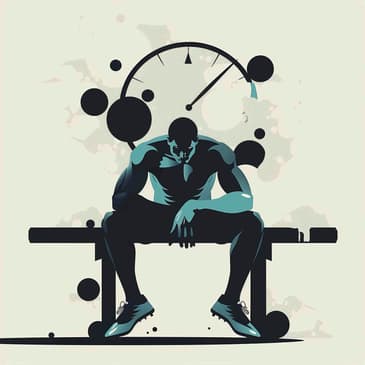
[00:02:50] as some would have you believe. Entering a true state of overtraining can take months of excessive exercise, far more than most people are doing in the gym, and the symptoms are not pleasant. The Symptoms of Overtraining. One guy I was reading about who had been diagnosed with
[00:03:08] overtraining syndrome by a team of researchers from Finland was unable to carry on playing his sport due to constant fatigue and exhaustion. He couldn't sleep properly and was getting by on only
[00:03:19] three to four hours of sleep each night. Despite the fact he was only in his mid-20s, his testosterone levels were low, his brain chemistry was out of whack, he was suffering from tinnitus or the
[00:03:31] perception of noise or ringing in the ears, and a psychiatric examination showed that he was suffering from major depression. That's overtraining. Feeling a bit tired for a day or so after a hard
[00:03:43] workout is not. Once you're in a truly overtrained state, it can take months and possibly years of rest and recovery before you get anywhere close to normal again. The Difference Between Overreaching and Overtraining. There is a form of temporary overtraining known as functional overreaching
[00:04:03] which is sometimes used to boost athletic performance. This involves ramping up the amount of training you do for a relatively short period of time where your progress stagnates or even gets worse. Then, you cut back before tipping yourself over the edge. This is supposed to
[00:04:19] generate a rebound effect where you come back stronger and fitter after a period of recovery although I think it's largely a waste of time for anyone wanting to build muscle. There's also non-functional overreaching where your performance doesn't improve because you didn't get the
[00:04:36] balance right between training and recovery and end up digging yourself into a hole that can take weeks to recover from. But most people will end up skipping a few workouts if they're feeling a bit
[00:04:46] frazzled. That's usually all they need to get things back on track before they get anywhere close to overreaching, let alone overtraining. If you feel tired or have a few crappy workouts, that doesn't automatically mean you're overtrained. Maybe your diet wasn't quite right or you've been
[00:05:03] under a lot of stress or you haven't been sleeping well, all of which can lead to your performance in the gym taking a dive. If all it takes is a few days of rest to get things back on track,
[00:05:15] you are not overtrained. Too much, not enough, or about right. What's more, you can't tell just by looking at someone's training program if what they're doing is too much, not enough, or about right. Training programs that might appear to constitute overtraining have been shown to work
[00:05:34] surprisingly well when it comes to building muscle. In one study, the amount of muscle growth generated by working the same muscle groups six times a week was not significantly different to training three times a week. In fact, while the differences between groups didn't reach statistical
[00:05:51] significance, it was subjects in the six-day group who saw the biggest gains in lean body mass. In another trial, a group of untrained beginners in their 60s and 70s trained their quads three
[00:06:03] times a week for a total of four months using the leg extension, leg press, and parallel squat. Despite racking up a total of 27 sets per week, the fast twitch muscle fibers in their quads
[00:06:16] grew by an average of 23%. In days gone by, I would have slapped the overtraining label on both programs. You can't take a group of untrained beginners in their 60s and 70s, get them to do
[00:06:27] such a high volume of training and expect them to grow. Nor can you bench press and squat six times a week and expect to see gains. It's just going to leave you overtrained and burned out.
[00:06:37] But in both cases, I would have been wrong to do so. And that's my point. You can't look at a single workout or even a week's worth of training and declare that it is or isn't overtraining.
[00:06:49] What constitutes too much for one person may be too little for someone else and about right for a third. More interesting still, resistance training programs designed specifically to generate a state of overreaching or overtraining often fail to have the desired effect. That is,
[00:07:06] despite following a training program designed to make them weaker, many of the subjects taking part in these trials ended up getting stronger. In a 1994 study, subjects using the TrueSquat machine, which is similar to a HackSquat, five days a week for three weeks, which led to eight
[00:07:23] sets of one repetition at 95% of their one repetition max, finished the study stronger than they were at the start. Said the researchers, quote, This was not expected given that the design of the training protocol was intended to produce decreases in one repetition max leg strength. End quote.
[00:07:45] In another, subjects who trained their quads seven days a week for two weeks posted a 6% increase in leg press strength, a result the authors describe as, quote-unquote, surprising. Again, the training program had been set up to make their subjects weaker,
[00:08:00] but that isn't what happened. The group that was supposed to be overtraining actually made faster gains than the control group who trained their legs twice a week using a more conventional upper-lower split routine. Two weeks of daily training with 10 sets of one repetition at 100%
[00:08:18] of one repetition max has been shown to decrease strength performance, but that's a long way from the type of thing most people are doing in the gym. Even the squat every day type of training that was popular some years back will typically involve just one maximal set,
[00:08:35] followed by several lighter sets. Final thoughts. Someone might see the amount of exercise you're doing and announce that you're overtraining because you're doing too many sets, training a muscle group too often, doing too much cardio, or using
[00:08:49] too many advanced training methods like rest-pause training or drop sets. But without knowing a lot more about you, how long it's taken you to build up to that amount of training or how well you're responding to it, they're just guessing. You just listened to the post titled,
[00:09:08] The Critical Difference Between Overtraining and Being Overtrained by Christian Finn of MuscleEvo.net and I'll be right back with my commentary. When you're hiring, it feels amazing to finally close out a job search. But what if you could get rid of the search and just match? You can
[00:09:25] with Indeed. Indeed is your matching and hiring platform with over 350 million global monthly visitors and a matching engine that helps you find quality candidates fast. Ditch the busy work, use Indeed for scheduling, screening, and messaging. 93% of employers agree Indeed delivers
[00:09:45] the highest quality matches compared to other job sites. One of the things I love about Indeed is that it filters out incompatible applicants. So when you're hiring, the process is much faster and you only have to consider applicants that are already likely to be a great fit.
[00:10:01] And listeners of this show will get a $75 sponsored job credit to get your job's more visibility at indeed.com slash health. Just go to indeed.com slash health right now and support our show by
[00:10:17] saying you heard about Indeed on this podcast. Indeed.com slash health. Terms and conditions apply. Need to hire? You need Indeed. Host the ultimate backyard barbecue with Whole Foods Market. It's the hot grill summer event through July 16th with sizzling sales on no antibiotics
[00:10:36] ever boneless beef ribeye steak and beef New York strip steak. Plus check out sales on sustainable wild caught Alaska sockeye salmon, organic strawberries, and more. In a hurry? Choose grab and go favorites like picnic salads and sushi plus plenty of cooler friendly beverages. Make it a hot
[00:10:53] grill summer at Whole Foods Market. Dr. Neil here for my commentary. As Christian said in today's article, it can be really difficult to know whether someone is truly experiencing overtraining syndrome or whether they're just experiencing fatigue for other reasons. In fact, researchers
[00:11:09] admit that it's hard to actually diagnose whether someone is truly experiencing overtraining symptoms. Authors of a meta-analysis concluded that actual overtraining is probably less common than we think. They also admit that diagnosing it is really tricky because first, we don't know when
[00:11:27] someone is actually experiencing it until after they've already started reporting symptoms. Second, there aren't any specific lab tests or anything else that will help us determine whether or not a person is experiencing overtraining syndrome. And on top of that, there really isn't a standardized
[00:11:45] definition of overtraining that we can all agree on. So the authors of this study said that we basically have very little understanding of this concept, which brings us back to today's authors' Christian's advice. If we feel tired or have a few free workouts, it may mean our diets
[00:12:02] weren't quite right or we've been under a lot of stress or we haven't been sleeping well. All of these can negatively impact our workouts. So it may not mean we're overtraining, it may just mean
[00:12:13] we need to pay a bit more attention to our other habits. Alright, that'll do it for another edition of Optimal Health Daily. Thank you so much for being here. I hope you have a great rest of your
[00:12:23] day and I'll see you back here tomorrow with another post and where your optimal life awaits!