



Discover all of the podcasts in our network, search for specific episodes, get the Optimal Living Daily workbook, and learn more at: OLDPodcast.com.
Episode 2612:
Dr. Neal answers Susan's question about light lamp therapy, confirming its effectiveness in treating depression and regulating circadian rhythms. He explains how light influences our sleep-wake cycles, the optimal use of light boxes, and emphasizes the importance of consulting a healthcare provider.
Quotes to ponder:
"Light lamp therapy is helpful for treating depression and regulating our circadian rhythms."
"Our circadian rhythms can be influenced by the environment, with light and darkness being the most powerful factors."
"If we live in an area where the sun typically shines, spending 30 minutes outdoors each morning is usually enough."
Episode references:
Light box products: https://www.mayoclinic.org/diseases-conditions/seasonal-affective-disorder/in-depth/seasonal-affective-disorder-treatment/art-20048298
Meta-analysis on light therapy: https://pubmed.ncbi.nlm.nih.gov/32622169/
Learn more about your ad choices. Visit megaphone.fm/adchoices
[00:00:00] Zeit, deine Stadt in vollen Zügen zu genießen. Heute geht's mit deinen Freunden in deine Lieblingsbar. Lass dein Auto zu Hause stehen. Ganz einfach Fahrt buchen und unterwegs die anderen einsammeln. Über die Funktion Zwischenstops. So spart ihr Zeit und Geld.
[00:00:14] Klick aufs Banner und buche deine Fahrt. Bequem durch deine Stadt. Mit der Uber App. Uber vermittelt Fahrten und ist kein Beförderer. Delicious meets nutritious in the snack that packs a real protein punch. Wonderful Pistachios. Each one-ounce serving of Wonderful Pistachios has 6 grams of protein,
[00:00:33] giving you over 10% of your daily value and making Wonderful Pistachios one of the highest protein nuts. But perhaps more than that, I love all of the flavors they have. Their sea salt and vinegar ones are my favorite when I'm craving that flavor but want to keep it healthy.
[00:00:48] But that's just the tip of the iceberg. Wonderful Pistachios come in a variety of flavors like Chili Roasted, Honey Roasted, Smoky Barbecue and Jalapeno Lime. Perfect for enjoying with family and friends or taking them with you on the go.
[00:01:03] Whether you're a pistachio purist who loves cracking open every nut or you prefer the convenience of no-shells pistachios, Wonderful Pistachios has got you covered. Grab Wonderful Pistachios and elevate your snacking game today. So fill up with a healthy snack when hunger strikes. Visit wonderfulpistachios.com to learn more.
[00:01:24] That's wonderfulpistachios.com It's another Q&A edition of Optimal Health Daily, episode 2612. And I'm Dr. Neal, your host of the show. Welcome back to another special Friday edition of Optimal Health Daily where I answer your health questions related to fitness, diet and nutrition, and more.
[00:01:44] You send in the questions and I answer them for you. Now, if you want to send in an audio question, just come by oldpodcast.com slash ask or you can call in your question by dialing 1-61-ILOVE-OHD.
[00:02:02] And I'm also taking email questions. You can send those in to health at oldpodcast.com. All right, and with that, let's hear today's question and start optimizing your life. Today's question came via email. Susan writes, Hi Dr. Neal, I love your podcast.
[00:02:25] Thank you for presenting such a wide array of health-related topics and I love that you also give your commentary. I have a question about light lamp therapy. Do light lamps that emit 10,000 lux actually help with depression and regulating your circadian rhythm?
[00:02:41] I ask because I have a chronic health condition that limits how much time I can spend outside and so I'm looking for other ways to get similar benefits. Thank you so much for taking the time to send in your question, Susan,
[00:02:53] and I'm so glad you appreciate the show and my commentary. So, do light lamps help with depression and regulating our circadian rhythms? According to a published meta-analysis on this topic, yes. All right, that'll do it for another Q&A episode of Optimal Health Daily.
[00:03:11] I kid. I'm not actually ending the episode right this instant. But I'm not joking about my answer to your question. Yes, it does seem that light lamp therapy is helpful. So let's dive in. First, I want to talk about what the phrase circadian rhythm actually refers to.
[00:03:28] Circadian rhythm is all about our sleep-wake cycles. These cycles repeat every 24 hours. Okay, so far I probably haven't mentioned anything all that new. But what we're learning is that our circadian rhythms or sleep-wake cycles can be influenced by the environment.
[00:03:46] One of the most important influences is light and darkness. Other factors are, of course, noise, our body temperature, the outside air or room temperature, and the production of certain hormones to help us fall asleep and stay asleep like melatonin. But again, of all of these factors,
[00:04:05] the cycle of light and darkness over the course of the day seems to be the most powerful for helping the body maintain its circadian rhythms. In fact, some researchers believe that the depression some of us may experience during the winter months
[00:04:21] is due to the interruption of our circadian rhythm. This is because, think about it, sunrise arrives later in the morning and sunset happens earlier in the evening, which throws off our sleep-wake cycles. But if we look at other studies,
[00:04:36] not just the ones that looked at depression during the winter months, but those that experienced depression year-round, we see that light therapy is still helpful. I should mention that most of these studies found that light therapy along with antidepressant medications tended to be the most helpful.
[00:04:54] Now, you may be thinking, well, how do we know whether the antidepressant medications weren't the reason why those with depression experienced fewer symptoms? How do we know that the light therapy actually helped? Well, the researchers designed the study so that they could make this distinction.
[00:05:11] And again, they found that those that were taking antidepressant medications and received light therapy tended to improve the most. So let's say light therapy is something we want to try. First, as always, talk to your doctor about it.
[00:05:25] This is because it's important to rule out any other health issues that may be contributing to disordered sleep and depression. Next, if they approve of using light therapy, we need to ask ourselves when during the day we tend to feel most exhausted. It's that time during the day
[00:05:43] that we want to incorporate light therapy. Next, we need to talk about the type of light. As you mentioned, Susan, the recommendation is to expose our eyes to 10,000 lux, but for about 30 minutes. Again, this should happen at the point during the day
[00:05:59] when we tend to feel most tired. Now, how do we know whether we're exposing our eyes to 10,000 lux? For context, if we went outside on a sunny day, that would be about 10,000 lux. A cloudy day would be about 2,500 lux. So spending 30 minutes outside on a sunny day,
[00:06:20] especially in the morning, could be enough to help get our circadian rhythms back on track and improve depression symptoms. Of course, we do want to be sure that when outdoors we think about wearing sunscreen. But let's say we don't live in an environment
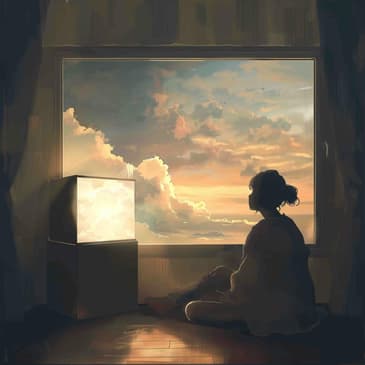
[00:06:35] where the sun comes out all that often. Or, as you said, Susan, we have a chronic condition that limits our exposure to sunlight. That's where buying a light box may be helpful. Light boxes are basically just as they sound. They are rectangular-shaped boxes with fluorescent light bulbs inside.
[00:06:55] Most health professionals recommend buying light boxes that provide 10,000 lux. Then, when it's in use, you want to sit near it and have your body positioned generally facing towards it. You don't have to face it and stare directly at it. Just point your body in its general direction.
[00:07:13] Now, what if we buy a light box that doesn't provide 10,000 lux? Maybe it provides only 2,500 lux. That means we probably need to spend more time sitting near it during the day, not just 30 minutes, but longer. Now, are there any risks to light therapy or using a light box?
[00:07:31] There are very few reported problems with using light therapy. Some clinicians may recommend that those with certain eye diseases avoid using light therapy, like those with macular degeneration. But for most, using a light box appears to be safe when used as directed. So what's the bottom line?
[00:07:50] Yes, light therapy can help with keeping our circadian rhythms in check and improve depressive symptoms. If we live in an area where the sun typically shines, spending 30 minutes outdoors each morning is usually enough. But, for those of us that aren't able to for whatever reason,
[00:08:07] buying a light box can help. Thank you again for taking the time to send in your questions, Susan. And if you want your question answered right here on the show and get a copy of our Optimal Living Daily Workbook for doing so,
[00:08:24] send one in. You can email one to health at oldpodcast.com. Or, if you want your voice on the show, just come by oldpodcast.com. You can record your question right from your computer's microphone. It's really easy and you can even play back your message
[00:08:42] and do retakes before sending it in. Or, you can do it the old-fashioned way and call in your question. The number is 1-61-ILOVEOHD. That's 1-614-568-3643. Alright, that'll do it for today. I hope you have a great start to your weekend
[00:09:04] and I'll see you back here tomorrow where your optimal life awaits!