



Discover all of the podcasts in our network, search for specific episodes, get the Optimal Living Daily workbook, and learn more at: OLDPodcast.com.
Episode 2637:
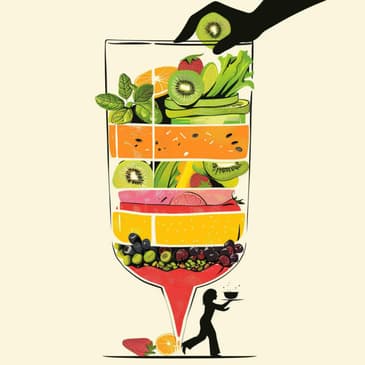
Danielle Omar of FoodConfidence.com delves into the art of crafting the perfect healthy smoothie. By combining leafy greens, fiber, healthy fats, protein, and the right liquid, you can create delicious, nutrient-packed smoothies that keep you full and energized throughout the day.
Read along with the original article(s) here: https://foodconfidence.com/2024/04/02/anatomy-of-a-healthy-smoothie/
Quotes to ponder:
"Smoothies are one of my favorite ways to pack a ton of fiber-rich leafy greens, free-radical-fighting berries, and other important nutrients into each day!"
"The best smoothies don’t just deliver a healthy dose of nutrients; they keep you full until your next meal, taste great, and don’t spike your blood sugar."
"As long as your smoothies contain greens, fiber, healthy fats, protein, and a liquid, you’ll be good to go!"
Learn more about your ad choices. Visit megaphone.fm/adchoices
[00:00:00] Delicious meets nutritious in the snack that packs a real protein punch, Wonderful Pistachios. Each one-ounce serving of Wonderful Pistachios has 6 grams of protein, giving you over 10% of your daily value and making Wonderful Pistachios one of the highest protein nuts. But perhaps more
[00:00:17] than that, I love all of the flavors they have. Their sea salt and vinegar ones are my favorite when I'm craving that flavor but want to keep it healthy. But that's just the tip of the iceberg.
[00:00:27] Wonderful Pistachios come in a variety of flavors like chili roasted, honey roasted, smoky barbecue and jalapeno lime, perfect for enjoying with family and friends or taking them with you on the go. Whether you're a pistachio purist who loves cracking open every nut or you
[00:00:44] prefer the convenience of no-shells pistachios, Wonderful Pistachios has got you covered. Grab Wonderful Pistachios and elevate your snacking game today. So fill up with a healthy snack when hunger strikes. Visit wonderfulpistachios.com to learn more. That's wonderfulpistachios.com. This is Optimal Health Daily, episode 2637.
[00:01:08] Anatomy of a Healthy Smoothie by Danielle Omar of foodconfidence.com. And I'm Dr. Neal, your very own personal narrator. Hey there, happy Saturday and welcome back to Optimal Health Daily or OHD, where I act as your narrator of popular health and fitness blogs and always with a bit
[00:01:26] of my commentary at the end. And don't forget we have a bunch of shows covering different topics. Just search for Optimal Living Daily in any podcast app to find them. But with that, let's get right to it and start optimizing your life.
[00:01:44] Anatomy of a Healthy Smoothie by Danielle Omar of foodconfidence.com. I love smoothies. I wrote the cookbook Super Green Smoothies and I've got tons of delicious smoothie recipes on my blog and Instagram. Smoothies are one of my favorite ways to pack
[00:02:00] a ton of fiber-rich leafy greens, free radical-fighting berries and other important nutrients into each day. But along with the health benefits of consuming smoothies, one of the best things about the smoothie making process is that it doesn't have to be overly
[00:02:15] complicated or time-consuming. That said, there is a bit of a science to blending up the perfect healthy smoothie. The best smoothies don't just deliver a healthy dose of nutrients, they keep you full until your next meal, taste great and don't spike your blood sugar. The right combination of
[00:02:33] ingredients also ensures that these nutrients will be absorbed and utilized by your body. Let's take a closer look at the anatomy of a healthy smoothie so you too can blend up a deliciously balanced smoothie every single time. 1. Greens
[00:02:50] Leafy greens aren't just for green smoothies, they're a fantastic addition to nearly any type of smoothie you're making. Fruit smoothies, chocolate smoothies, peanut butter smoothies, protein smoothies, smoothie bowls, you name it. A handful or two of leafy greens and other green
[00:03:04] fruits and veggies like celery, cucumber, cabbage, honeydew and broccoli add a healthy dose of vitamins, minerals, fiber and water to smoothies and you probably won't be able to taste them in there. Unless of course that's the taste you're going for. To give you an idea of how nutrient
[00:03:22] packed greens really are, raw arugula, one of my favorite smoothie ingredients contains vitamins A, C, K and folate as well as potassium, calcium and magnesium. A cup of raw spinach is even more
[00:03:36] nutritious containing tons of vitamins A, C, K and folate as well as potassium, calcium and magnesium. Plant diversity is super important so go ahead and experiment with different types of greens and see which ones you like best in your smoothies. Some other options include romaine lettuce,
[00:03:55] swiss chard, watercress, mint, cilantro, collard greens, avocado which also counts as a healthy fat, green apples, kiwi fruit, honeydew, pears and limes. 2. Fiber. Fruits and veggies contain dietary fiber and disease-fighting phytonutrients like anthocyanidins, lycopene, beta-carotene, curcuminoids, lutein, zeaxanthin, chlorophyll, isoflavone, resveratrol and others. This makes
[00:04:25] them the perfect addition to any healthy smoothie recipe. Experiment with a combination of fiber-rich veggies like broccoli, leafy greens and carrots as well as fruits such as berries, apples and bananas. Fruits also add a bit of natural sweetness to smoothies especially frozen bananas. Raw nuts
[00:04:42] and seeds also contain fiber and many double as a healthy fat as well. Flax seeds, chia seeds, oats, almonds and pistachios are all great smoothie additions. 3. Fats. The best smoothies also contain healthy fats as unsaturated fats maximize the absorption of fat-soluble vitamins like
[00:05:03] vitamins A, D, E and K. What's more, unsaturated fats support brain health, raise HDL cholesterol levels, the good type of cholesterol and they help to keep you full until your next meal rolls around. Examples of healthy fats include avocado, flax seed, chia seed, raw nuts like walnuts, almonds,
[00:05:25] cashews, hazelnuts and pecans, seeds like flax, chia, sunflower, hemp, pumpkin and sesame, peanut and almond butters and plant oils like olive oil. 4. Protein. Like fiber and healthy fats, adding protein to your smoothies increases satiation so you won't feel the need to snack
[00:05:46] between meals. Protein also contains essential amino acids that support immune function and help your body to break down and digest food. Your body relies on 20 different types of amino acids in order to function optimally each day and 9 of them, the essential amino acids, must be obtained
[00:06:04] from the plant and animal foods you eat. Thankfully, there are lots of ways to incorporate more protein into your smoothies, even plant-based smoothies without animal products. Try adding any of the following, Greek yogurt, dairy-based or plant-based, unsweetened soy milk
[00:06:20] or soy-based yogurt, organic silken tofu, cottage cheese, I personally like 2%, hemp hearts and chia seeds, raw nuts, nut butters, cooked beans and cooked quinoa. 5. Liquid. Even high-powered blenders like the Vitamix need a cup or two of liquid in order to thoroughly blend each of the ingredients
[00:06:43] together and give your concoction that drinkable consistency that makes a smoothie a smoothie. A few great options include unsweetened coconut water or plain filtered water, unsweetened nut and seed milks like almond, coconut, cashew, oat, hemp, rice, flax or pea,
[00:07:03] unsweetened soy milk, kefir, Greek yogurt, dairy-based yogurt, goat milk yogurt or dairy-free yogurt and fresh juices if you want to switch things up. As I've said, even the healthiest smoothies don't
[00:07:16] have to take up a lot of your time or use a ton of costly hard-to-find ingredients. As long as your smoothies contain greens, fiber, healthy fats, protein and a liquid, you'll be good to go.
[00:07:32] You just listened to the post titled, Anatomy of a Healthy Smoothie by Danielle Omar of foodconfidence.com and I'll be right back with my commentary. Dr. Neil here for my commentary. Today's author Danielle mentioned adding different types of liquids to smoothies.
[00:07:48] What I particularly like about Danielle's post is that she incorporated lots of different ingredients, not just juices when it comes to making smoothies. Because often in my experience, when I hear people tell me they made a smoothie, usually it just includes fruit juice and some ice.
[00:08:07] That's not what we're after. Now, some of the liquid ingredients that Danielle recommended were different types of milks and yogurts. I often get asked, which non-dairy milk alternative is the best? Of course, the word best is subjective and really depends on what we're
[00:08:23] looking for. But in my experience, when I get asked which non-dairy milk alternative is best, people usually mean which one provides the most protein, the least amount of sugar and the fewest calories. And based on these criteria, at this point, unsweetened soy milk tends to be the
[00:08:42] best. That's not to say the other milk alternatives are bad, but it's just something to keep in mind if we want the most bang for our buck. All right, that'll do it for today. Thank you so much for
[00:08:53] being here. Thank you for sharing this show with someone. I hope you have a great weekend and I'll see you back here tomorrow as usual where your optimal life awaits.