



Discover all of the podcasts in our network, search for specific episodes, get the Optimal Living Daily workbook, and learn more at: OLDPodcast.com.
Episode 2716:
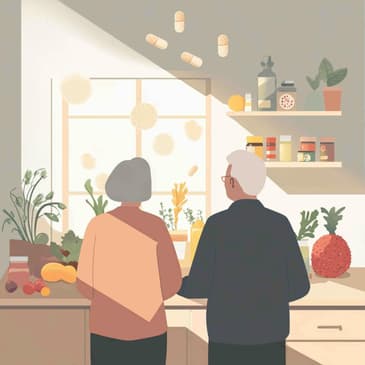
Aging comes with unique nutritional challenges, especially for plant-based eaters like Debra and her husband. As nutrient absorption declines, it becomes essential to prioritize protein sources and monitor levels of key nutrients such as calcium, vitamin D, and B12. Supplementing may be necessary, but always consult a doctor and choose high-quality, certified supplements.
Quotes to ponder:
"Calcium and vitamin D work together to protect the health of our bones. But beyond that, vitamin D may help the immune system work at its best."
"Strict vegetarians and vegans are more likely to experience a vitamin B12 deficiency. This is because animal products are the best sources of vitamin B12."
"Supplements are not as well-regulated as our food and water supply. We want to make sure that what we’re buying meets purity and quality standards."
Episode references:
National Institutes of Health: https://www.nih.gov
Consumer Lab: https://www.consumerlab.com
Learn more about your ad choices. Visit megaphone.fm/adchoices
[00:00:00] [SPEAKER_00]: It's another Q&A edition of Optimal Health Daily, and I'm Dr. Neal Malik.
[00:00:05] [SPEAKER_00]: Hey there, happy Friday and welcome to another special edition of Optimal Health Daily,
[00:00:09] [SPEAKER_00]: where I answer your health questions related to fitness, diet and nutrition, and more.
[00:00:14] [SPEAKER_00]: You send in the questions, and I answer them for you.
[00:00:17] [SPEAKER_00]: And if you do send in a question, we'll give you a copy of our Optimal Living Daily Workbook for free.
[00:00:24] [SPEAKER_00]: I'll tell you how to send in a question right after the Q&A, so for now,
[00:00:28] [SPEAKER_00]: let's hear today's question as we optimize your life.
[00:00:35] [SPEAKER_00]: Today's question came via email, Deborah writes,
[00:00:39] [SPEAKER_00]: My husband and I both turned 70 this year, and would like to know if you recommend adding
[00:00:44] [SPEAKER_00]: Vitamin or Mineral Supplements to our diet and if so, which ones?
[00:00:48] [SPEAKER_00]: We are whole food, plant-based eaters, and do not enjoy soy.
[00:00:53] [SPEAKER_00]: As we age, what do you recommend for us to try and maintain our health?
[00:00:58] [SPEAKER_00]: Thank you for taking the time to send in your question, Deborah.
[00:01:00] [SPEAKER_00]: As we get older, we find that we can't digest and absorb nutrients as well as we did when we were younger.
[00:01:07] [SPEAKER_00]: Plus, we're more likely to have issues with our teeth and taste buds.
[00:01:11] [SPEAKER_00]: We're also more likely to be on medications, which can also change how food tastes or affect our appetites.
[00:01:17] [SPEAKER_00]: We tend to be less sensitive to thirst signals, so we may be dehydrated without knowing it.
[00:01:23] [SPEAKER_00]: All of these changes influence which foods we prefer,
[00:01:26] [SPEAKER_00]: and make our food choices much more limited.
[00:01:29] [SPEAKER_00]: We're also more at risk for developing chronic conditions like osteoporosis.
[00:01:34] [SPEAKER_00]: So, the general nutrition recommendations for those aged 50 or older are to maintain body weight
[00:01:39] [SPEAKER_00]: if you're at a healthy body weight and prioritize nutrient-dense foods.
[00:01:45] [SPEAKER_00]: So basically foods that have fewer calories but contain lots of nutrients.
[00:01:49] [SPEAKER_00]: So we're talking foods like fruits, vegetables, whole grains, lean meats, beans, nuts, seeds,
[00:01:57] [SPEAKER_00]: and low-fat dairy products. Because you and your husband follow a whole food plant-based diet,
[00:02:03] [SPEAKER_00]: it sounds like you both already have prioritized fruits, vegetables, whole grains,
[00:02:09] [SPEAKER_00]: beans, nuts and seeds, which is great. So since you may not consume animal products,
[00:02:14] [SPEAKER_00]: there are some nutrients that come to mind when it comes to possible deficiencies.
[00:02:18] [SPEAKER_00]: Since lean meats, for example, are good sources of protein and dairy and soy may contain
[00:02:24] [SPEAKER_00]: decent amounts of calcium and some vitamin D by not consuming these foods regularly,
[00:02:30] [SPEAKER_00]: it may lead to some deficiencies. So let's start with protein. To make sure you're
[00:02:35] [SPEAKER_00]: consuming enough of it, here are some things we can do. Eat those beans and lentils by enjoying
[00:02:41] [SPEAKER_00]: vegetarian chili, lentils soups, and adding beans to salads. You could top crackers with peanut butter
[00:02:48] [SPEAKER_00]: or almond butter. Now beyond protein, when we think about the micronutrients like vitamins and minerals,
[00:02:55] [SPEAKER_00]: there may be a need to consider taking a vitamin or mineral supplement. According to the
[00:02:59] [SPEAKER_00]: National Institutes of Health, there are some nutrients that you and your husband may want to
[00:03:04] [SPEAKER_00]: discuss with your doctor. First up, calcium. Women particularly are at an increased risk for developing
[00:03:12] [SPEAKER_00]: osteoporosis after the age of 45. Osteoporosis is that nasty disease that leads to holes forming in our
[00:03:19] [SPEAKER_00]: bones. The word osteo or osteon refers to bone and porosis or porous refers to something having
[00:03:29] [SPEAKER_00]: small spaces or holes in it. Now I know there's been some controversy lately about the effectiveness
[00:03:34] [SPEAKER_00]: of calcium supplementation and osteoporosis prevention, but most studies do find some benefit,
[00:03:41] [SPEAKER_00]: especially if someone isn't getting enough calcium in their diet. I would consider asking
[00:03:46] [SPEAKER_00]: your doctor about whether supplementing with 300 to 500 milligrams of calcium each day is a good idea.
[00:03:53] [SPEAKER_00]: Next, Vitamin D. Calcium and Vitamin D work together to protect the health of our bones,
[00:04:00] [SPEAKER_00]: but beyond that, Vitamin D may help the immune system work at its best, and our immune system
[00:04:06] [SPEAKER_00]: is our defense against everything from the common cold to even cancer. The best way to help
[00:04:12] [SPEAKER_00]: the body make enough of its own Vitamin D is to be out in the sun. About 15 minutes of sun exposure
[00:04:19] [SPEAKER_00]: to the hands, arms and face at least twice a week without sunscreen is usually enough to do the trick.
[00:04:27] [SPEAKER_00]: The problem here is that we all don't live in climates that get a lot of sun. Plus, our dermatologists
[00:04:34] [SPEAKER_00]: or medical doctors that specialize in treating skin conditions may recommend we don't spend too
[00:04:40] [SPEAKER_00]: much time in the sun because it may raise our risk of developing skin cancer. Foods aren't great
[00:04:46] [SPEAKER_00]: sources of Vitamin D, unless they've been enriched or fortified with it. So you can ask your doctor
[00:04:52] [SPEAKER_00]: for a blood test that looks at your Vitamin D levels. If your levels are low, it may be worthwhile
[00:04:58] [SPEAKER_00]: to consider a Vitamin D supplement, too. If your test comes back normal, there may be no need
[00:05:04] [SPEAKER_00]: to supplement with Vitamin D. If you do need to supplement 20 micrograms per day or about 800
[00:05:11] [SPEAKER_00]: international units or IU of Vitamin D3 specifically is recommended for those over the age of 70.
[00:05:20] [SPEAKER_00]: All right next up, Vitamin B12. Strict vegetarians and vegans are more likely to experience
[00:05:26] [SPEAKER_00]: a Vitamin B12 deficiency. This is because animal products are the best sources of Vitamin B12.
[00:05:33] [SPEAKER_00]: Plus, as we age, our bodies are not as good at absorbing it. Vitamin B12 is important because it
[00:05:40] [SPEAKER_00]: keeps our red blood cells and nerve cells working at their best. A blood test can show whether
[00:05:45] [SPEAKER_00]: someone has a B12 deficiency, and there are foods that have added Vitamin B12 like fortified cereals,
[00:05:52] [SPEAKER_00]: but when it comes to supplementing with B12, the recommended starting dose is 2.4 micrograms per day.
[00:06:00] [SPEAKER_00]: Okay so at this point we may be asking ourselves, would it be easier at this point to just take
[00:06:06] [SPEAKER_00]: a multivitamin supplement to cover all of these requirements? This is definitely something to
[00:06:11] [SPEAKER_00]: consider and speak to your doctor about. But be sure to look for a supplement that is specifically
[00:06:16] [SPEAKER_00]: designed for older adults. Multivitamin formulated for older adults will come closer to meeting the
[00:06:23] [SPEAKER_00]: recommendations I just described. Now how do we find a quality supplement? Unfortunately in the
[00:06:29] [SPEAKER_00]: U.S., we do have incidents of poor quality supplements being sold in the marketplace. Supplements
[00:06:35] [SPEAKER_00]: are not as well regulated as our food and water supply. As a result, it's been estimated that about
[00:06:41] [SPEAKER_00]: 30% of supplement sold in stores and online contain illegal or banned substances. There have
[00:06:47] [SPEAKER_00]: been documented instances of supplements containing ash and newspaper shavings. There have been
[00:06:52] [SPEAKER_00]: other situations where the supplement nutrient labels claim that an ingredient is present,
[00:06:59] [SPEAKER_00]: but when its actual composition is tested, it doesn't actually contain that ingredient at all,
[00:07:05] [SPEAKER_00]: or maybe the wrong quantity of that ingredient is listed. So we want to make sure that what
[00:07:10] [SPEAKER_00]: buying meets purity and quality standards, here are a couple of ways to check for this.
[00:07:16] [SPEAKER_00]: One, look at the supplement packaging. See if you can find one or both of the following abbreviations
[00:07:22] [SPEAKER_00]: on it, either USP or NSF. Both of these are independent organizations that check for the quality and
[00:07:31] [SPEAKER_00]: purity of supplements. The USP logo is green and gold. The NSF logo is blue and white.
[00:07:39] [SPEAKER_00]: And your other option, log on to consumer lab. That's where I get most of my supplement information
[00:07:45] [SPEAKER_00]: and consumer lab.com does charge a small feed to search their database. So before buying any supplement,
[00:07:52] [SPEAKER_00]: use at least one of these resources to make sure the supplement you're using is relatively free of
[00:07:58] [SPEAKER_00]: and of course, always check with your doctor to make sure that supplementing is right for you
[00:08:03] [SPEAKER_00]: and won't interact with any medications you might be taking. Taking charge of my health has been
[00:08:12] [SPEAKER_00]: a priority for me, but navigating today's one size fits all healthcare system can feel overwhelming.
[00:08:18] [SPEAKER_00]: That's why I'm so excited about 23 and me plus total health. It's not just a health membership.
[00:08:24] [SPEAKER_00]: It's a way to get personalized insights that matter to me. For me, reaching the next level of health
[00:08:29] [SPEAKER_00]: means understanding my genetic blueprint and what it says about my future risks,
[00:08:34] [SPEAKER_00]: it's about being proactive, not reactive. With 23 and me plus total health, I've begun
[00:08:40] [SPEAKER_00]: leveraging advanced genetic screening and comprehensive blood tests. Getting started was a breeze.
[00:08:46] [SPEAKER_00]: I received a sleek kit in the mail which made diving into my health journey both easy and exciting.
[00:08:52] [SPEAKER_00]: What intrigues me the most is the biological age analysis. It's fascinating to see how lifestyle
[00:08:57] [SPEAKER_00]: changes can influence how old I really am inside, plus having access to clinicians with genetics expertise
[00:09:04] [SPEAKER_00]: to guide me through a personalized health plan feels incredibly empowering. Advocate for your
[00:09:10] [SPEAKER_00]: health today. Go to 23 and me.com slash OHD to receive 10% off. That's 10% off at 23 and me.com slash OHD.
[00:09:23] [SPEAKER_00]: Thank you again for taking the time to send in your question Deborah. Now if you want your
[00:09:28] [SPEAKER_00]: question answered right here on the show and get a copy of our optimal living daily workbook,
[00:09:33] [SPEAKER_00]: you can email your question to health at OHDpodcast.com or if you want your voice played and
[00:09:39] [SPEAKER_00]: heard in an episode come by OHDpodcast.com slash ask. Right on that page, you can record
[00:09:47] [SPEAKER_00]: straight from your computer's microphone. It's really easy and you can even play back your message
[00:09:52] [SPEAKER_00]: and do retakes before sending it in or you can do it the old fashioned way and call in your
[00:09:57] [SPEAKER_00]: question. The number is 1, 61 I love OHD. That's 1, 614, 568, 3, 643. Thank you so much for doing that
[00:10:09] [SPEAKER_00]: answering your questions is my favorite part of the show. All right that'll do it for another Q&A
[00:10:14] [SPEAKER_00]: edition of Optimal Health Daily. Thank you so much for listening every day and all the way through.
[00:10:19] [SPEAKER_00]: I hope you have a great start to your weekend and I'll see you back here tomorrow where your
[00:10:23] [SPEAKER_00]: optimal life awaits.