



Discover all of the podcasts in our network, search for specific episodes, get the Optimal Living Daily workbook, and learn more at: OLDPodcast.com.
Episode 2725:
Lea Genders emphasizes the importance of finding a balance in your exercise routine. While it's tempting to believe that more effort leads to better results, overtraining can actually hinder progress and lead to injury. By listening to your body and allowing for adequate recovery, you can achieve your fitness goals more effectively and sustainably.
Read along with the original article(s) here: https://www.leagendersfitness.com/news/why-more-is-not-always-better-and-how-to-find-balance-with-exercise
Quotes to ponder:
"More is not always better when it comes to exercise."
"If you ignore the initial signs of overtraining, it could lead to injury and you won't be able to train at all."
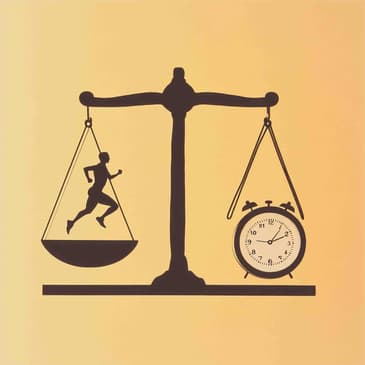
"The key is to find the balance between not enough exercise to make an impact and too much that causes detriment."
Episode references:
The Four Hour Body: https://www.amazon.com/Four-Hour-Body-Uncommon-Incredible-Superhuman/dp/030746363X
Learn more about your ad choices. Visit megaphone.fm/adchoices
[00:00:00] [SPEAKER_01]: Automolimune is your partner for the immune system.
[00:00:03] [SPEAKER_01]: And to work with your immune system,
[00:00:05] [SPEAKER_01]: it is important to supply enough nutrients with micro-needs.
[00:00:09] [SPEAKER_01]: Automolimune is a food supplement for the targeted support of the immune system.
[00:00:14] [SPEAKER_01]: With important nutrients such as vitamin C, D and zinc
[00:00:17] [SPEAKER_01]: as a contribution to a normal function of the immune system.
[00:00:20] [SPEAKER_01]: Now, look online for Automolimune,
[00:00:22] [SPEAKER_01]: get informed and secure your free product test.
[00:00:30] [SPEAKER_00]: And now, let's get on stage for a good night's sleep.
[00:00:31] [SPEAKER_00]: That's the idea behind our new podcast, Good Sleep.
[00:00:35] [SPEAKER_00]: Greg, our host from Optimal Relationships Daily,
[00:00:38] [SPEAKER_00]: is here to help ease you into a peaceful night's rest
[00:00:40] [SPEAKER_00]: with some positive affirmations.
[00:00:43] [SPEAKER_00]: And these affirmations aren't just comforting,
[00:00:45] [SPEAKER_00]: they can help ease anxiety and nurture positive thoughts,
[00:00:49] [SPEAKER_00]: setting you up for true good sleep.
[00:00:52] [SPEAKER_00]: So, press play on Good Sleep tonight
[00:00:54] [SPEAKER_00]: because a good tomorrow starts with a good night's sleep.
[00:00:57] [SPEAKER_00]: Just search for Good Sleep in your podcast app
[00:01:01] [SPEAKER_00]: and be sure to pick the one from Optimal Living Daily.
[00:01:05] [SPEAKER_00]: This is Optimal Health Daily.
[00:01:07] [SPEAKER_00]: Why more is not always better
[00:01:09] [SPEAKER_00]: and how to find balance with exercise
[00:01:11] [SPEAKER_00]: by Leah Genders of leahgendersfitness.com.
[00:01:15] [SPEAKER_00]: And I'm Dr. Neal, your very own personal narrator.
[00:01:18] [SPEAKER_00]: Hey there, happy Saturday
[00:01:19] [SPEAKER_00]: and welcome back to another weekend edition
[00:01:21] [SPEAKER_00]: of Optimal Health Daily.
[00:01:23] [SPEAKER_00]: This is where I read to you
[00:01:24] [SPEAKER_00]: from some of the best health and fitness blogs on the web
[00:01:27] [SPEAKER_00]: and always with a bit of my commentary at the end.
[00:01:30] [SPEAKER_00]: And with that, let's get right to the post
[00:01:32] [SPEAKER_00]: as we optimize your life.
[00:01:38] [SPEAKER_00]: Why more is not always better
[00:01:40] [SPEAKER_00]: and how to find balance with exercise
[00:01:42] [SPEAKER_00]: by Leah Genders of leahgendersfitness.com.
[00:01:47] [SPEAKER_00]: More is not always better.
[00:01:49] [SPEAKER_00]: Look at the preteen who's experimenting with makeup,
[00:01:52] [SPEAKER_00]: your uncle with a penchant for beer drinking
[00:01:54] [SPEAKER_00]: or the person on your block who has 17 cats.
[00:01:58] [SPEAKER_00]: All of these in small amounts can be good
[00:02:00] [SPEAKER_00]: but too much of a good thing is still too much.
[00:02:04] [SPEAKER_00]: Sometimes people take health and fitness too far.
[00:02:08] [SPEAKER_00]: If the American Heart Association says
[00:02:10] [SPEAKER_00]: 150 minutes of cardio per week is good for my heart,
[00:02:14] [SPEAKER_00]: then 500 minutes must be better.
[00:02:17] [SPEAKER_00]: If eating protein is healthy,
[00:02:19] [SPEAKER_00]: I must eat three times my body weight
[00:02:21] [SPEAKER_00]: in grams of protein.
[00:02:23] [SPEAKER_00]: If working out five days a week is good,
[00:02:25] [SPEAKER_00]: then seven days a week must be better.
[00:02:28] [SPEAKER_00]: If I'm not getting the results I want,
[00:02:30] [SPEAKER_00]: I should push harder and do more.
[00:02:33] [SPEAKER_00]: Not so fast.
[00:02:34] [SPEAKER_00]: Just like with makeup, alcohol and cats,
[00:02:38] [SPEAKER_00]: more is not always better when it comes to exercise.
[00:02:41] [SPEAKER_00]: Tim Ferriss talks about
[00:02:42] [SPEAKER_00]: the minimum effective dose theory in his book
[00:02:46] [SPEAKER_00]: The Four Hour Body, which I admit I have not read.
[00:02:49] [SPEAKER_00]: I only have read about the theory.
[00:02:51] [SPEAKER_00]: I like the concept
[00:02:53] [SPEAKER_00]: and I'll expand on it in my own way,
[00:02:55] [SPEAKER_00]: which may be different than he originally intended.
[00:02:58] [SPEAKER_00]: What is the minimum you need to do
[00:03:00] [SPEAKER_00]: to achieve the results you desire?
[00:03:02] [SPEAKER_00]: Keeping in mind that more is not always better,
[00:03:05] [SPEAKER_00]: is it possible you are doing more than needed
[00:03:07] [SPEAKER_00]: and are hindering your results?
[00:03:10] [SPEAKER_00]: Of course, the key to the theory is effective.
[00:03:13] [SPEAKER_00]: It's not about doing the minimum all the time,
[00:03:16] [SPEAKER_00]: even though I do set bare minimum goals for myself.
[00:03:20] [SPEAKER_00]: I interpret the minimum effective dose theory
[00:03:22] [SPEAKER_00]: as doing the minimum that is effective
[00:03:25] [SPEAKER_00]: and not more to the point of detriment.
[00:03:28] [SPEAKER_00]: Depending on your goals,
[00:03:30] [SPEAKER_00]: the minimum effective dose may still be a lot of hard work.
[00:03:33] [SPEAKER_00]: If you're training to run a marathon,
[00:03:36] [SPEAKER_00]: your minimum effective dose is a lot of miles every week.
[00:03:40] [SPEAKER_00]: It depends on your goals and your fitness abilities.
[00:03:43] [SPEAKER_00]: If you exercise too intensely or too frequently
[00:03:46] [SPEAKER_00]: or some combination of the two for your fitness abilities,
[00:03:49] [SPEAKER_00]: it can inhibit you from reaching your goals.
[00:03:53] [SPEAKER_00]: When the negatives start to outweigh the positives,
[00:03:55] [SPEAKER_00]: you've taken it too far.
[00:03:58] [SPEAKER_00]: If you ignore the initial signs of overtraining,
[00:04:00] [SPEAKER_00]: it could lead to injury
[00:04:01] [SPEAKER_00]: and you won't be able to train at all.
[00:04:04] [SPEAKER_00]: Signs of overtraining.
[00:04:06] [SPEAKER_00]: You may need to rest if
[00:04:08] [SPEAKER_00]: you feel aches, pains, or muscle soreness
[00:04:12] [SPEAKER_00]: that lingers longer than usual.
[00:04:14] [SPEAKER_00]: This is your body telling you it's time to rest.
[00:04:16] [SPEAKER_00]: If your resting heart rate is elevated beyond normal
[00:04:20] [SPEAKER_00]: for a few days, it's time to rest.
[00:04:23] [SPEAKER_00]: If you notice a sustained decrease in performance,
[00:04:26] [SPEAKER_00]: then it's time to rest.
[00:04:27] [SPEAKER_00]: If you have heavy legs while running,
[00:04:30] [SPEAKER_00]: it's time to rest.
[00:04:32] [SPEAKER_00]: If you can't sleep despite feeling exhausted,
[00:04:35] [SPEAKER_00]: then it's time to rest.
[00:04:37] [SPEAKER_00]: If you're reaching for caffeine to give you the energy
[00:04:39] [SPEAKER_00]: to get through the day,
[00:04:41] [SPEAKER_00]: it might be time to rest.
[00:04:43] [SPEAKER_00]: If you're getting sick more often,
[00:04:44] [SPEAKER_00]: it's a clear sign of a weakened immune system
[00:04:47] [SPEAKER_00]: and it's definitely time to rest.
[00:04:50] [SPEAKER_00]: Recovery Protocol.
[00:04:52] [SPEAKER_00]: Exercise causes stress on your body.
[00:04:55] [SPEAKER_00]: It's good to stress your body with exercise
[00:04:57] [SPEAKER_00]: because that's how you send the signal to grow stronger,
[00:05:00] [SPEAKER_00]: get faster, and fitter.
[00:05:03] [SPEAKER_00]: However, the adaptation happens
[00:05:05] [SPEAKER_00]: during the rest after you exercise,
[00:05:07] [SPEAKER_00]: not during the exercise session itself.
[00:05:10] [SPEAKER_00]: That means if you don't allow the proper time for recovery,
[00:05:14] [SPEAKER_00]: you won't see the full benefits of your hard work
[00:05:16] [SPEAKER_00]: and you may risk injury, overtraining, or burnout.
[00:05:20] [SPEAKER_00]: The more intense the exercise and the older you get,
[00:05:24] [SPEAKER_00]: the more time your body needs to recover unfortunately.
[00:05:28] [SPEAKER_00]: If you're stressed at work or at home
[00:05:30] [SPEAKER_00]: or if you haven't been sleeping well,
[00:05:32] [SPEAKER_00]: then you may need even more time to recover.
[00:05:35] [SPEAKER_00]: It's all connected.
[00:05:37] [SPEAKER_00]: Your recovery protocol should be dynamic,
[00:05:39] [SPEAKER_00]: which means it changes day by day, month by month,
[00:05:42] [SPEAKER_00]: and year by year.
[00:05:44] [SPEAKER_00]: One week you may need an extra day or two of rest,
[00:05:47] [SPEAKER_00]: then the next you may feel great to go at full throttle.
[00:05:51] [SPEAKER_00]: When you're 40, you definitely need more rest than you did
[00:05:54] [SPEAKER_00]: when you were 20 unfortunately.
[00:05:56] [SPEAKER_00]: So how do you know how much recovery time you need?
[00:05:59] [SPEAKER_00]: Your body will tell you.
[00:06:01] [SPEAKER_00]: You just have to learn to listen to what it is telling you
[00:06:04] [SPEAKER_00]: and honor that communication.
[00:06:06] [SPEAKER_00]: Most athletes, yes I mean you,
[00:06:08] [SPEAKER_00]: need to take at least one to two full rest days a week.
[00:06:13] [SPEAKER_00]: Active recovery exercises like walking, foam rolling
[00:06:17] [SPEAKER_00]: and stretching are perfect ways to keep moving
[00:06:20] [SPEAKER_00]: in a gentle way on rest days.
[00:06:22] [SPEAKER_00]: Are you getting seven to eight hours of quality sleep per night?
[00:06:26] [SPEAKER_00]: Sleep plays an important role in stress levels,
[00:06:28] [SPEAKER_00]: recovery, and regulation of hormones.
[00:06:31] [SPEAKER_00]: Most of our body's recovery processes happen
[00:06:34] [SPEAKER_00]: while we are sleeping.
[00:06:35] [SPEAKER_00]: If you're not currently getting at least seven hours of sleep,
[00:06:39] [SPEAKER_00]: it's the first step I would take to optimize recovery.
[00:06:42] [SPEAKER_00]: Less is more when it comes to high intensity exercise.
[00:06:46] [SPEAKER_00]: No one likes to hear this,
[00:06:48] [SPEAKER_00]: but most athletes will thrive on just one or two
[00:06:51] [SPEAKER_00]: high intensity exercise sessions a week.
[00:06:54] [SPEAKER_00]: A highly trained athlete with an optimized recovery protocol
[00:06:57] [SPEAKER_00]: may be able to handle three.
[00:07:00] [SPEAKER_00]: Remember the minimum effective dose theory?
[00:07:02] [SPEAKER_00]: You'll get better results with fewer high intensity sessions
[00:07:05] [SPEAKER_00]: that include proper recovery than you will with
[00:07:08] [SPEAKER_00]: more high intensity sessions that you are not properly recovering from.
[00:07:13] [SPEAKER_00]: Strive for balance, not too much, not too little.
[00:07:17] [SPEAKER_00]: The key is to find the balance between
[00:07:19] [SPEAKER_00]: not enough exercise to make an impact
[00:07:21] [SPEAKER_00]: and too much that causes detriment.
[00:07:24] [SPEAKER_00]: Our goal achievement depends on us to be able to find that balance.
[00:07:29] [SPEAKER_00]: If you don't work hard enough,
[00:07:30] [SPEAKER_00]: you won't see results, but if you push yourself too hard,
[00:07:34] [SPEAKER_00]: you may sabotage your results.
[00:07:36] [SPEAKER_00]: An exercise program should be a mix of high intensity exercises,
[00:07:40] [SPEAKER_00]: low intensity exercises, stretching, cardio,
[00:07:45] [SPEAKER_00]: strength training, mobility work, and recovery days.
[00:07:48] [SPEAKER_00]: Athletes that put all of their focus on one component of fitness
[00:07:52] [SPEAKER_00]: and ignore the others will end up unbalanced
[00:07:55] [SPEAKER_00]: and that can be unhealthy.
[00:07:58] [SPEAKER_00]: Fitness should ultimately be about health.
[00:08:01] [SPEAKER_00]: Sure, you may want to achieve lofty performance goals
[00:08:03] [SPEAKER_00]: and look good in a swimsuit.
[00:08:05] [SPEAKER_00]: I was going to say, look good naked,
[00:08:08] [SPEAKER_00]: but this is rated G after all.
[00:08:11] [SPEAKER_00]: However, if you keep health as your first priority
[00:08:13] [SPEAKER_00]: and let the defined abs and sculpted arms
[00:08:16] [SPEAKER_00]: be a welcomed side effect,
[00:08:18] [SPEAKER_00]: you'll be a lot more successful
[00:08:19] [SPEAKER_00]: in achieving optimal health and longevity.
[00:08:22] [SPEAKER_00]: So take an extra rest day if you need it.
[00:08:24] [SPEAKER_00]: Listen to your body. Work hard. Sleep. Eat for health.
[00:08:30] [SPEAKER_00]: You got this.
[00:08:35] [SPEAKER_00]: You just listened to the post titled
[00:08:37] [SPEAKER_00]: Why More Is Not Always Better
[00:08:39] [SPEAKER_00]: and How to Find Balance with Exercise
[00:08:41] [SPEAKER_00]: by Leah Genders of leagendersfitness.com
[00:08:44] [SPEAKER_00]: and I'll be right back with my commentary.
[00:08:47] [SPEAKER_00]: Dr. Neal here for my commentary.
[00:08:50] [SPEAKER_00]: In today's article, Leah talked about
[00:08:52] [SPEAKER_00]: how important those rest and recovery days are for us
[00:08:55] [SPEAKER_00]: and when our muscles are feeling sore,
[00:08:57] [SPEAKER_00]: it may feel really good to enjoy a day of relaxation
[00:09:00] [SPEAKER_00]: on the couch, binging our favorite shows.
[00:09:03] [SPEAKER_00]: But when our muscles are feeling sore from an intense workout
[00:09:06] [SPEAKER_00]: the day before, an active recovery day
[00:09:08] [SPEAKER_00]: may actually be the best thing.
[00:09:11] [SPEAKER_00]: Leah talked about examples of active recovery
[00:09:14] [SPEAKER_00]: like walking, foam rolling and stretching.
[00:09:17] [SPEAKER_00]: So notice these are light intensity movements
[00:09:20] [SPEAKER_00]: to incorporate on rest days.
[00:09:22] [SPEAKER_00]: Now I know it seems like moving is the last thing
[00:09:25] [SPEAKER_00]: the body wants when our muscles are feeling sore
[00:09:28] [SPEAKER_00]: after an intense workout.
[00:09:29] [SPEAKER_00]: But it's actually one of the best things to do.
[00:09:32] [SPEAKER_00]: This is because gently moving those sore muscles
[00:09:36] [SPEAKER_00]: will help them recover faster.
[00:09:38] [SPEAKER_00]: By gently moving those sore muscles,
[00:09:40] [SPEAKER_00]: we force the body to send more nutrient rich blood
[00:09:44] [SPEAKER_00]: to those muscles and that nutrient rich blood supply
[00:09:47] [SPEAKER_00]: will help those sore muscles heal faster.
[00:09:50] [SPEAKER_00]: So even just a few minutes of gentle walking or stretching
[00:09:54] [SPEAKER_00]: can help speed up the healing process
[00:09:56] [SPEAKER_00]: and then you'll be feeling better hopefully in no time.
[00:10:00] [SPEAKER_00]: Alright that'll do it for the Saturday episode.
[00:10:02] [SPEAKER_00]: I hope you're having a great weekend.
[00:10:04] [SPEAKER_00]: Thank you so much for being here and listening every day.
[00:10:07] [SPEAKER_00]: Thank you so much for sharing this show with someone
[00:10:09] [SPEAKER_00]: and don't forget I'll be back here tomorrow as usual.
[00:10:12] [SPEAKER_00]: So I'll see you there where your optimal life awaits.