



Discover all of the podcasts in our network, search for specific episodes, get the Optimal Living Daily workbook, and learn more at: OLDPodcast.com.
Episode 2767:
Danielle Omar's insights on ultra-processed foods emphasize their detrimental effects on health, drawing on a comprehensive study linking these foods to cancer, cardiovascular disease, and more. By explaining the NOVA food classification system, she highlights the importance of choosing minimally processed options like whole grains and frozen veggies over ultra-processed items like hot dogs and pre-packaged snacks to safeguard long-term well-being.
Read along with the original article(s) here: https://foodconfidence.com/2024/05/23/ultra-processed-foods-study/
Quotes to ponder:
"No food is worth these health risks, especially when real, whole foods are readily available."
"The ultra processed foods that hardly meet Britannica’s definition of food are directly associated with an increased risk of cancer, cardiometabolic disease, anxiety, depression, and more."
"Having this new information is actually empowering. It’s an important reminder that we have the power to influence our health and well-being through the food choices we make."
Episode references:
Britannica: https://www.britannica.com
The BMJ: https://www.bmj.com
Learn more about your ad choices. Visit megaphone.fm/adchoices
[00:00:00] Brauchen wir wirklich noch einen Computer? Alle wahrscheinlich nicht. Aber wenn du Musik mit der Power eines Neuralprozessors neu erfindest oder unterwegs Migrationsmuster mit einem ganztägigen Akku analysierst oder deine Ideen mit dem KI-gesteuerten Co-Creator zum Leben erwächst, dann kann ein Co-Pilot Plus PC einen Unterschied machen. Nicht alle brauchen einen leistungsstärkeren KI-Computer. Aber wenn du versuchst, die Welt zu verändern, auch wenn es nur deine eigene ist, haben wir einen für dich entwickelt. Microsoft Co-Pilot Plus PC mit Snapdragon. Die bisher schnellsten und intelligentesten Windows-PCs. Die Akkulaufzeit variiert hier nach Nutzung und Einstellungen.
[00:00:30] Have you ever noticed how a calm mind can really set the stage for a good night's sleep? That's the idea behind our new podcast, Good Sleep. Greg, our host from Optimal Relationships Daily, is here to help ease you into a peaceful night's rest with some positive affirmations. And these affirmations aren't just comforting, they can help ease anxiety and nurture positive thoughts, setting you up for true good sleep. So, press play on Good Sleep tonight because a good tomorrow starts with a good sleep.
[00:01:00] Just search for Good Sleep in your podcast app and be sure to pick the one from Optimal Living Daily. This is Optimal Health Daily, my take on the new ultra-processed food study by Danielle Omar of foodconfidence.com. And I'm Dr. Neil Malik, your host. Welcome back to Optimal Health Daily or welcome for the first time if you're new here. This is the podcast where I act as your very own personal narrator
[00:01:27] and read to you from some of the most popular health and read to you from some of the most popular health and fitness blogs online.
[00:01:31] Alright, and with that, let's get right to it as we optimize your life.
[00:01:39] My take on the new ultra-processed foods study by Danielle Omar of foodconfidence.com.
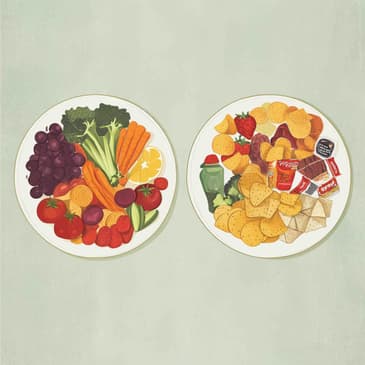
[00:01:46] Breakfast cereals, pre-packaged pastries, sugar-sweetened beverages, potato chips, processed meats like hot dogs, lunch meats, and chicken nuggets.
[00:01:56] These are all prime examples of ultra-processed foods, foods that have been significantly altered from their natural state.
[00:02:03] Ultra-processed foods are kind of like frankenfoods, deconstructed from their original ingredients and put back together with lots of other poor-quality substances that aren't commonly used in cooking,
[00:02:15] like preservatives, emulsifiers, flavors, additives, and artificial colors.
[00:02:20] These ingredients might make foods look and taste edible, but unlike whole foods, they lack the nutrients we require for optimal health.
[00:02:28] What's even scarier, though, is how these foods make up about 71% of the U.S. food supply.
[00:02:35] This is pretty concerning considering the direct link between heavily processed foods and 32 adverse health effects, ranging from cancer to early death.
[00:02:44] These findings come from a recent review of 45 studies and 9.8 million participants, making it the largest review of its kind to date.
[00:02:53] But even so, this review doesn't take into account the potential cognition-related effects of consuming ultra-processed foods,
[00:03:01] like left hippocampal shrinkage.
[00:03:03] This part of the brain is involved in learning, memory, and mood regulation.
[00:03:07] If you ask me, no food is worth these health risks, especially when real whole foods are readily available.
[00:03:15] Let's take a closer look at the new ultra-processed foods study and discuss how to differentiate between minimally processed foods,
[00:03:22] like quinoa and bagged veggies, and ultra-processed foods, like hot dogs, salami, and breakfast cereals.
[00:03:29] Because unless you're picking it off the tree and eating it, most food is going to be processed, one way or another.
[00:03:35] The Ultra-Processed Foods Study
[00:03:37] According to the peer-reviewed report published in the British Medical Journal,
[00:03:42] ultra-processed foods like prepackaged meat products, pizza, hot dogs, chips, ice cream, and chocolate milk
[00:03:49] are directly associated with an increased risk of cancer, cardiometabolic disease, anxiety, depression, asthma,
[00:03:57] adverse sleep-related outcomes, and cardiovascular disease-related mortality.
[00:04:02] One of the 45 studies analyzed even found that consuming processed foods
[00:04:07] increases the risk of developing Crohn's disease,
[00:04:09] and not just heavily processed foods, but minimally processed foods as well.
[00:04:14] But what is it exactly that makes ultra-processed foods so dangerous to our health?
[00:04:20] In comparison to other foods categorized under the 4-grade NOVA classification system,
[00:04:25] ultra-processed foods are often high in chemicals, food additives,
[00:04:29] preservatives, sodium, sugar, and saturated fat.
[00:04:34] They're also low in vitamins, minerals, dietary fiber, and other essential nutrients,
[00:04:40] and contain few, if any, whole foods like fruits, veggies, whole grains, and nuts.
[00:04:46] Other foods categorized under the NOVA system include
[00:04:49] 1. Unprocessed or minimally processed foods
[00:04:54] These include group 1 foods such as
[00:04:57] fresh, frozen, or bagged fruits and veggies,
[00:05:00] eggs, unsalted nuts and seeds,
[00:05:03] plain and unsweetened milk,
[00:05:05] dried beans and legumes,
[00:05:07] and bulk or prepackaged grains.
[00:05:10] 2. Processed culinary ingredients
[00:05:13] These include group 2 foods such as
[00:05:16] sugar, salt, oils, butter, fats, maple syrup, and honey.
[00:05:21] 3. Processed foods
[00:05:24] These include group 3 foods such as
[00:05:27] canned beans and legumes,
[00:05:29] tomato paste, salted nuts and seeds,
[00:05:31] canned fish, freshly made breads,
[00:05:34] and fermented alcoholic beverages.
[00:05:36] And ultra-processed foods and drinks
[00:05:39] fall under the fourth group.
[00:05:42] The most processed and least nutrient-dense
[00:05:45] of all four groups.
[00:05:46] Examples include
[00:05:47] sodas, instant and pre-packed meals,
[00:05:51] sweetened yogurts, margarines,
[00:05:53] and packaged bread products like
[00:05:55] sandwich bread, hot dog buns, and hamburger buns.
[00:05:58] And the list goes on.
[00:05:59] My take on processed foods
[00:06:02] As a registered dietitian with more than
[00:06:04] 20 years of experience,
[00:06:06] I can't say I was surprised by the study's results.
[00:06:09] After all, I've written about
[00:06:10] processed foods in the past.
[00:06:12] I also have an entire course devoted
[00:06:13] to removing these foods from your diet.
[00:06:15] For years, we've known that
[00:06:17] heavily processed foods increase our risk
[00:06:19] of non-communicable diseases
[00:06:21] and early death.
[00:06:23] And this is just the tip of the iceberg.
[00:06:26] Ultra-processed meat products
[00:06:27] like hot dogs and sausages
[00:06:29] were even classified as
[00:06:31] group 1 carcinogens back in 2015
[00:06:33] after researchers found that
[00:06:35] consuming 50 grams of processed meat daily
[00:06:37] increases a person's colon cancer risk
[00:06:40] by 18%.
[00:06:41] The amount of meat we're talking about
[00:06:44] is about 2 slices of ham
[00:06:46] or 1 hot dog per day.
[00:06:48] For me, the new British Medical Journal study
[00:06:51] only further validated my own decision
[00:06:53] made long ago
[00:06:54] to recommend minimally processed foods
[00:06:56] over ultra-processed foods.
[00:06:58] When shopping for groceries,
[00:07:00] I recommend choosing single whole grains
[00:07:02] like brown rice and oats
[00:07:04] versus the flours of these grains.
[00:07:07] If a product contains a long list of ingredients
[00:07:10] that I probably wouldn't use
[00:07:12] while cooking at home,
[00:07:13] I don't recommend it
[00:07:14] or don't buy it myself.
[00:07:16] That said,
[00:07:17] all foods are processed
[00:07:18] in one form or another.
[00:07:20] So, there are
[00:07:21] good processed foods out there.
[00:07:23] I'm definitely not suggesting
[00:07:25] we should avoid processed foods altogether.
[00:07:27] The British Medical Journal study
[00:07:29] isn't referring to
[00:07:30] all processed or packaged food items,
[00:07:32] but rather the ultra-processed foods
[00:07:35] that hardly meet
[00:07:36] Britannica's definition of food,
[00:07:38] which, by the way, means,
[00:07:39] quote,
[00:07:40] a substance that consists of essentially
[00:07:43] a protein, carbohydrate, fat,
[00:07:45] and other nutrients
[00:07:46] used in the body of an organism
[00:07:48] to sustain growth and vital processes
[00:07:50] and to furnish energy.
[00:07:51] End quote.
[00:07:53] On the other hand,
[00:07:54] many minimally processed foods
[00:07:56] are essential in a nutritious,
[00:07:57] well-balanced diet.
[00:07:59] These include
[00:07:59] bagged veggies and frozen fruit,
[00:08:02] nuts and seeds,
[00:08:04] BPA-free canned beans and legumes,
[00:08:06] oats and single whole grains
[00:08:08] like wild rice and quinoa,
[00:08:10] canned tuna and salmon,
[00:08:12] granola,
[00:08:13] and some energy bars
[00:08:14] and baked snack foods.
[00:08:16] When in doubt,
[00:08:17] read the food label.
[00:08:18] If a food item contains
[00:08:20] five or more ingredients
[00:08:21] that you don't recognize
[00:08:22] or wouldn't use
[00:08:23] to prepare food at home,
[00:08:25] then it's probably best
[00:08:26] to leave it on the shelf.
[00:08:28] The bottom line.
[00:08:29] I know the results
[00:08:31] of the recent
[00:08:31] British Medical Journal study
[00:08:33] may seem dire,
[00:08:33] but having this new information
[00:08:35] is actually empowering.
[00:08:36] It's an important reminder
[00:08:38] that we have the power
[00:08:39] to influence our health
[00:08:40] and well-being
[00:08:41] through the food choices
[00:08:42] we make.
[00:08:47] You just listened to the post
[00:08:49] titled,
[00:08:49] My Take on the New
[00:08:50] Ultra-Processed Food Study
[00:08:52] by Danielle Omar
[00:08:53] of foodconfidence.com
[00:08:55] and I'll be right back
[00:08:56] with my commentary.
[00:08:57] While we can't control
[00:08:59] every aspect
[00:09:00] of our future health,
[00:09:01] we can be proactive about it.
[00:09:03] That's why I'm excited
[00:09:04] about my experience
[00:09:05] with 23andMePlus Total Health.
[00:09:08] This isn't just
[00:09:09] another health service.
[00:09:10] It's a comprehensive
[00:09:11] longevity platform
[00:09:12] that gives you insights
[00:09:14] you typically wouldn't get
[00:09:15] from traditional healthcare.
[00:09:17] I recently joined
[00:09:18] and what excites me most
[00:09:19] is how it combines
[00:09:20] advanced genetic screening
[00:09:22] with regular blood testing
[00:09:23] throughout the year.
[00:09:24] What sets this apart
[00:09:26] is having clinicians
[00:09:27] with specialized
[00:09:28] genetics training
[00:09:29] who help create
[00:09:30] a personalized
[00:09:31] preventive health plan.
[00:09:32] I'm particularly fascinated
[00:09:33] by their biological age feature
[00:09:36] which tells you
[00:09:36] how old you really are
[00:09:38] based on your
[00:09:38] internal biomarkers.
[00:09:40] And the best part?
[00:09:41] Unlike your calendar age,
[00:09:43] this number
[00:09:43] could actually decrease
[00:09:45] with lifestyle changes.
[00:09:47] So,
[00:09:47] advocate for your health today.
[00:09:49] Go to
[00:09:50] 23andMe.com
[00:09:52] slash OHD
[00:09:53] for your limited time offer.
[00:09:55] That's
[00:09:57] 23andMe.com
[00:09:59] slash OHD.
[00:10:01] Dr. Neil here
[00:10:02] for my commentary.
[00:10:04] Recently,
[00:10:05] I read an article
[00:10:05] by Steve Kam
[00:10:06] where he talked about
[00:10:07] how everything
[00:10:08] seems to be bad for us.
[00:10:10] In fact,
[00:10:11] the title of that article
[00:10:12] was
[00:10:12] Apparently Everything
[00:10:14] Will Kill You.
[00:10:15] After reading that article
[00:10:16] in my commentary,
[00:10:18] I talked about
[00:10:18] how there's a point
[00:10:19] we all reach
[00:10:20] where we've heard
[00:10:21] so much negativity
[00:10:22] like all the ways
[00:10:23] things could possibly
[00:10:25] go wrong
[00:10:25] that we end up
[00:10:26] taking no action
[00:10:27] at all.
[00:10:28] We're so afraid
[00:10:29] of making the wrong decision
[00:10:30] or eating the wrong foods
[00:10:31] that it leads to inaction.
[00:10:33] We throw our hands up
[00:10:34] in the air and say,
[00:10:35] what's the point
[00:10:36] of even trying?
[00:10:38] Well,
[00:10:38] when we start to feel this way,
[00:10:40] here's what we should do.
[00:10:41] Go back
[00:10:42] to the basics.
[00:10:43] Ignore what you may be hearing
[00:10:45] about the newest,
[00:10:45] greatest,
[00:10:46] superfood
[00:10:47] that you must have
[00:10:48] and go back
[00:10:48] to the basics.
[00:10:49] Just like today's author
[00:10:50] Danielle said,
[00:10:52] as often as we can,
[00:10:53] enjoy minimally
[00:10:54] processed foods
[00:10:55] like those foods
[00:10:56] that have five
[00:10:56] or fewer ingredients.
[00:10:58] If we eat
[00:10:59] highly processed foods
[00:11:00] like we all do,
[00:11:01] don't stress about it.
[00:11:03] Instead,
[00:11:04] again,
[00:11:04] just try to consume
[00:11:05] minimally processed foods
[00:11:07] as often as we can.
[00:11:09] Alright,
[00:11:10] that'll do it
[00:11:10] for another edition
[00:11:11] of Optimal Health Daily.
[00:11:12] Thank you so much
[00:11:13] for listening.
[00:11:14] Thank you for sharing
[00:11:15] this show with someone.
[00:11:16] That's one of the best ways
[00:11:17] to keep this show going.
[00:11:19] And I hope you're having
[00:11:20] a great weekend
[00:11:20] and I'll see you back here
[00:11:22] tomorrow as usual
[00:11:23] where your optimal life
[00:11:24] awaits.