



Discover all of the podcasts in our network, search for specific episodes, get the Optimal Living Daily workbook, and learn more at: OLDPodcast.com.
Episode 2825:
Keyonna Summers presents a transformative guide to conquering sugar cravings with insights from dietitian Samantha Coogan. This practical advice empowers you to decode food labels, make healthier swaps, and embrace mindful eating for a balanced lifestyle.
Read along with the original article(s) here: https://www.unlv.edu/news/release/sweetness-your-weakness-dietitian-s-guide-giving-sugar
Quotes to ponder:
"Sugar isn't just in desserts; it's hiding in places you least expect, like sauces, bread, and even salad dressings."
"Understanding how to read food labels is the first step in reclaiming your health and controlling sugar intake."
"Mindful eating isn't about deprivation; it's about making choices that nourish both your body and your well-being."
Learn more about your ad choices. Visit megaphone.fm/adchoices
[00:00:00] This is Optimal Health Daily. Is Sweetness Your Weakness? A Dietitian's Guide to Giving Up Sugar by Keyonna Summers with UNLV.edu. And I'm Dr. Neal. Welcome back to Optimal Health Daily where I read to you from the best health and fitness blogs for free. And on Fridays, I do something a little different. I answer your questions.
[00:00:21] Now today's post comes from the University of Nevada, Las Vegas. As you'll hear, Keyonna put together this article with information from the director of UNLV's didactic program in nutrition and dietetics. And of course, I'll have some comments of my own at the end. And so with that, let's get right to it and start optimizing your life.
[00:00:45] Is Sweetness Your Weakness? A Dietitian's Guide to Giving Up Sugar by Keyonna Summers with UNLV.edu.
[00:00:54] From birthday cakes to Thanksgiving pie to cold summer treats, every holiday, season, or special occasion harkens mouthwatering memories of a favorite confectionary craving.
[00:01:06] But what if you're trying to get healthy by shutting down the sugar in your diet?
[00:01:10] Samantha Coogan, director of UNLV's didactic program in nutrition and dietetics and president of the Nevada Academy of Nutrition and Dietetics, explains how putting a halt on sweet treats affects the body.
[00:01:23] How does the body react when you cease the sugar in your diet? And how long do symptoms last?
[00:01:29] Well, when you cut out sugar, you'll be cutting out a boatload of empty, useless calories, which should help with weight loss, as long as you don't replace those sugar calories with other empty calories.
[00:01:41] Replacing sugar with things like fiber and protein will increase your satiety values, allowing you to feel fuller longer while reducing your overall caloric intake.
[00:01:50] Sugar has a very low satiety value and causes sharp spikes and dips in blood sugar, causing you to feel that shaky sensation and almost ravenous levels of hunger soon after consumption.
[00:02:03] Sugar is quite addictive, so many experience withdrawal symptoms.
[00:02:07] It sounds silly, but it's true.
[00:02:08] When your body becomes accustomed to certain substances, removing that substance essentially leaves your body in a state of shock.
[00:02:15] It will cause some uncomfortable moments such as headaches, stomach upset, or disruption in bowel activity as your body starts to reset itself.
[00:02:24] Withdrawal symptoms could last anywhere from a few days to two weeks.
[00:02:27] Well, once you weather the initial withdrawal symptoms, if they even occur, your overall energy should improve in all areas of your life.
[00:02:34] For example, you may notice your hair, skin, and nails start to improve.
[00:02:39] Cravings change drastically.
[00:02:41] Once you remove sugar for enough time, you start to miss it less and less.
[00:02:45] Performance in the gym improves, and you'll recover from workouts more quickly and potentially reduce your risk for injury.
[00:02:52] Productivity at work should improve, and you'll need fewer sick days.
[00:02:55] Belly fat decreases because your body won't have any excess sugar to store its fat in your adipose tissue.
[00:03:01] Sleep cycles become longer and more consistent.
[00:03:03] Sugar can negatively affect your REM sleep if your body is constantly searching for its next fix.
[00:03:09] It may be a harsh comparison, but think about those who are addicts and how they live on a day-to-day basis.
[00:03:16] Work might be either low-quality or non-existent.
[00:03:19] Workouts are either minimal intensity or, again, non-existent.
[00:03:23] And their sleep patterns may be constantly disturbed without ever feeling fully rested.
[00:03:28] Sugar is an addictive substance for some people, so it really is necessary to approach it in a similar manner to drug or alcohol detoxification.
[00:03:37] How do you get through the withdrawal stage without backsliding?
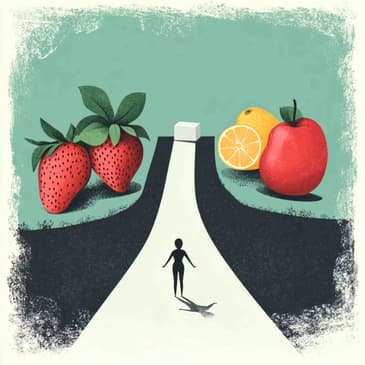
[00:03:40] You can get through the withdrawals by upping your water intake or by chewing on gum or stacking on fruit for a sweet sensation without all the artificial sugar.
[00:03:49] Just give your mind and mouth something else to think about when a sugar craving approaches.
[00:03:54] Sugar often makes us feel lethargic, fatigued, and begging for more, which also takes a toll on the body.
[00:04:00] Some people may feel the positive effects of a sugar-free diet right away, while others may take a little longer.
[00:04:06] If you experience withdrawal symptoms, you may not even realize the benefits that are happening at the same time during that two-week period.
[00:04:14] So when do these positive changes start?
[00:04:17] Everyone's body is different, but for some people it's possible to start to see, taste, and feel changes in as early as three days.
[00:04:25] Fruit may start to taste sweet again, almost like candy,
[00:04:28] because your taste receptors have been given a chance to relax and stop searching for that sugar.
[00:04:33] Your sweetness tolerance starts to reduce in only a few days as well.
[00:04:36] The higher your sugar tolerance was, the longer it may take for naturally sweetened foods to taste as sweet as before.
[00:04:43] You may even find that certain foods are almost too sweet for your new preference.
[00:04:48] Again, every person and every body is different.
[00:04:51] Many factors, such as genetics, presence of or risk factors for certain chronic diseases and conditions,
[00:04:57] physical activity level, carb or sugar sensitivity, age, and gender,
[00:05:02] these may all play a role in how and how long your body reacts to the removal of sugar.
[00:05:12] You just listened to the post titled,
[00:05:14] Is Sweetness Your Weakness?
[00:05:15] A Dietitian's Guide to Giving Up Sugar by Kiana Summers with UNLV.edu.
[00:05:21] And I'll be right back with my commentary.
[00:05:24] Dr. Neil here for my commentary.
[00:05:26] Now I want to make sure we're clear right off the bat.
[00:05:29] When we say cut out all sugar, what we're talking about here is added sugars.
[00:05:34] These are the things that get added to foods to make them taste better.
[00:05:38] Sugars also sometimes use it as a preservative.
[00:05:41] And so really that's what we're talking about.
[00:05:43] So think of a can of regular soda.
[00:05:46] All of those sugars you find in there aren't natural.
[00:05:50] They've been added.
[00:05:51] But the sugar you would find in a whole unprocessed piece of fruit, for example,
[00:05:55] there are no added sugars there.
[00:05:57] All the sugars found in that fruit are natural.
[00:06:00] And so when we say avoid all sugar, well, that's actually impossible because many foods have natural sugars.
[00:06:08] So what we're really talking about is trying to minimize added sugars.
[00:06:12] And yes, that can be hard to do.
[00:06:14] And that's why I would say maybe not consider avoiding all added sugars because, again, that's really tough.
[00:06:20] But think about minimizing how much you get.
[00:06:23] And the reason why we would want to think about consuming fewer added sugars each day
[00:06:27] is because there are studies now that are finding that increased intakes of added sugars
[00:06:33] may increase risk for certain chronic diseases, diseases like heart disease and even cancer.
[00:06:39] In fact, the American Heart Association has taken a stand on this.
[00:06:43] And they have now created an added sugar limit for both men and women.
[00:06:47] So for men, they say guys consume no more than 9 teaspoons or about 36 grams of added sugar each day.
[00:06:55] For women, no more than 6 teaspoons or about 25 grams of added sugar each day.
[00:07:01] So what you'll see on a Nutrition Facts label is a row that says added sugars.
[00:07:07] All right, that'll do it for me for today.
[00:07:09] Thank you again for listening.
[00:07:10] Thank you for subscribing.
[00:07:12] I hope you have a wonderful rest of your Tuesday.
[00:07:14] And I'll see you back here tomorrow.
[00:07:15] As always, where Optimal Life awaits.