



Discover all of the podcasts in our network, search for specific episodes, get the Optimal Living Daily workbook, and learn more at: OLDPodcast.com.
Episode 2836:
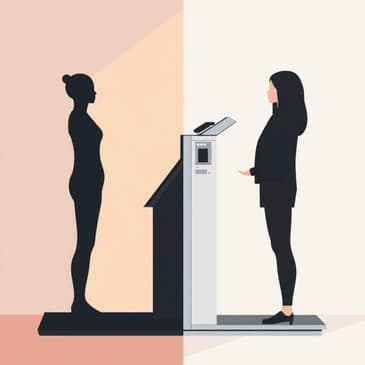
Dr. Neal addresses the reliability of body composition measurements from smart scales and gym body scan machines, highlighting the differences in accuracy across methods such as hydrostatic weighing, Bod Pods, and DEXA scans. He explains why understanding body fat percentage is crucial for health and provides insights into the pros and cons of the most common testing techniques.
Quotes to ponder:
"Body fat percentage is an important health measure many would argue it’s even more important than just looking at body weight."
"The most accurate forms of body fat testing are hydrostatic weighing and something called a 'BOD POD.'"
"For both genders, increasing age usually leads to an increase in body fat percentage, but that’s not always a bad thing either."
Learn more about your ad choices. Visit megaphone.fm/adchoices
[00:00:00] Überlass deine gesunde Ernährung und die Gains nicht nur deinem Bauchgefühl. Denn bei der Ernährung gaukelt uns unser innerer Schweinehund manchmal ganz schön was vor. Sag stattdessen Hallo zu deinem neuen Coach, Yasio. Yasio ist die meistgenutzte Ernährungs-App Europas, made in Germany. Egal ob Massephase oder ein bisschen Abnehmen, tracke Kalorien, Proteine, Carbs, Fette, Bewegung und Intervallfasten. Und mit den Tasty-Rezepten bist du ready für deine Ziele. Let's go! Lade die Yasio-App jetzt herunter.
[00:00:30] It's another Q&A edition of Optimal Health Daily, and I'm Dr. Neal, your host of the show. Welcome back to another special Friday edition of Optimal Health Daily, where I answer your questions. On the other days, I read health and fitness blogs to you, kind of like an ongoing audiobook. Now I'm going to keep this intro nice and short so we can get right to today's question and start optimizing your life. Today's question came via email. Roxanne writes, Hi Dr. Neal.
[00:01:02] Are body scan machines useful or accurate? I have a smart scale in my bathroom and just got an Evolt 360 body scan done at my gym. The results were not even close. So what do you recommend? Thank you so much for taking the time to send in your question, Roxanne.
[00:01:19] When I was in graduate school, smart scales existed, but cost a lot of money. Now it seems we all have smart scales in our bathrooms. Okay, I'm starting to feel old, so I'm going to change the subject. Let's first talk about what smart scales actually are. Then we'll talk about body scans and the accuracy of each.
[00:01:39] Smart scales. Smart scales measure body weight, but can also predict body fat percentage, muscle mass, water weight, how many calories you burn each day or basically your metabolism, and more.
[00:01:51] They do this by using a process called body impedance analysis. You'll often see this abbreviated as BIA.
[00:01:59] I'll describe more about BIA in a bit. But are these measurements actually accurate? I was only able to find one study examining the accuracy of these home smart scales, and the news wasn't good.
[00:02:14] The researchers found that none of the three smart scales they tested were accurate.
[00:02:19] Now, we of course need more studies to test other brands, but for now, it seems that home smart scales may not be giving us the most accurate information.
[00:02:30] Now, the body scan you'd performed at your gym also uses body impedance analysis, or BIA.
[00:02:37] The difference with these fancier body scans you might find at your local gym is they collect more data from the body, which does increase accuracy.
[00:02:46] Okay, so why is it important to know not just our weight, but body fat percentage too?
[00:02:53] And do we really need to know all of the other information these smart scales and body scans tell us?
[00:02:58] Some of the information is more helpful than others, so I'll explain.
[00:03:03] Body fat percentage is an important health measure.
[00:03:07] Many would argue it's even more important than just knowing your body weight.
[00:03:10] This is because when you really think about it, body weight is made up of a number of different things,
[00:03:16] like body fat, of course, muscle, water weight, and our skeletal structure.
[00:03:22] All of these contribute to how much we weigh.
[00:03:25] But we know that having too much fat on our bodies can lead to more serious health problems,
[00:03:30] like heart disease and type 2 diabetes.
[00:03:33] So, having our body fat tested is a great idea,
[00:03:36] so we know how much of our body weight is made up of fat cells.
[00:03:40] Now, there are a number of ways to test body fat percentage,
[00:03:44] and like I said earlier, each is different as far as their level of accuracy.
[00:03:49] So, let's talk about some of these.
[00:03:51] Now, when we step on a standard bathroom scale,
[00:03:54] the scale doesn't know the difference between fat, muscle, our bones, and water weight.
[00:03:59] It just tells us how much we weigh, period.
[00:04:01] There are a number of ways to test body fat percentage,
[00:04:05] and like I said earlier, each is different as far as their level of accuracy.
[00:04:10] So, let's talk about some of the most common types of body composition tools,
[00:04:15] like those that test body fat, like your smart scales at home,
[00:04:19] and the EVOL 360 body scan, and the pros and cons of each.
[00:04:24] Let's first start with something called hydrostatic weighing.
[00:04:27] This is considered the most accurate form of body fat testing.
[00:04:33] Technology is moving quickly,
[00:04:34] and so something called a BODPOD and a DEXA scan may also be considered quite accurate.
[00:04:41] I'll talk about both of those in a moment.
[00:04:43] So, let's go back to hydrostatic weighing.
[00:04:45] You'll often see this called a dunk tank.
[00:04:48] That's because this process involves dunking the body underwater
[00:04:51] and measuring body weight while the body is submerged underwater.
[00:04:55] So, to do this, the person has to sit on a bench that's already submerged underwater.
[00:05:01] The bench is actually attached to a special dial that measures weight underwater.
[00:05:06] So, the person will climb into the water,
[00:05:09] make themselves comfortable on the bench,
[00:05:11] and then try and exhale as much air as possible.
[00:05:15] As they exhale, the body will begin to sink in the water.
[00:05:19] Once the person's exhaled as much air as possible,
[00:05:23] their weight is taken while reading the dial.
[00:05:27] Then, once that measurement on the dial is read,
[00:05:30] the test is over and the person can climb out of the dunk tank.
[00:05:33] Now, believe it or not, again, this is considered the gold standard
[00:05:36] when it comes to measuring body fat percentage.
[00:05:39] It's considered the most accurate.
[00:05:41] Ultimately, the person's weight on land is compared to their underwater weight.
[00:05:46] So, this entire process is based on the idea that fat causes us to float
[00:05:50] and lean tissue or muscle causes us to sink.
[00:05:54] The error rate with this method is, give or take, 1.5%.
[00:06:00] That means, after this test, our body fat percentage may be off by 1.5% in either direction.
[00:06:07] So, let's say after this process,
[00:06:09] a person's body fat reading is determined to be 12%.
[00:06:14] Well, because there's some error with this method,
[00:06:17] their actual body fat percentage may range from 10.5% to 13.5%.
[00:06:24] So, how can we sign up for a dunk tank?
[00:06:27] How can we sign up for this hydrostatic weighing?
[00:06:30] Well, this test is not readily available.
[00:06:33] Many local colleges and universities have this equipment
[00:06:36] and will schedule the test for a small fee.
[00:06:38] But, as you can imagine, it's also uncomfortable.
[00:06:41] So, where does that leave us?
[00:06:43] Well, there are other options, like bod pods.
[00:06:46] Bod pods are becoming more popular and many gyms have them on site now.
[00:06:51] A bod pod actually is based on a similar concept to hydrostatic weighing or the dunk tank.
[00:06:57] Instead of using water, the bod pod uses air displacement to measure body composition.
[00:07:03] Basically, what happens is you climb into this tiny little booth.
[00:07:07] There's no water in it.
[00:07:08] The trainer will close the door behind you and you sit there for a minute or so
[00:07:12] while the machine's built-in computer system take some measurements.
[00:07:16] So, you sit in this little pod and you just breathe normally.
[00:07:21] Now, these bod pods overestimate or underestimate body fat by 2% to 3%.
[00:07:26] So, again, very close to the dunk tank as far as accuracy.
[00:07:32] The gym I used to go to had one of these set up in the back corner.
[00:07:35] The bod pod kind of looks like one of those old photo booths.
[00:07:38] You know, the ones where you and your friends would insert 75 cents into the coin slot,
[00:07:43] cram into the booth, close the curtain,
[00:07:44] and you pose for three quick flash photos while making silly faces.
[00:07:49] Anywho, a bod pod kind of looks like this, except it's shaped like a giant egg.
[00:07:54] Now, the next test, the one that's probably least available but maybe the most accurate,
[00:08:00] is the Dual Energy X-ray Absorptiometry or DEXA scan.
[00:08:06] Just like the name sounds, this uses low-dose beams of X-ray energy to measure fat mass.
[00:08:12] To get a DEXA scan, the process takes about 15 minutes
[00:08:16] and it's usually only available at medical or research facilities.
[00:08:20] The cost of the test is about $300.
[00:08:24] And again, researchers are finding that these DEXA scans are pretty accurate
[00:08:27] and, based on new research, maybe the new gold standard.
[00:08:32] Alright, two more to discuss and then we'll compare accuracy.
[00:08:36] Next up, Bioelectrical Impedance Analysis or BIA.
[00:08:41] See, I promised I would come back to this one.
[00:08:42] So, in case we forgot, here's how BIA works.
[00:08:45] A low-level electrical current is passed through the body.
[00:08:48] So, when we step on a smart scale at home or get on an EVOLT 360 body scan,
[00:08:54] the machines are actually sending a low-level electrical current through the body.
[00:08:58] The more electrical resistance detected by the analyzer,
[00:09:02] the higher the amount of body fat.
[00:09:04] These are fairly simple and cheap.
[00:09:06] But the problem is, to make sure the results are as accurate as possible,
[00:09:10] we have to follow instructions that come with the machine.
[00:09:13] So, Roxanne, before you were tested for the full body scan,
[00:09:17] I'm hoping the trainer had you prepare for the scan by having you fast,
[00:09:22] not drink any caffeine, be hydrated but not over-hydrated,
[00:09:26] not have performed a workout over the last 24 hours, and so on.
[00:09:31] There's kind of a long checklist that you have to follow
[00:09:34] to make sure the results are accurate.
[00:09:35] So, the error range for BIA tests like these range from 4% to 6%.
[00:09:42] So, again, if the machine says a person has a body fat percentage of 12%,
[00:09:47] then their actual value could range from as low as 6%, but as high as 18%.
[00:09:53] And lastly, skinfold calipers.
[00:09:56] Sometimes this procedure is called the pinch test.
[00:09:59] Now, have you ever pinched the fat around your hips or your belly with your fingers?
[00:10:03] Well, this is basically just like that.
[00:10:07] Now, instead of performing this pinch test or using skinfold calipers on yourself
[00:10:12] and using your fingers,
[00:10:13] it involves an experienced professional using skinfold calipers,
[00:10:17] which kind of look like small kitchen tongs.
[00:10:20] Now, the professional measures the amount of fat around specific areas of the body
[00:10:24] by pinching the fat that's found directly under the skin
[00:10:27] and pulling it away from the muscle.
[00:10:29] They then use those special calipers to measure the thickness of the pinch.
[00:10:33] Once they have all their measurements,
[00:10:35] they then plug them into a special equation to determine body fat percentage.
[00:10:39] Now, this method can be accurate, but it has to be performed correctly.
[00:10:45] So, finding a highly qualified and well-experienced person to perform this
[00:10:49] is really important to get the most accurate results.
[00:10:52] Now, the cost of this test is up to the individual performing it,
[00:10:56] so the cost can vary quite a bit,
[00:10:58] but most practitioners are pretty reasonable.
[00:11:00] If you have a well-trained practitioner administering this test,
[00:11:03] the error rate is give or take 3.5%.
[00:11:06] So, a 12% body fat reading may really mean that actual body fat ranges
[00:11:13] from as low as 8.5% up to 15%.
[00:11:17] All right, that means there are a lot of options for measuring body composition.
[00:11:21] If you're looking for a definitive answer,
[00:11:23] it may be worthwhile to try more methods and compare the results.
[00:11:28] So, in your case, Roxanne, you've already tried two methods.
[00:11:31] That means try a third and see if two of the three readings end up closer to each other,
[00:11:37] and then toss out the one that's furthest from the others.
[00:11:41] Oh, and before I end, let's talk about what a healthy body fat percentage actually is.
[00:11:47] Now, it does differ based on age and gender.
[00:11:49] In fact, we know that those born female typically carry more body fat,
[00:11:54] and that's a good thing for them.
[00:11:56] This extra body fat not only promotes health,
[00:11:59] but as women reach child-rearing age, it will help support pregnancy.
[00:12:04] For those born male, we can get pretty low on our body fat percentages
[00:12:08] without experiencing any health risks.
[00:12:10] For both genders, increasing age usually leads to an increase in body fat percentage.
[00:12:16] But that's not necessarily a bad thing either.
[00:12:18] But here's a general breakdown.
[00:12:20] If you are identified at birth as female,
[00:12:24] 20 to 32% body fat is fine.
[00:12:27] The lowest you would want to go is 8%.
[00:12:29] Any lower than that,
[00:12:31] and you'll likely experience something called amenorrhea,
[00:12:34] which means you'll stop having your monthly cycle.
[00:12:36] There's also a risk for having lower bone density if you go below 8% body fat.
[00:12:41] And for those identified at birth as male,
[00:12:44] 10 to 22% body fat is acceptable.
[00:12:47] But because guys don't rely on fat cells for producing as many of our hormones like ladies do,
[00:12:53] we can go as low as 3% body fat and still be okay.
[00:12:57] And for reference,
[00:12:58] 3% body fat is what professional bodybuilders try and hit right before our competition.
[00:13:03] So, pretty darn extreme.
[00:13:09] A Feierabendbier.
[00:13:10] Perfect zum Abschalten.
[00:13:12] Ein Glas Wein.
[00:13:13] Gut fürs Herz.
[00:13:14] Aber was, wenn das nur Mythen sind?
[00:13:16] Die Wahrheit.
[00:13:17] Alkohol ist die gefährlichste Droge der Welt.
[00:13:20] Und wir feiern sie täglich.
[00:13:22] Warum ist Alkohol für Frauen so verlockend?
[00:13:24] Und so gefährlich?
[00:13:25] Wie beeinflusst die Alkoholindustrie unser Leben?
[00:13:28] Höchste Zeit, darüber zu sprechen.
[00:13:31] Dirty Little Secrets.
[00:13:32] Warum wir immer weiter trinken.
[00:13:34] Die Dokuserie jetzt exklusiv streamen in der ARD Mediathek.
[00:13:39] Thank you again for taking the time to send in your question, Roxanne.
[00:13:42] Now, if you want to submit a question and have it answered right here on the show,
[00:13:46] you can email it to health at oldpodcast.com.
[00:13:51] You can also call in your question.
[00:13:53] The number is 161-ILOVE-OHD.
[00:13:57] That's 1-614-568-3643.
[00:14:02] Or you can submit your audio question at oldpodcast.com slash ask.
[00:14:08] All right, that'll do it for another Q&A of Optimal Health Daily.
[00:14:12] Thank you so much for listening every day and all the way through.
[00:14:15] And of course, I'll see you back here tomorrow and over the weekend
[00:14:18] where your optimal life awaits.
[00:14:20] Exactly.
[00:14:20] I'm not going to have a question.
[00:14:21] Bye.