



Discover all of the podcasts in our network, search for specific episodes, get the Optimal Living Daily workbook, and learn more at: OLDPodcast.com.
Episode 2892:
The ketogenic diet has surged in popularity, but is it truly beneficial for everyone? Dr. Neal Malik breaks down the science behind ketosis, exploring its origins, potential benefits, and risks. He also discusses whether supplementing with ketones offers the same advantages as following a strict ketogenic diet, providing insights into the latest research on how genetics may play a role in the diet's effectiveness.
Quotes to ponder:
"Keto gained popularity not necessarily because of its effectiveness, but due to athlete and celebrity endorsements."
"In the short term, the ketogenic diet appears to be relatively safe for otherwise healthy individuals, but switching from a standard diet can come with side effects."
"Those with Inuit ancestry may have a special genetic adaptation that prevents their bodies from producing ketones, suggesting that not everyone is built for ketosis."
Episode references:
ConsumerLab: https://www.consumerlab.com
Learn more about your ad choices. Visit megaphone.fm/adchoices
[00:00:00] Überlass deine gesunde Ernährung und die Gains nicht nur deinem Bauchgefühl. Denn bei der Ernährung gaukelt uns unser innerer Schweinehund manchmal ganz schön was vor. Sag stattdessen Hallo zu deinem neuen Coach, Yasio. Yasio ist die meistgenutzte Ernährungs-App Europas, made in Germany. Egal ob Massephase oder ein bisschen Abnehmen, tracke Kalorien, Proteine, Carbs, Fette, Bewegung und Intervallfasten. Und mit den Tasty-Rezepten bist du ready für deine Ziele. Let's go! Lade die Yasio-App jetzt herunter.
[00:00:30] It's another Q&A edition of Optimal Health Daily, and I'm Dr. Neal Malik. Hey there, happy Friday, and welcome to another Q&A edition of Optimal Health Daily, where I answer your health questions related to fitness, diet and nutrition, and lots more. You send me the questions, and I answer them for you. I'm sure you're excited to hear today's question, so I'm going to keep this intro brief. Let's jump right in as we optimize your life.
[00:00:56] This is Kelly, and I have been hearing that ketones are a good addition to a diet, that being in ketosis is a good thing. I'd like to hear your opinion of that, and whether supplementing with ketones is a good idea. Thanks.
[00:01:15] Thank you for your question and for listening to the show, Kelly. I have discussed the ketogenic diet on this show before, but I'm still getting questions about it, which is great. I'm happy to talk more about this. Plus, I have a really interesting update from the latest research, so let's dive right in. I always like to start from the beginning, just to be sure that everyone's on the same page. So, a ketogenic type diet has been around since really the early 1900s, and initially it was used to treat epilepsy.
[00:01:41] Now, fast forward to today, and this diet is being used to help treat a number of health conditions, but it doesn't always mean it's effective or effective at all. If not, then why the sudden jump in popularity? Well, let's discuss. Part of the ketogenic diet's recent popularity isn't necessarily because it is effective for the treatment of health conditions, or because it's useful for weight loss in the long term. Instead, we can attribute much of its popularity to athlete and celebrity endorsements.
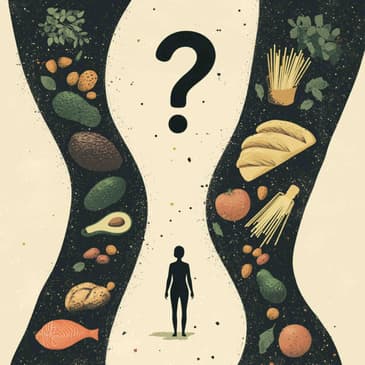
[00:02:09] A handful of world-record-setting endurance athletes swear by the ketogenic diet and insist that it played a large role in their athletic achievements. So, what's so special about the ketogenic diet? Well, the typical American diet consists of about 60% of one's daily energy, or calories, coming from carbohydrates, and about 15% coming from protein, and about 25% from fat.
[00:02:32] Now, let's compare this with the ketogenic diet, which requires only 10% of one's daily calories coming from carbohydrate, about 20% from protein, and a whopping 70% from fat. So, essentially, it's a lower-carbohydrate, high-fat diet. It's called a ketogenic diet specifically because this lowered consumption of dietary carbohydrate leads to the buildup of these things called ketones in the body.
[00:03:00] I'm sure you're actually familiar with one type of ketone already, nail polish remover, which is called acetone. Acetone is just one type of ketone. And yes, when our bodies are in a state of ketosis, meaning the body is creating ketones, one of the ones produced is acetone. So, if you were to follow this diet over a period of two weeks or longer, you would be in a state of ketosis, meaning your blood levels of ketones have increased to a higher-than-normal level.
[00:03:29] So, back to your original question. Is being in a constant state of ketosis bad? And is it possible that following such an extreme diet could be beneficial? Well, based on observational case studies performed in the 1920s, explorers observed Inuit populations consuming large amounts of dietary fat and not a whole lot of carbohydrates. This was because those were the foods that were available at the time.
[00:03:52] And at the same time, they didn't appear to suffer from the chronic diseases we commonly see in Western societies. So, fast forward to today, and we find a renewed interest in this diet. And again, much of this can be attributed to athlete endorsements. So, more studies are being conducted to test the effects of the ketogenic diet, but we need to keep in mind that many of these studies have recruited elite athletes as participants. So, when we examine the results, we find that during activity,
[00:04:20] these athletes burn more fat as fuel and were able to improve their endurance. It is often assumed that the ketones are what helped this extra fat burn. But here's something else we're learning, and here's my update. Those with Inuit ancestry may have a special genetic adaptation that helps them thrive on a ketogenic diet. This genetic adaptation is something maybe the rest of us don't have, and this adaptation prevents their bodies from producing ketones.
[00:04:50] That's huge, right? So, maybe this diet is only effective for certain people because they have the genetic adaptation to accommodate a diet like this. So, what happens when the rest of us follow a ketogenic diet? We know that in the short term, it does appear to be relatively safe for otherwise healthy individuals. But when switching from a standard American diet, which consists mostly of carbohydrates, to one mostly of fat, there will be some side effects.
[00:05:17] Complaints range from feeling fatigued, which could be the result of consuming less carbohydrates, which lowers blood sugar, to constipation, which is also due potentially to the reduced carbohydrate intake, or even diarrhea because of the increased fat intake. Some may develop gallstones, and there are risks of developing vitamin deficiencies. Now, I want to go back to your question about exogenous ketones, Kelly. Think of these as like supplemental ketones. You take a pill form of them.
[00:05:46] Supplement manufacturers are making these kind of synthetic exogenous ketones. So, what if you were to avoid following this strict diet altogether and just ingested ketones from a bottle? Would that provide the same effect? Sadly, we don't know. Why? Well, there are a number of reasons. One reason is that supplement manufacturers will often add other ingredients to their supplements. So, you may think you're purchasing ketones, but in fact, you're getting ketones with other ingredients like herbs,
[00:06:16] taurine, capsaicin, caffeine, or even asparagus. Yes, asparagus. True story. So, because of this, we don't know whether it's the ketones that may help burn fat, those other ingredients, or a combination of the two. Also, there simply aren't enough studies. There are some studies that examine the use of raspberry ketones, but those were inconclusive, and we really don't have any other studies examining other forms. So, going back to the studies that we do have,
[00:06:43] remember, those were conducted in elite athletes. So, we have to be careful interpreting these results, because this is a very unique subset of individuals. Elite athletes have very different nutritional needs when compared to those of us that do not possess these superhuman-like abilities. But if this type of eating pattern appeals to you, or you're considering taking exogenous ketones, definitely discuss this with your physician to be sure that it is safe, given your current health status, or your prior health history.
[00:07:12] If you decide to follow the diet, I would suggest you incorporate this pattern of eating very slowly to prevent any uncomfortable side effects. If you decide you may want to take exogenous ketones in a pill form, definitely research the company first. Look at the product to make sure that's what you're actually getting. Because again, supplement manufacturers may add fillers in there. One of the websites that I like to use is ConsumerLab.com. ConsumerLab is an independent third-party organization
[00:07:42] that randomly tests supplements on the market. And they have some nice articles on these exogenous ketones. So, I recommend you go there. Just know, the website does require a subscription, which I believe is about $24 a year. Thank you again for the question, Kelly. Now, if you want your question answered right here on the show, and get a copy of our Optimal Living Daily Workbook,
[00:08:07] you can email your question to health at oldpodcast.com. Or, if you want your voice played and heard in an episode, come by oldpodcast.com slash ask. Right on that page, you can record straight from your computer's microphone. It's really easy. You can even play back your message and do retakes before sending it in. Or, you can do it the old-fashioned way and call in your question. The number is 1-61-ILOVE-OHD.
[00:08:37] That's 1-614-568-3643. Thank you so much for sending in your questions. Answering them is my favorite part of the show. All right, that'll do it for another Q&A edition of Optimal Health Daily. Thank you for listening every day and all the way through. I hope you have a great start to your weekend and I'll see you back here tomorrow where your optimal life awaits.