



Discover all of the podcasts in our network, search for specific episodes, get the Optimal Living Daily workbook, and learn more at: OLDPodcast.com.
Episode 3381:
Dr. Jenny Brockis explores how the food you eat directly shapes your mood, cognition, and long-term mental health, revealing compelling research linking sugar and processed foods to anxiety and depression. By understanding the gut-brain connection, you’ll see why small dietary shifts, like reducing sugar and embracing whole foods, can significantly improve how you think and feel. This insight offers a practical, science-backed path to regaining mental clarity and emotional balance.
Read along with the original article(s) here: https://drjennybrockis.com/2017/8/21/lost-your-edge-could-it-be-something-you-ate/
Quotes to ponder:
"New data from the Whitehall 11 Study has shown that eating a diet high in processed sugars is linked to an increased risk in developing anxiety or depression."
"While eating a small amount of sugar can make us feel better initially, over the longer time it elevates levels of inflammation, which is bad for our body and brain."
"If you’re serious about looking after your cognitive and mental health, it’s time to stop the excuses and take the steps to reduce sugar and trans fats consumption and increase healthier options."
Episode references:
Deakin University – Food & Mood Centre: https://foodandmoodcentre.com.au/
Mediterranean Diet Overview – Harvard T.H. Chan School of Public Health: https://www.hsph.harvard.edu/nutritionsource/healthy-weight/diet-reviews/mediterranean-diet/
World Health Organization – Depression: https://www.who.int/news-room/fact-sheets/detail/depression
Learn more about your ad choices. Visit megaphone.fm/adchoices
[00:00:00] It's time to refresh your yard during spring backyard days at the Home Depot. Get low prices guaranteed on propane grills starting at $179, like the NexGrill 3-Burner Gas Grill. Or get $50 off a select Weber Spirit Grill and bring big flavor to your backyard. Then set the scene with Hampton Bay String Lights that bring it all together. Shop spring backyard days for seven days at the Home Depot, now through May 6th. Exclusion Supply, see homedepot.com slash price match for details.
[00:00:30] This is Optimal Health Daily. Lost Your Edge? Could It Be Something You Ate? By Dr. Jenny Brockis of Dr. Jenny Brockis.com And I'm Dr. Neal, your very own personal narrator. Hey there, happy Saturday. Thank you so much for being here and welcome back to Optimal Health Daily where I act as your narrator of popular health and fitness blogs and always with a bit of my commentary at the end. Now don't forget we have a bunch of shows covering a bunch of different topics. Just search for Optimal Living Daily in any podcast app to find all of them.
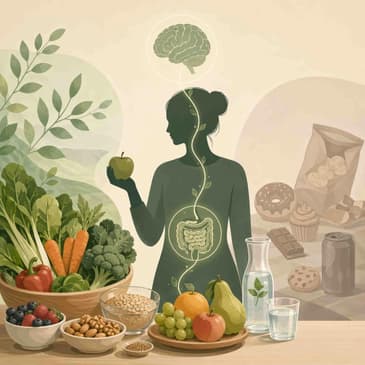
[00:01:01] And with that, let's keep this intro nice and short and get right to it as we start optimizing your life. Lost Your Edge? Could It Be Something You Ate? By Dr. Jenny Brockis of Dr. Jenny Brockis.com The area of nutritional psychiatry is rapidly expanding our understanding of how the gut-brain axis and our gut biome interact and influence how we think and feel.
[00:01:28] Prior research has shown how eating a diet high in trans fats, as found in fast or processed foods, impacts cognition by reducing word memory and putting us at an increased risk of depression. New data from the Whitehall 11 study have shown that eating a diet high in processed sugars is linked to an increased risk in developing anxiety or depression. This study looked at whether feeling low made people crave sugary foods
[00:01:55] or whether the sugar itself led to changes in mental function. The findings indicate that consuming sugar lowered mood. So why is this important? That's because levels of anxiety and depression are continuing to spiral ever upwards. According to the World Health Organization, major depression is now the leading cause of ill health and disability globally. Over 300 million people are living with depression,
[00:02:23] an increase of 18% over 10 years between 2005 and 2015. And that's just those who have been clinically diagnosed and doesn't include those who are struggling with depression and have yet to seek help. Despite all the best intentions with workplace wellness programs looking to help us manage our stress more effectively and reduce the stigma associated with mental ill health, we are losing the battle.
[00:02:48] A new approach is needed and this means including taking a look at our diet. The typical Western diet is high in sugar and trans fats. The issue with sugar is that it's often added to processed foods to make it more palatable and hidden from sight unless we read the labels. These empty calories, if not burnt off, can get converted to fat. So how much sugar is okay?
[00:03:13] The current recommendation is that we should be consuming around 6 teaspoons max of sugar a day. This excludes the natural sugars found in fruits and vegetables. Coca-Cola and Pepsi have 35 grams of sugar per 330 milliliters, so it doesn't take much to quickly exceed the recommended intake. Australians are currently consuming around 18 grams a day. In the Whitehall study, men consuming more than 67 grams of sugar in food and beverages a day over a 5-year period
[00:03:42] were found to show a 23% increase in mental illness compared to a group that consumed 39.5 grams of processed sugar a day. It was also shown that those already diagnosed with a mental illness were at greater risk of relapse and repeated episodes of depression if on a high-sugar diet. While eating a small amount of sugar can initially make us feel better when we're trying to cope with stress, over the longer term, it elevates levels of inflammation,
[00:04:10] which is bad for our body and the brain. What needs to change? If you're serious about looking after your cognitive and mental health and that of your family, it's time to stop the excuses and take the steps to reduce sugar and trans-fat consumption and increase healthier options. At home, this is about choosing to buy fresh, unprocessed foods and keeping sweet treats as an occasional treat. Not an everyday snack. It's about choosing to drink water
[00:04:38] and avoiding sweetened beverages and fruit juices. And food choices matter even before birth. A study of over 23,000 Norwegian mothers and children revealed how the diet followed by the mothers during pregnancy impacted their children's mental health in the first few years of life. At work, it's about making healthier choices when possible. If the vending machine is full of junk food options, why not ask for healthier alternatives? If the work canteen only has deep-fried or fast food choices,
[00:05:08] it's time for management to provide the healthier options. If that's not going to happen anytime soon, you can choose to bring your own lunch or scout out healthier alternatives at cafes close to work. Got the mid-afternoon munchies or feeling stressed? If your habit is now to eat a sugary fatty snack, try something different, such as a handful of nuts, a piece of fruit, some vegetable sticks, and a drink of water. We often mistake thirst for hunger, after all. A team from Deakin University
[00:05:37] recently showed how switching to a Mediterranean-style diet, one that's high in vegetables and low in processed food, made a significant difference in a group diagnosed with clinical depression, to the extent that one-third in the dietary intervention group achieved clinical remission of symptoms, compared to 8% of the group offered social support. While this was a very small study, the findings suggest this is worthy of further investigation to help tackle one of the world's major health problems.
[00:06:06] Mood-boosting foods that keep our gut biota healthy include fresh, plant-based foods, fruits and vegetables, whole grains, legumes, seeds and nuts, as well as oily fish for the omega-3 fatty acids, as found in the Mediterranean style of diet. Choose high-fiber foods such as legumes to provide the body with complex carbohydrates that take longer to break down, making it easier for the body to keep blood sugar levels steady. In addition, try adding more fermented foods
[00:06:35] such as kimchi, kombucha, sauerkraut and miso. Fermented foods act as probiotics, helping to keep our body, our brain and gut microbiome happy. Feeling good about ourselves and staying in a positive state of mind is good for us, our family and all of our relationships and is a critical component to high performance. If you're having too many quote-unquote bad hair days, perhaps it's time to review what you're eating and take a stand to cut the sugar at other highly processed foods
[00:07:05] and consume more of what will keep you happy, healthy and wise. You just listened to the post titled, Lost Your Edge? Could It Be Something You Ate? by Dr. Jenny Brockis of drjennybrockis.com and I'll be right back with my commentary. If you've been optimizing your diet, your protein intake, your sleep, you're already ahead of most people. But here's one thing most of us completely miss.
[00:07:32] The quality of the water we're drinking every single day. That's why I started using CovePure at home. It's a water purifier that sits right on your counter and plugs straight in. No plumber or drilling required. CovePure's ClearWave reverse osmosis technology is lab certified to remove up to 99.9% of contaminants. It's not just chlorine, PFAS, lead, microplastics, pharmaceutical residue. If it isn't water, CovePure removes it.
[00:08:02] The removable pitcher is super convenient and being able to choose whatever temperature you want is my favorite feature. Water is the most fundamental thing you put in your body. Every cell runs on it. So make sure what you're drinking is clean. Go to covepure.com slash OHD. And because you're a listener of the show, if you use that link, you can get $250 off. That's C-O-V-E-P-U-R-E dot com slash OHD.
[00:08:32] If you're a small business, the right hire can be make or break. Hoping the right people see your job posting isn't the best growth strategy. When the pressure's on and you need the right hire, this is a job for sponsored jobs. Join the 3.3 million employers worldwide that use Indeed to connect with quality talent that fits their needs. Spend less time searching and more time actually interviewing candidates who check all your boxes. Less stress, less time, more results.
[00:09:01] When you need the right person to cut through the chaos, this is a job for Indeed sponsored jobs. And listeners of this show will get a $75 sponsored job credit to help get your job the premium status it deserves at Indeed.com slash podcast. Just go to Indeed.com slash podcast right now and support our show by saying you heard about Indeed on this podcast. Indeed.com slash podcast. Terms and conditions apply.
[00:09:31] Need to hire? This is a job for Indeed sponsored jobs. Dr. Neal Malik here for my commentary. I was at a conference last month and there were a series of presentations all about nutrition and the gut-brain axis. The gut-brain axis is how the gut and brain are connected basically by nerve cells. The fact that the gut and the brain are connected though isn't brand new information, right? We've basically understood this as soon as we developed consciousness.
[00:10:01] Think about a really distressful event. Like, imagine someone asked you right now to give a 10-minute speech in front of 100 people. For many of us, this would immediately trigger a stress response. The brain interprets this threat, public speaking, and even worse, being unprepared for public speaking, and the stress response kicks in as a result. And again, for many of us, me included, this stress response may lead to having that nervous stomach feeling.
[00:10:30] Some describe it as butterflies. Others experience gastrointestinal cramping or worse. So the brain seems to have triggered these unpleasant gut responses. But we're learning that maybe it wasn't the brain that started the process. Maybe it actually all started in the gut. that our gut microbiome wasn't all that healthy, which then makes the brain overreact to stressful situations. That's where the research is headed. And what many in the field believe
[00:10:59] is the real relationship between the gut-brain axis. Some believe that depression doesn't happen in the brain. It starts in the gut. Now again, this research is in its infancy. And I'm sure there'll be plenty more on this topic soon. So stay tuned. Alright, that'll do it for today. I hope you're having a great weekend. And I'll see you back here tomorrow for the Sunday show and where your optimal life awaits.