



Discover all of the podcasts in our network, search for specific episodes, get the Optimal Living Daily workbook, and learn more at: OLDPodcast.com.
Episode 3420:
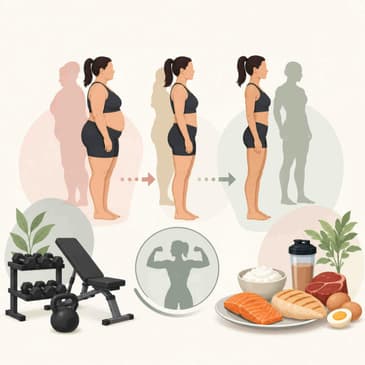
Dr. Neal answers Joe’s question about preserving muscle while using GLP-1 medications for weight loss, explaining that some loss of strength can be expected as body weight decreases and that current research does not show GLP-1 medications cause greater muscle loss than weight loss alone. He highlights the two most important strategies for maintaining muscle mass, adequate protein intake and consistent strength training, and shares practical recommendations for both.
Quotes to ponder:
“One explanation for the loss of muscular strength is simply that there is less of you.”
“In fact, some studies have found that, when we lose weight, 25-30% of that weight, may be lost muscle!”
“So far, the good news is that GLP-1 medications do not seem to increase muscle loss to any greater extent than what we would normally see as people lose weight.”
Learn more about your ad choices. Visit megaphone.fm/adchoices
[00:00:00] Expedia and VisitScotland invite you to come experience the beauty that awaits in Scotland. The sweep of wild coastlines, quiet locks and untamed landscapes. Fresh cuisine that feels rooted in the land. Come experience the kind of stillness that stays with you long after you leave. Plan your Scottish escape today at Expedia.com slash VisitScotland.
[00:00:29] From athletic stuff like a full court pick up game, swish, to athletic stuff like a half mile stroll. Get those steps in! Head to Sierra or Sierra.com for the brands you want at the prices that let you do it all. From athletic to athletic-ish, Sierra's got it. It's another Q&A edition of Optimal Health Daily and I'm Dr. Neal Malik.
[00:00:49] Hey there, happy Friday and welcome to another Q&A edition of Optimal Health Daily where I answer your health questions related to fitness, diet and nutrition and lots more. You send in the questions and I answer them for you. Now if you do send in a question, we'll physically mail you a copy of our hardcover workbook as long as you're in the U.S. and we have some left. If you're outside of the U.S., we'll email you a digital version.
[00:01:16] Now I will tell you how to send in a question at the end of the show, but once a month, usually during the first Q&A episode of the month, I mention a bit about my background and credentials so you can better understand where my perspectives come from. And given this is the first Q&A of the month, it's time. Now I've been obsessed with Batman for as long as I can remember, but I was not always interested in the things I talk about on this show, like nutrition, exercise, health and wellness.
[00:01:45] But being diagnosed with a chronic disease at the age of 19 definitely changed my life's purpose. It was at that time I decided to focus my attention on helping others so that no one else had to experience a chronic disease diagnosis like I did. But to do that, I wanted to make sure I had some credibility. This is not meant to be a humble brag, but instead gain your trust. I received both my master's and doctoral degrees in public health.
[00:02:11] And to make sure I really covered all of my bases, I also became a registered dietitian nutritionist, a certified health education specialist, and a certified exercise physiologist through the American College of Sports Medicine. I've been teaching in higher education for a long time now, and I'm currently faculty within the California State University system.
[00:02:32] I've published peer-reviewed studies, I've presented at national and international conferences, and I've been interviewed by over 70 different media outlets for my expertise on basically all the things I talk about on this podcast. So I say all of this so that when I provide my commentary after each episode and answer the questions you send in, I hope you feel as though it's coming from a place of truth. My only intention is to help you feel your best.
[00:03:00] All right, and with that, let's jump right in and hear today's question as we optimize your life. Today's question came via email. Joe writes, Hello, Dr. Neal Malik. I love the OLD podcasts, and as a pharmacist myself by training, I always search for the most up-to-date clinical information and do my best to stay in the know.
[00:03:26] My question is, for those in their 40s and 50s who are on GLP-1 medications and want to minimize muscle loss, what does the current research say about the minimal effective dose of strength training to maintain muscle mass only?
[00:03:41] I know it may depend on each individual, but despite feeling great about my progress, I do feel like my strength has decreased since starting from 227 pounds in January and am now 185 pounds almost a year later. Thank you kindly for the inspiration. Thank you for taking the time to send in your question, Joe, and thank you so much for your kind words. I am so glad you find all of the podcasts and our network so helpful.
[00:04:09] And also, congratulations on your weight loss progress so far. You mentioned you are concerned about your loss of some of your strength since you've started this weight loss journey and since starting on GLP-1 medication. One explanation for the loss of muscular strength is simply that there's less of you. Since you've lost 42 pounds over the past year, that's 42 pounds less mass that your body has to carry around.
[00:04:36] So, it is somewhat normal to see a dip in strength as body weight drops. In fact, some studies have found that when we lose weight, 25-30% of that weight may be lost muscle. And so, you're also correct that with weight loss and when using certain medications, muscle loss can happen too. And in fact, it's fairly natural. Loss of muscle will, of course, lead to a loss of strength.
[00:05:02] And over time, muscle loss, if it continues, can make everyday activities more difficult and may increase the likelihood of falls and bone fractures. So, I completely understand the concerns you have about muscle loss. Now, what are GLP-1 medications? And how might they lead to muscle loss? First, the GLP in GLP-1 is an abbreviation for glucagon-like peptide.
[00:05:29] Glucagon-like peptide, or again GLP, is a hormone that the body naturally produces. One of the functions of this hormone is to tell the body that we've had enough to eat. GLP-1 medications act in the same way. They tell the body we've had enough to eat. So, GLP-1 medications decrease appetite. And with a decreased appetite, we'd expect weight loss will naturally follow.
[00:05:56] But as we've talked about on this podcast many times before, weight loss doesn't always mean fat loss. The number on the scale doesn't always give us an accurate picture of what's really going on. And scales just measure weight. They don't tell us the type of weight we've gained or lost. So, weight loss could mean fat loss, or it could mean a loss of water weight, or it could mean muscle loss, or a combination of all of those things.
[00:06:23] So, if someone is taking a GLP-1 medication, and if someone is losing weight, are they more likely to lose muscle, fat, or water as they lose that weight? Luckily, studies have tried to answer this question. And so far, the good news is that GLP-1 medications do not seem to increase muscle loss to any greater extent than what we would normally see as people lose weight.
[00:06:48] Other studies smartly looked at not just overall muscle loss while on GLP-1 medications, but also loss of muscle functioning, like loss of mobility and overall strength and endurance. So again, GLP-1 medications don't seem to increase the rate of muscle loss beyond what we would normally expect when someone loses weight, and don't seem to decrease muscle functioning.
[00:07:14] Now the question is, is there anything we can do to prevent this muscle loss? Because it's going to happen no matter what. It's just a matter of how much muscle do we lose while we're losing weight, and on these medications. Luckily, there are things we can do to prevent excess muscle loss, and it comes down to two things. And I bet you can guess what two things I'm about to mention. You ready to hear them? Here we go.
[00:07:43] So diet and exercise. No big surprise there, right? As far as diet, getting enough protein each day can help. A number of health organizations agree that 80 to 120 grams of protein per day is a good starting point. Now if you want to get a bit more specific, you could aim for 1.5 grams of protein per kilogram of body weight per day. Now to make sense of this recommendation,
[00:08:12] a bit of math is needed, especially for those of us in the US. We don't measure body weight in kilograms. We measure our body weight in pounds. But luckily the math isn't complicated. Stick with me here. If you want to know your body weight in kilograms, just divide your body weight in pounds by 2.2. So if someone weighs 150 pounds, let's say,
[00:08:36] they would divide 150 pounds by 2.2 to get their body weight in kilograms. So punching this into my calculator, 150 divided by 2.2 equals 68.2. That means 150 pound person weighs 68.2 kilograms. All right. Now that we have our body weight converted to kilograms, let's go back to the original protein recommendation.
[00:09:06] 1.5 grams of protein per kilogram of body weight. Well, we've got our body weight in kilograms, 68.2. So now we just multiply this by 1.5. Because remember we said we need 1.5 grams of protein per kilogram body weight. Kilograms, 68.2 times 1.5 equals 102.3 or about 102 grams of protein per day.
[00:09:36] There. No matter what your body weight, you would follow these same steps. Divide your body weight in pounds by 2.2, whatever that equals, multiply that number by 1.5 and you've got your daily protein goals. All right. So we've got that 102 grams of protein per day for 150 pound person. Let's put that in perspective. Most of us would get about 37 grams of protein from a lunch or dinner sized portion of cooked chicken breast.
[00:10:06] So again, 150 pound person would be getting about a third of their protein needs from that one serving of chicken. Now all of this is important because if we consume enough protein each day, we can hopefully hang on to more of our muscle as we lose weight. Now it's also recommended that when we sit down at each meal, we eat the protein rich foods first. Now, eating enough protein doesn't quite solve the problem.
[00:10:33] We have to also increase the demand for that protein by exercising our muscles. So far, the recommendation for those taking GLP-1 medications and those losing weight is to strength train at least three times each week. So Joe, based on your original question, what's the minimum dose? Three times per week of strength training seems to be the minimum.
[00:10:58] And each strength training session should incorporate all of the major muscle groups, meaning back, shoulders, arms, chest, abs, and legs. And in addition, at least 150 minutes of moderate intensity aerobic exercise each week should also be incorporated. Again, so far, these recommendations seem to preserve muscle and even preserve the health of our skeletal structure too.
[00:11:29] If you're a small business, the right hire can be make or break. Hoping the right people see your job posting isn't the best growth strategy. When the pressure's on and you need the right hire, this is a job for sponsored jobs. Join the 3.3 million employers worldwide that use Indeed to connect with quality talent that fits their needs. Spend less time searching and more time actually interviewing candidates who check all your boxes. Less stress, less time, more results.
[00:11:58] When you need the right person to cut through the chaos, this is a job for Indeed sponsored jobs. And listeners of this show will get a $75 sponsored job credit to help get your job the premium status it deserves at Indeed.com slash podcast. Just go to Indeed.com slash podcast right now and support our show by saying you heard about Indeed on this podcast. Indeed.com slash podcast. Terms and conditions apply.
[00:12:28] Need to hire? This is a job for Indeed sponsored jobs. This Father's Day, do more with Dad and spend less with low prices guaranteed at the Home Depot. Get him fired up with a new grill and accessories like the Next Grill 5 burner for just $299 so you can spend more time together while he becomes the grill master he was always meant to be. Or build memories with savings on top brand power tools so you can tackle projects side by side.
[00:12:56] Gift more and do more together this Father's Day with help from The Home Depot. Exclusions apply. See homekeeper.com slash price match for details. I wish you all the best, Joe, and continued success. And again, thank you for taking the time to send in your question. Answering your questions is my favorite part of the show. And if you want to send in a question, remember, you'll get a physical copy of our workbook mailed to you if you're in the US and as long as we have some still available. And remember, you can email your question directly
[00:13:25] to health at oldpodcast.com. Or if you want your voice played on the show, come by oldpodcast.com slash ask. You can record your question straight from your computer's microphone. You can even play back your message and do retakes before sending it in. Or you can call in your question. The number is 1-614-568-3643. That's 1-614-568-3643.
[00:13:56] Thank you again so much for sending in your questions. But that'll do it for another Q&A edition of Optimal Health Daily. Thank you for listening every day and all the way through. I hope you have a great start to your weekend. And of course, I'll see you back here tomorrow where your optimal life awaits. And of course, I'll see you back here tomorrow. Thank you. Thank you.