



Get the 200+ Page Optimal Living Daily Workbook (PDF) — Free.
Want to turn today’s episode into an actionable plan? Join the Optimal Living Weekly newsletter and I’ll send you our 200-page digital workbook immediately. It’s packed with the best takeaways from the show, formatted for easy reading and implementation at home.
Get your free PDF workbook here: https://oldpodcast.eo.page/join
Discover all of the podcasts in our network, search for specific episodes, get the Optimal Living Daily workbook, and learn more at: OLDPodcast.com.
Episode 3461:
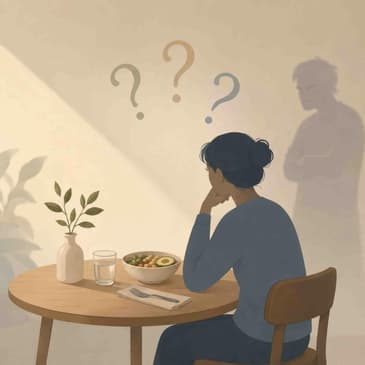
Dr. Lisa Firestone explores how our earliest experiences and internalized messages shape the way we think about food, our bodies, and self-worth. By examining the beliefs we inherited, challenging our inner critic, and treating ourselves with the same compassion we'd offer a friend, we can build a healthier and kinder relationship with eating.
Read along with the original article(s) here: https://www.psychalive.org/three-questions-that-could-change-your-relationship-with-food/
Quotes to ponder:
"Our relationship with food and eating starts to form very early in our lives."
"One of the most powerful actions we can take to transform our relationship with food is to challenge our critical inner voice."
"Being kind to ourselves redefines our relationship with food by breaking internalized, often harmful patterns that have been engrained in us."
Episode references:
Centers for Disease Control and Prevention (CDC): Nutrition, Physical Activity, and Obesity Data, Trends and Maps: https://www.cdc.gov/nccdphp/dnpao/data-trends-maps/index.html
Stress in America 2021: Stress and Decision-Making During the Pandemic: https://www.apa.org/news/press/releases/stress/2021/one-year-pandemic-stress
Learn more about your ad choices. Visit megaphone.fm/adchoices
[00:00:00] Hey, it's Christy from Lululemon and I'm here at the office checking out the Shake It Out shorts. These have been my go-tos and I kind of think of them as a middle ground between a true run short and a more playful, athletic, sporty short. They have all the performance you want for running, so a comfy liner, our lightweight, swift fabric, even a pocket for your keys. But what I really like is the flowy fit and layered hem. It gives it a little bit of volume, a little bit of fun, so they feel as good on a run as they do just at coffee afterwards. You can find the Shake It Out shorts in store now or online at lululemon.com.
[00:00:30] This is Optimal Health Daily. Three Questions That Could Change Your Relationship With Food by Dr. Lisa Firestone of PsychAlive.org and I'm Dr. Neal Malik, your very own host and narrator. Welcome back to Optimal Health Daily, where I read to you from some of the most popular health and fitness blogs out there, with permission from the websites and always with a bit of my commentary at the end. And with that, let's get right to the post as we optimize your life.
[00:01:01] Three Questions That Could Change Your Relationship With Food by Dr. Lisa Firestone of PsychAlive.org. When my niece was a teenager, she asked a group of her friends to guess the number of calories in a serving of corn nuts she was eating. Because none of them had ever eaten corn nuts before, she posed the question as more of a random game of trivia than out of any concern about nutrition.
[00:01:24] One friend instantly blurted out, 140. Impressed, my niece said, wow, that's exactly right. How'd you guess that? I didn't guess it, said her friend. I knew. And so unfolded a story of how, at age 11, my niece's friend had found a book belonging to her mom that listed the nutrition information of pretty much every food under the sun.
[00:01:49] Sneaking into her mother's bedroom, the young girl all but memorized the book before starting a year-long obsession with counting every calorie she consumed. Sadly, way too many of us can relate to this story in one way or another. Our relationship with food and eating starts to form very early in our lives. It's impacted by the messaging we receive, be it through attitudes and comments directed at us, or those our influential caretakers modeled and directed at themselves.
[00:02:17] For example, a parent counting their every calorie, a sibling standing critically in front of the mirror, or a grandparent advising us not to get seconds while gesturing toward our midsection. Then, of course, there is the monumental amount of messaging we get from society, which includes a $192 billion diet industry that banks on us feeling badly about our weight and seeing food as alternately our best friend or our worst enemy.
[00:02:45] Whatever our stories around food may be, most of us wish we had a better relationship with it. Many people already struggle with critical thoughts about their bodies. These thoughts can impact every aspect of how we eat and what we feel when we eat. Diets have been on the rise, with the latest CDC data showing that 17% of Americans were on one as of 2018. A 2021 report from the American Psychological Association on Stress in America
[00:03:12] further showed that 61% of American adults said they'd experienced undesired weight changes since the start of the pandemic. With all of this in mind, now is the time to challenge any ruptures in our relationship to food. When it comes to changing how we feel about ourselves and think about the food we eat, asking ourselves these three questions can be a huge help. 1. What are the messages you got around food?
[00:03:38] Our first experiences learning to feed and nourish ourselves have a strong impact throughout our lives. Unless we can recognize and differentiate from unhealthy attitudes we internalized around food, we're likely to subconsciously continue a cycle of self-criticism or even self-punishment. Taking time to reflect on what kinds of messages we received around food, eating, and our bodies can shine an incredible amount of light on the way we feed ourselves today.
[00:04:06] When we do this exercise, some of these messages may be obvious. Maybe we had relatives who constantly called us fat or put us on diets to lose weight. Other messages may have been more subtle. Maybe we noticed our mother feeling down after pinching her waistline in the mirror, or our father falling into a pattern of extreme restricting that made him irritable. When we were distressed as a child, we may have been repeatedly handed a cookie in an attempt to soothe us,
[00:04:33] inadvertently setting up a pattern of using treats to calm ourselves. Or we might have had a parent who modeled a relationship with food in which they indulged in binges when they themselves were in turmoil. Whether we knew it at the time or not, our ideas around food and eating were formed in these encounters. Being curious about our own story as it relates to how we came to feed ourselves can be an ongoing beneficial process. It can help us understand some of our habits as well as the current way we treat ourselves
[00:05:02] when it comes to food and eating. 2. What are your critical inner voices around food? It's much more challenging for people to find their own natural rhythm and balance when food itself can stir up feelings of anxiety and guilt. Many people struggle with disordered thoughts and feelings around how we look and what we eat. One major element that's fueling this anxiety and guilt, along with self-doubt and self-hatred, is our critical inner voice.
[00:05:31] The critical inner voice is like a cruel coach inside our heads that reinforces and elaborates on destructive thoughts and attitudes we've internalized throughout our lives. This inner critic can get very focused on what we eat and how we nourish ourselves. We tell ourselves, You can't eat that. What's wrong with you? You're out of control. You're so gross. Or, alternatively, You deserve a reward. It's been a hard week. Or, You need to calm down. Just have a treat.
[00:05:59] The tricky thing about this voice is that it doesn't always make itself so obvious. It tries to disguise itself as our real point of view by continually building a case against us, berating us when we fail, but also luring us into actions that work against our goals. One more glass of wine won't hurt. You had a hard day. Have another piece of cake. What difference does it make anyway? The problem, of course, is that that same voice that seduces us
[00:06:27] is right there to beat us up the minute we take its advice. See? You failed again. You're going to look terrible now. You're never going to change. One of the most powerful actions we can take to transform our relationship with food is to challenge our critical inner voice. This means identifying it every time it comes up and systemically refusing to accept it as our real point of view. Treating this inner critic as the enemy can help us interrupt the self-destructive cycles
[00:06:56] we get into in relation to how we feed ourselves, an act which should, at the very least, come from a place of kindness. And three, how would you treat a friend in this situation? How do you feel when a friend berates themselves in front of you? Or goes on yet another painfully restrictive diet? How about when they feel guilty for enjoying a meal or having a treat? Our reactions may range from eye-rolling to genuine concern and protectiveness. And yet,
[00:07:25] we're rarely inclined to extend the same compassion to ourselves. We're perfectly willing to put ourselves down and enforce all kinds of rules and regulations on our own bodies. We never think to challenge the mean ways we treat ourselves when it comes to food. In fact, very few of us regard feeding ourselves as a kind act at all. We're unwilling to attune to our own needs and accept our natural hunger. One simple way to start to challenge this is to ask ourselves, how would I treat a friend
[00:07:54] in this same situation? What would I say about them beating themselves up for gaining weight? Would I insult them for craving a certain food? Would I force them to eat everything in their fridge that they like in one night so they can starve themselves tomorrow? Would I tell them they're only good if they restrict as much as possible? Would I make them feel guilty for being hungry or anxious about needing to meet a natural human need? When we feel our anxiety arising around food, we can stop to take a pause and take a breath.
[00:08:23] We can think about the most nurturing and compassionate way to treat ourselves in that moment, a way that matches how we behave with a friend. That may mean eating something really nutritious that boosts our energy or it may mean stopping to savor something delicious. Whatever the action may be, the intention matters. Being kind to ourselves redefines our relationship with food by breaking internalized, often harmful patterns that have been ingrained in us. By understanding
[00:08:52] where these patterns come from, challenging the critical thoughts that drive them and building new behaviors and attitudes around food, we can completely transform how we eat and perhaps, even more importantly, how we feel. You just listened to the post titled Three Questions That Could Change Your Relationship With Food by Dr. Lisa Firestone of psychalive.org and I'll be right back with my commentary. One thing I love about summer
[00:09:22] is how easy everything feels. The days are a little more relaxed and I find myself reaching for the same comfortable go-anywhere pieces again and again. And Quince has exactly that. Quince's 100% European linen pants and shirts are lightweight, breathable, and easy to just throw on, starting at just $34. Their tees are soft enough to wear all day and the lightweight cotton sweaters are perfect when evenings cool down. Everything is priced 50-80% less than comparable brands
[00:09:51] because they work directly with ethical factories and cut out the middlemen. So you're paying for quality, not markup. I love their cashmere polo. It's incredibly soft and feels expensive, works with everything, and is actually affordable. Make your summer wardrobe easier. Go to quince.com slash OHD for free shipping on your order and 365-day returns. Now available in Canada too. That's q-u-i-n-c-e dot com slash
[00:10:21] OHD for free shipping and 365-day returns. quince.com slash OHD This episode is brought to you by Google Health. Stop chasing someone else's definition of health. What matters is what's healthy for you. Google Health offers a new kind of coach built with Gemini for effortless tracking, sleep insights, and holistic coaching tailored to you. Visit googlestore.com to learn more and start a new relationship with your health. Requires Google account, Google Health app, internet,
[00:10:50] and Google Health premium subscription. Features subject to change. Availability and results vary. Not intended for medical purposes. Works independently of Gemini apps. Check responses for accuracy. Dr. Neal Malik here for my commentary. There have actually been some fascinating studies looking at what today's author, Dr. Firestone, mentioned. For example, Dr. Firestone talked about our inner voices and what those voices tell us when we're around tempting foods especially. Researchers have tried to explain why it can be so difficult to avoid those oh-so-tempting foods,
[00:11:20] even though our inner voices may be telling us, come on, stay away from that, fill-in-the-blank food here. Or sometimes we end up indulging anyway. Researchers found that this can happen because the joy we think we'll get from consuming something creates a kind of debate in our minds. We think the food will make us happy and at the same time, we understand consuming the food may not help us reach our health goals. So when the thought of eating this tempting food outweighs our health goals,
[00:11:49] we will talk ourselves into eating the tempting food. To make this less likely to happen, researchers have found that something called dietary self-talk can be helpful. This is where we make it more likely that the health goal side of the argument will win out. It's kind of like the athlete talking to themselves before the next free throw, the next serve, the next at-bat, the next heavy lift, the next sprint. They talk themselves into a better performance. It turns out we can use
[00:12:19] that same kind of positive self-talk to encourage ourselves to pick the healthier behavior. And if we can combine this positive self-talk with making sure that the healthier option is the easy choice or the easy option, the chances the behavior will actually occur will go up even more. All right, that's it for today. Thank you so much for listening. Thank you for being a subscriber or follower of the show. I hope you have a great rest of your day and I'll see you back here tomorrow where your optimal life awaits. have a great rest of your day and I'll see you back there.
[00:12:49] I'll see you back there. I'll see you back there. I'll see you back there. Thank you.