



Get the 200+ Page Optimal Living Daily Workbook (PDF) — Free.
Want to turn today’s episode into an actionable plan? Join the Optimal Living Weekly newsletter and I’ll send you our 200-page digital workbook immediately. It’s packed with the best takeaways from the show, formatted for easy reading and implementation at home.
Get your free PDF workbook here: https://oldpodcast.eo.page/join
Discover all of the podcasts in our network, search for specific episodes, get the Optimal Living Daily workbook, and learn more at: OLDPodcast.com.
Episode 3483:
Nancy Clark explains that successful weight management is driven more by overall calorie intake than by blaming carbohydrates or embracing keto. She explores how insulin response, genetics, and athletic training influence nutrition needs, helping listeners understand why a balanced, individualized approach is often more sustainable than extreme dieting.
Read along with the original article(s) here: https://nancyclarkrd.com/2019/04/13/weight-management-carbs-calories-or-keto/
Quotes to ponder:
"The bottom line is: calories count. You can lose weight by limiting carbs and/or fat."
"Eating “carbs” as part of a meal elicits a lower glycemic response than eating them solo. Protein and fat slow their conversion into blood glucose, thus blunting the glycemic response."
"You have to figure out your answer to the keto or veto question. For serious athletes who do intense exercise, take note: It is a lot of work with no proven performance benefits to date."
Learn more about your ad choices. Visit megaphone.fm/adchoices
[00:00:00] Right now, get up to 15% off select storage solutions. Put heavy-duty HDX totes to good use, protecting what's important to you. The solid, impact-resistant design prevents cracking, and the clear base and sides make items easy to find even when the totes are stacked. Find select shelving and tote storage up to 15% off at the Home Depot to organize every room in your home, from your garage to your attic. Visit homedepot.com, how doers get more done.
[00:00:28] Hey, Washington DC. Class it up with Crocs. You know back to school is coming in fast. So why wait to find your new fave footwear? Step into a local Crocs store and step into your new look. Try it. Style it. Make it yours. Because the right pair doesn't just show up, it shows off. First day fits, handled. Walk out ready for whatever's next. Visit your nearest Crocs store today.
[00:01:00] This is Optimal Health Daily. Weight Management. Carbs, calories, or keto. By Nancy Clark of nancyclarkrd.com. And I'm Dr. Neal, your very own personal narrator. Hey there, welcome to a Thursday edition of Optimal Health Daily. Remember, this is one of a few shows where we read to you from blogs for free, so that you don't have to read them yourself.
[00:01:22] Now on Fridays, that's where I answer your questions. Remember, you can send in a question by emailing it directly to health at oldpodcast.com. All right, and with that, let's get right to today's post as we optimize your life. Weight Management. Carbs, calories, or keto. By Nancy Clark of nancyclarkrd.com.
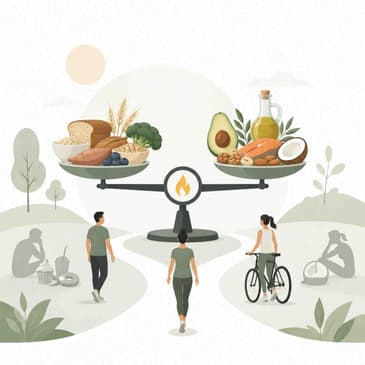
[00:01:49] For most of the past 40 years, dieters have been told to limit dietary fat, believing it leads to obesity and heart disease. Today, dieters hear messages to indulge in a very high-fat or ketogenic diet and limit the carbohydrate-based foods that fueled their low-fat diet. Confusing, right? The bottom line is, calories count. You can lose weight by limiting carbs or limiting fat. Let's look at the weight management picture as we understand it to date.
[00:02:19] Remember, nutrition is an evolving science. Are carbs fattening? Foods such as white bread, pasta, rice, and potato, or carbohydrates, have been demonized as being fattening because they have a high glycemic index. That is, they digest quickly and can spike blood glucose when eaten solo in 50-gram carbohydrate doses. Each 50-gram carbohydrate dose contains about 200 calories.
[00:02:48] So what happens when the average unfit American devours a basket of warm dinner rolls is their blood glucose levels spike. When blood glucose rises quickly, the pancreas secretes insulin to carry glucose out of the blood and into the muscles. Insulin can stimulate hunger, the desire to eat, and the potential to gain weight. But how often would you eat rolls without butter? Or a plate of pasta without sauce and Parmesan cheese?
[00:03:15] Or a large potato all by itself with no butter or protein? Most likely, rarely. Eating carbs as part of a meal elicits a lower glycemic response than eating them solo. Protein and fat slow their conversion into blood glucose, thus blunting the glycemic response. The advice given to the general public to limit high glycemic foods often results in eating fewer calories and therefore losing weight.
[00:03:42] The advice can appropriately help stabilize blood glucose in women with polycystic ovary syndrome, or PCOS, and unfit people with obesity, prediabetes, and type 2 diabetes. But the advice may not pertain to you, let's say if you're an athlete. The bodies of athletes eagerly take up blood glucose to fuel exercise and replenish depleted muscle glycogen stores.
[00:04:05] Too little carb, meaning too little grain, fruit, or vegetables, results in needless muscular fatigue if you train hard day after day. That said, some very athletic people live in large bodies. They tend to be frustrated that they don't shed fat despite religiously abiding to a low-calorie diet plus rigorous exercise. As one triathlete complained, I should be pencil thin by now for the exercise I do. What's going on?
[00:04:34] The answer might relate to that athlete's personal insulin response to carbohydrate. Research suggests genetics may lead some people to be high insulin secretors. Just as not all couch potatoes secrete excess insulin, not all lean athletes escape type 2 diabetes. What does this mean for you? Let's say if you're a weight-conscious athlete. If you struggle to lose weight, you might be a high insulin secretor. Take a look at your family genetics.
[00:05:04] Do your relatives gain weight easily? Do they have diabetes? If yes, you want to talk with your doctor. You might be better off choosing a low-glycemic diet, trading processed carbs for whole grains, and combining them with lean protein and healthy fats such as nuts, nut butter, and avocado. And plan to keep exercising, religiously. Keto or veto? You have undoubtedly heard people rave about the keto diet.
[00:05:32] This very rigid, high-fat, low-carb food plan with more than 70% of the calories from fat and less than 5% of the calories from grains, fruits, and veggies is touted to reduce weight and reduce the risk for heart disease, diabetes, cancer, and even Alzheimer's. Here's some food for thought on the current keto rage. You can figure out if you want to jump in or think twice.
[00:05:57] Nutritional ketosis, as opposed to diabetic ketoacidosis, which is a life-threatening condition, curbs hunger due to the appetite-suppressing effect of ketones. To induce nutritional ketosis, a person needs to restrict carbohydrate to about 20 to 50 grams a day. That means eating only a few berries, some leafy greens, mushrooms, no milk, yogurt, or grains.
[00:06:22] You'd eat lots of avocado, olive oil, nuts, nut butter, and some cheese, bacon, and fatty meats. When carbohydrate is not available for fuel, the body adapts, painfully over several weeks of feeling lousy, hence the term keto flu, to burning fat and makes a byproduct called ketones. Infants burn ketones. The adult body needs to relearn how to use them. Due to lack of carbohydrate, keto dieters secrete very little insulin,
[00:06:51] which contributes to reduced appetite, which, when combined with limited food options and the consumption of fewer calories, leads to fat loss. And the health benefits associated with weight loss, including reduced risk of diabetes, heart disease, and so on. But then, the questions arise. Would following a ketogenic diet suit your lifestyle? This means no bananas, no beer, no birthday cake. What would you eat on Meatless Monday?
[00:07:18] Plant proteins like beans come with too many carbs. Also, no hummus, burritos, or chili. Would a high intake of saturated fat, like from bacon, sausage, and spare ribs, create cardiovascular issues? Does the low fiber intake have a negative impact on your gut? Meaning, could the keto diet lead to constipation? If you happen to love crunchy apples, fruit smoothies, and roasted veggies, to say nothing of a social life, how long could you sustain the keto lifestyle?
[00:07:48] Also, what would happen when you get out of keto jail? Would you end up binge eating carbs? Would that leave you with rebound weight gain, feeling depressed, and being worse off than your pre-keto status? And would changing the nutrient-poor food choices in your current lifestyle be the wiser weight management solution? Meeting with a registered dietitian could help you make those changes more easily than you may think. You have to figure out your answer to the keto or veto question.
[00:08:15] For serious athletes who do intense exercise, take note. It's a lot of work with no proven performance benefits to date. You just listened to the post titled, Weight Management, Carbs, Calories, or Keto, by Nancy Clark of nancyclarkrd.com. And I'll be right back with my commentary. This episode is brought to you by Google. The spirit of innovation is deeply ingrained in America, and Google is helping Americans
[00:08:45] innovate in ways both big and small. The U.S. Department of Transportation is empowering staff with Google AI tools to rapidly synthesize research and streamline contracting, directly strengthening the safety and reliability of our nation's transit systems. This is a new era of American innovation. Learn more at g.co slash American Innovation. Who cares about your poops? Oli does. That's why Oli's science-backed gut health lineup helps support your family's regularity.
[00:09:15] From daily probiotics to fiber gummies, your kiddos will love. Find it all on oli.com. That's O-L-L-Y dot com. These statements have not been evaluated by the Food and Drug Administration. This product is not intended to diagnose, treat, cure, or prevent any disease. Dr. Neal Malik here with my commentary. Multiple long-term studies have found that lower-carbohydrate diets may contribute to a less healthy gut microbiome.
[00:09:44] So earlier in the post today, Nancy mentioned that those following a keto diet may experience constipation. Well, this is because, again, a low-carbohydrate diet may lead to a diet that's low in dietary fiber. But also, we know that less dietary fiber can lead to the growth of harmful gut bacteria. This may lead to a not-so-healthy gut microbiome. And a not-so-healthy gut microbiome may increase disease risk.
[00:10:13] Also, we're finding that in some individuals, eating a high-fat diet may increase the number of harmful compounds called lipid peroxides in the body. Lipid peroxides can form as a natural byproduct when our bodies metabolize fat, especially when following a high-fat diet, like a ketogenic diet. What happens is these lipid peroxides start to damage healthy cells. And lastly, a high-fat diet may also increase the amount of fat floating in the bloodstream,
[00:10:42] which we know is associated with increased chronic disease risk too. So here's what we know so far. In the short term, following a ketogenic diet may not be an issue. But we can't say for sure what's going to happen to the body and disease risk over the long term. All right, that'll do it for today's episode. Thank you so much for listening. Thank you for being a subscriber or follower of the show. I hope you have a great rest of your day.
[00:11:07] And I'll see you back here tomorrow for another Friday Q&A and where your optimal life awaits.