



Get the 200+ Page Optimal Living Daily Workbook (PDF) - Free.
Want to turn today's episode into an actionable plan? Join the Optimal Living Weekly newsletter and I'll send you our 200-page digital workbook immediately. It's packed with the best takeaways from the show, formatted for easy reading and implementation at home.
Get your free PDF workbook here: https://oldpodcast.eo.page/join
Discover all of the podcasts in our network, search for specific episodes, get the Optimal Living Daily workbook, and learn more at: OLDPodcast.com.
Episode 3508:
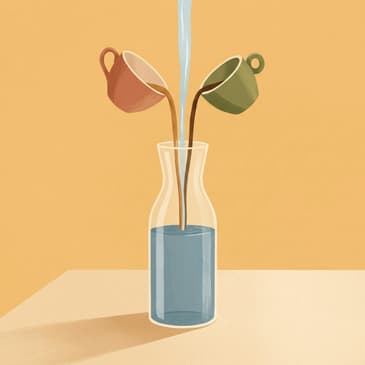
Dr. Neal Malik takes on a question he gets often: whether the tea and coffee you drink through the day count toward your daily fluid needs. He looks at what the research actually says about caffeine and hydration, and how to think about your total fluid intake rather than tracking plain water alone. It is a practical reset on one of the more persistent healthy habits myths.
Optimal Health Daily is a daily health and wellness podcast where we narrate the best articles on nutrition, fitness, weight loss, and healthy habits, read to you by a professional narrator so you can improve your health a little more every day.
Learn more about your ad choices. Visit megaphone.fm/adchoices
[00:00:00] I just want to give you the space to process it, Michael said. Elena paused. I don't think I want to see anybody else. This is the love story of real hinge couple Elena and Michael, written and read by me, Raven Smith. Listen to the free audiobook now. Ultra running shoes are all about space. The space to go further. To feel better. To do something you never thought possible. And this space starts with Ultra Fit.
[00:00:29] Unlike traditional running shoes, Ultra Fit gives toes more room to move naturally. So every step is strong, balanced and comfortable. Whatever you're lacing up for, stay out there with Ultra. Shop now at ultrarunning.com. That's A-L-T-R-A-running.com. It's another Q&A edition of Optimal Health Daily, and I'm Dr. Neal Malik. Hey there, happy Friday. Welcome to another Q&A edition of Optimal Health Daily, where I answer your health questions related to fitness,
[00:00:58] diet and nutrition, and lots more. You send me the questions, and I answer them for you. Alright, let's keep this intro short and sweet. Let's get right to today's question as we optimize your life. Hi Dr. Neal. My name is Ruba. My question has to do with tea and water intake. I've been mindful about how much water I drink,
[00:01:24] and I've been boosting my water intake, but at the same time I drink a lot of tea, and I know tea can be considered dehydrating. I know it's a diuretic, but should I have to drink equal amounts of water to make up for the tea that I'm drinking, or should I just consider the tea as part of my water intake? Your feedback would be appreciated. Thank you. Thank you for your question, Ruba. I'm going to get to the point.
[00:01:54] The bottom line is this. Your tea intake does count towards your overall fluid intake for the day. Now historically, coffee and tea have been given a bad rap. There are myths swirling that both of them act as diuretics, or as you mentioned, Ruba, dehydrating. Meaning, when you drink them, they actually cause your body to lose more water. So it would go something like this. You drink a cup of tea or coffee, and your body, within a relatively short period of time,
[00:02:22] would then basically eliminate the fluid you just drank via your urine. Again, this was the belief, but we're learning that this simply is not the case. Coffee and tea do mildly trigger this diuretic effect, but not to this extreme. Your body does still absorb and use the majority of the liquid you consume via both coffee and tea. Not only that, but there are some potential health benefits to consuming coffee and tea regularly.
[00:02:47] Researchers are discovering that consuming 2-4 cups of coffee, black or green tea, most days of the week can reduce a person's risk for developing type 2 diabetes, heart disease, colon and liver cancer, and even Parkinson's disease. I must mention, though, that these studies usually look at people that drink their coffee and tea without any added milk, cream, or sugar. But here's the question that researchers still aren't able to answer. Is it the healthy compounds in coffee and tea that prevent these diseases,
[00:03:17] or is it the caffeine? The consensus seems to be that both may help lower our risk for these diseases. For example, we know that coffee and tea come from plants, duh, and plants contain lots of beneficial compounds. For example, plant-based foods contain antioxidants. Remember, antioxidants are good guys. They sound like a bad thing, but they're actually really good. Now, there are lots of different types of antioxidants. Some of these antioxidants are called polyphenols.
[00:03:46] These are the types of antioxidants we often find in coffee and tea. Researchers are learning that these polyphenols may prevent certain diseases like heart disease and cancer. So yes, it appears these compounds are probably beneficial to our health. But it's also possible that the caffeine itself helps to make them more potent. Now, there are a few studies that have been performed using decaf tea and decaf coffee, and those are showing promising results.
[00:04:13] But we need more published studies to really know what's going on. Okay, so while all of this sounds amazing, there's no need to go overboard with your tea and coffee consumption. Most health agencies recommend that healthy adults consume no more than 400 milligrams of caffeine each day. If you look at a nutrition facts label, you'll see caffeine is measured in milligrams. So if we're talking about tea specifically, if you take your run-of-the-mill store-bought tea,
[00:04:39] you would get about 400 milligrams of caffeine if you drank about 7 cups, or about 56 fluid ounces. So that would be quite a bit. Because it's naturally higher in caffeine, drinking about 2.5 cups of your store-bought drip coffee would get you to around 400 milligrams. Now, if you have an underlying condition like high blood pressure, IBS or irritable bowel syndrome, heartburn, also known as gastroesophageal reflux, or stomach ulcers,
[00:05:08] or inflammatory bowel disease like Crohn's disease or ulcerative colitis, you may want to check with your doctor first. Also, for those that are pregnant, the American Congress of Obstetricians and Gynecologists recommend no more than 200 milligrams of caffeine per day. So again, in the context of tea, that would be no more than about 4 cups each day. When we're talking about coffee, anywhere from 1 to 1.5 cups, it really depends on the brand. So please know, depending on the brand, the caffeine content can vary quite a bit.
[00:05:37] So be sure to check that label to really make sure you know how much you're actually getting per serving. Now, I can't talk about coffee, tea, and caffeine without also addressing energy drinks. Now, we simply don't know at this time whether energy drinks would provide the same benefits, like the decreased risk of heart disease in certain cancers. Part of the reason for this is that energy drinks not only contain caffeine, but usually sugar, and possibly some herbal supplements as well.
[00:06:05] So because of all of these other ingredients, it makes it difficult to determine the true health effects of these products. The current recommendation when it comes to energy drinks is this. If you're an otherwise healthy adult, consume no more than two cans of Red Bull per day or no more than one bottle of 5-hour energy. Now, if you do consume either of these, it's best to avoid other sources of caffeine. So that would kind of be your limit for the day. Two cans of Red Bull or one bottle of 5-hour energy and you're done.
[00:06:35] Well, what about other energy drinks, like Monster, for example? Well, again, we don't really know if they cause harm or if they're beneficial. Part of the reason for that is the caffeine content that's listed on the nutrition facts label may be inaccurate, or sometimes they don't list it at all. When it comes to tea and coffee, on the other hand, those foods are more tightly regulated, so the caffeine content listed there is more accurate. So, RUBA, you may continue counting tea towards your water intake for the day,
[00:07:04] but don't rely on this as your only source of fluid. Continue drinking water regularly as you have been. It's best also to consume tea plain instead of adding sugar, milk, or cream to it. And go ahead and check the caffeine content of the brand of tea you're using. That way you can make sure you're not exceeding that 400 milligrams of caffeine per day limit. Quince is all about fewer, better pieces. Premium materials, built to last,
[00:07:33] designed to become the ones you reach for day after day. They specialize in everyday staples that work harder. Ultra soft organic teas, and premium Mongolian cashmere sweaters that go from a casual workday to dinner out. Still hanging on to worn out basics? Their premium denim and tailored chinos start at just $60, with the fit and fabric you'd expect from a luxury designer brand. Everything is 50 to 80% less than similar brands because they work directly with ethical factories
[00:08:02] and cut out the middlemen. I always recommend the Quince cashmere sweater because it's great for virtually any occasion. Unbelievably soft, and the fit is perfect. And don't forget, Quince has hotel quality bedding, cookware, and travel essentials. Upgrade your everyday. Download the Quince app for app-exclusive offers or go to quince.com slash OHD. Get free shipping on your order and 365 day returns.
[00:08:30] Now available in Canada and the UK too. That's Q-U-I-N-C-E dot com slash OHD. I don't think I can be your friend, Isabella said. Rebecca's stomach flipped. This is the love story of real hinge couple Isabella and Rebecca, written and read by me, Temi Denton-Hurst. Listen to the free audio book now. Thank you again for the question, Ruba.
[00:08:59] Now, if you want to send your questions in and get a copy of our Optimal Living Daily Workbook for doing so, you can email them to health at oldpodcast.com. That's health at oldpodcast.com. Or if you want your voice played on the show, come by oldpodcast.com slash ask. Or you can do it the old-fashioned way and call in your question. The number is 161-ILOVE-OHD.
[00:09:29] That's 1-614-568-3643. Thank you so much for sending me your questions. Answering them is one of my favorite parts of this show. All right, that's another Q&A edition of Optimal Health Daily. Thank you so much for listening every day and all the way through. I hope you have a great start to your weekend and I'll see you back here tomorrow where your optimal life awaits. Optimal Health Daily