



Ready to clean out your closet and make some extra money? Download the Vinted app for free and start listing. With no seller fees, you keep every dollar you earn. Get the 200+ Page Optimal Living Daily Workbook (PDF) - Free.
Want to turn today's episode into an actionable plan? Join the Optimal Living Weekly newsletter and I'll send you our 200-page digital workbook immediately. It's packed with the best takeaways from the show, formatted for easy reading and implementation at home.
Get your free PDF workbook here: https://oldpodcast.eo.page/join
Discover all of the podcasts in our network, search for specific episodes, get the Optimal Living Daily workbook, and learn more at: OLDPodcast.com
Episode 3580:
Dr. Neal Malik answers a listener question about how the gut microbiome may affect our emotions and how diet shapes it. He explains what researchers mean by the gut microbiome, why the link between gut health, anxiety and depression is promising but still early, and why he favors fiber-rich whole foods like beans, lentils, oats, fruits and vegetables over probiotic supplements for good nutrition and gut health.
Optimal Health Daily is a daily health and wellness podcast where we narrate the best articles on nutrition, fitness, weight loss, and healthy habits, read to you by a professional narrator so you can improve your health a little more every day.
Learn more about your ad choices. Visit megaphone.fm/adchoices
[00:00:00] This episode is sponsored by Vinted. I recently looked at my closet and realized how many clothes I keep telling myself I'll wear again, but somehow never do. They're taking up space, and some of that could be extra money instead. That's where Vinted comes in. Vinted is the second-hand marketplace app that makes it simple to sell pre-loved fashion and give your clothes a second life. Listing on Vinted is quick and straightforward, and once an item sells, Vinted creates the prepaid shipping label for you.
[00:00:30] Without adding much to your routine. What I especially like is that Vinted has no seller fees, so you keep everything you earn. That makes finally clearing out your closet feel a lot more worthwhile, and it may even make room for something you'll actually wear. So, take another look at what's sitting unworn in your closet. Give your clothes a second life with Vinted. Download the Vinted app for free and start listing today. With no seller fees, you keep every dollar you earn.
[00:01:01] It's another Q&A edition of Optimal Health Daily, and I'm Dr. Neal Malik. Hey there, happy Friday, and welcome to another Q&A edition of Optimal Health Daily, where I answer your health questions related to fitness, diet and nutrition, and more. You send in the questions, and I answer them for you. Now, if you're in the U.S., and you send in a relevant question, we'll visit the post office and personally mail you a physical copy of the Optimal Living Daily workbook, as long as we have some copies left.
[00:01:30] If you're outside of the U.S., we'll email you a digital copy. Now, I'll tell you how to send in a question at the end of the show, but for now, let's jump right in and hear today's question as we optimize your life. Today's question came via email. Laura writes, Hello, I was wondering how the gut microbiome affects our emotions and how what you eat impacts it. Thank you. Thank you for taking the time to send in your question, Laura.
[00:02:01] Researchers have been spending a lot of time researching this thing called the microbiome. Now, one of the biggest challenges when studying the microbiome is trying to define it. Even those that specialize in studying it aren't really sure how to define it or even what to call it. Some use the term microbiota, a synonym for the microbiome. What we can agree on is first, there are different microbiomes throughout the body. Our skin has its own microbiome.
[00:02:28] But when we hear the term gut microbiome, we can agree that we're talking about the good bacteria found in the gut. And we have lots of good bacteria in the gut. It's estimated that each person has anywhere from 10 to 100 trillion of these good bacteria in our intestines. And remember, these are good bacteria. They help keep us healthy. What's also amazing is that each person's microbiome is different.
[00:02:54] There are lots of different strains or species of these good bacteria within each person, but in different quantities. It's believed there are at least 400 different species of these good bacteria within each person. And it's these different quantities that make everyone's microbiome unique. And it's believed that the gut microbiome is not only important for the health of our intestines, but may influence the health of other organs, like the brain.
[00:03:19] When I talk about gut-brain science, I often find myself using non-committal phrases like, we think there's a connection, or there may be a link. Then these are usually followed by me saying, so more research is needed. Now, don't get me wrong. This gut-brain idea is very interesting. In fact, the idea that the health of our digestive organs may influence the health of the brain and our emotions has been around for over 100 years.
[00:03:48] Now that we're starting to find some evidence supporting this idea, it's gaining momentum. Now, we already knew that the brain can influence our digestive organs. Think about a time when you were really anxious. Did your stomach start to rumble? Well, it's very possible that the brain sent signals down to the nerves to the gut, which triggered that nervous stomach feeling, which basically means the brain may influence our gut microbiome. And to complicate things,
[00:04:16] it's possible that the microbiome may create neurotransmitters and metabolites that affect the brain. So when it comes to things like anxiety and depression, there's an association between gut health and these conditions. So researchers have started to examine whether improving gut health can also improve our emotions, like reduce anxiety and depression. It's also possible the good bacteria in the gut
[00:04:44] may affect how the body breaks down and absorbs the foods we eat, which could then influence our appetites and even our body weight. Now again, this is all very new research. But so far, most studies are pointing to the fact that, you know what, it's a good idea to try and preserve the health of the gut. How do we do that? How can we get the numbers and different forms of good bacteria to a healthy level within our intestines?
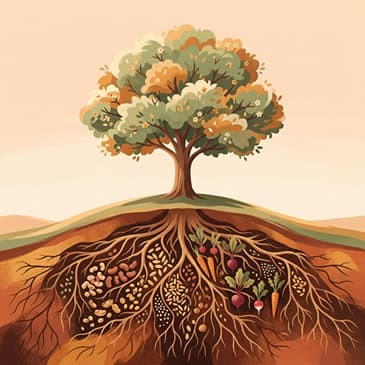
[00:05:10] Well, one of the best ways to do this is to consume fiber-rich foods. Foods like beans, lentils, nuts, whole grains, oats, fruits and vegetables will support the regrowth of beneficial gut bacteria. Consuming a combination of these foods will provide your body with something called short-chain fatty acids. These short-chain fatty acids help the body create more healthy gut bacteria.
[00:05:40] Now, don't worry about going out and trying to find short-chain fatty acid supplements. Instead, eating fiber-rich foods, like the ones I just mentioned, would be the way to go. If you can aim to consume somewhere between 25 to 35 grams of fiber each day from these kinds of foods, you'll likely replenish those good bacteria and those healthy species in no time. Now, what about probiotics, like those found in yogurt?
[00:06:07] Now, probiotics are live bacteria that support the health of our gut microbiome. And yes, foods like yogurt, kefir and Yakult contain lots of probiotics. The problem is, we don't really know how helpful these foods are when it comes to actually increasing the number or different types of species of good bacteria in the gut. This is because these foods first have to pass through the stomach before they get to the intestine. And the stomach is a pretty harsh environment for most things.
[00:06:35] So it's possible that many of these good bacteria are destroyed before they get to the intestines, where they're supposed to thrive. We also need to be careful before supplementing with most things, probiotics included. As I've mentioned many times before, the supplement industry is kind of like the Wild West right now. Supplement manufacturers are creating products that aren't necessarily being tested by independent third parties. So they may be putting who knows what in our products and marketing them as, let's say, probiotics.
[00:07:05] It's very possible you could go out and purchase what you think is a probiotic supplement. But if we were to actually analyze the product to see what it's truly made of, we might find it contains no probiotics at all. Or if the product does contain these probiotics, there aren't enough of them to make a difference. So that all brings us back to the fact that we just need to eat these whole foods that are good sources of dietary fiber. And again, these would be foods like beans, lentils, whole grains,
[00:07:34] nuts, oats, fruits, and vegetables. You know, all of the stuff I end up recommending we consume regularly anyway. You're listening to a quick ad. You know what else is quick? Selling your car on Carvana. Just put in your vehicle information and we'll give you an offer. Done. No hassle, no negotiation, no guy from an online listing lowballing you. Which means by the time I'm done explaining this, you could have basically done it.
[00:08:07] Still haven't started? Hey, better late than never. Sell your car today on Carvana. Pickup fees may apply. Pink Panther is here. Coach and Spotify are teaming up to bring music and style together and they want you to be part of it. Grab your friends and head to the Tabby Tour, hitting cities around the country with live performances from special artists, exclusive experiences, and personalized products. And discover custom playlists on Spotify, built just for you based on who you are and how you listen.
[00:08:36] Live your story with Coach. Learn more at coach.com. Thank you again for taking the time to send in your question, Laura. Now, if you want to send in a question to be answered right here on the show and get a copy of the Optimal Living Daily Workbook, just email a question to health at oldpodcast.com. Now, if you want to hear your own voice on the podcast, which I always encourage, just come by oldpodcast.com slash ask.
[00:09:06] Right on that page, you can record your question straight from your computer's microphone. It's really easy. And if you don't like your first take, you can delete it and do as many retakes as you want before sending it in. Or you can do it the old-fashioned way and call in your question. The number is 161-ILOVE-OHD. That's 1-614-568-3643. Thank you so much for sending in your questions. Answering them is my favorite part of the show.
[00:09:35] All right, that'll do it for another Q&A edition of Optimal Health Daily. Thank you so much for listening every day and all the way through. I hope you have a great start to your weekend, and I'll see you back here tomorrow where your optimal life awaits.