


Discover all of the podcasts in our network, search for specific episodes, get the Optimal Living Daily workbook, and learn more at: OLDPodcast.com.
Episode 3258:
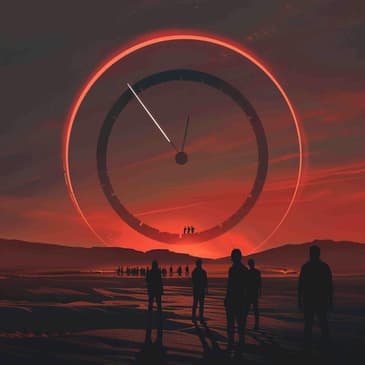
Colin Wright explores the importance of long-term thinking through the lens of The Long Now Foundation's 10,000 Year Clock. This monumental project emphasizes our unique human ability to plan far into the future, urging us to extend our perspective beyond immediate concerns to benefit future generations and avoid repeating past mistakes.
Read along with the original article(s) here: https://exilelifestyle.com/long-term-thinking/
Quotes to ponder:
"We have that capability, but we tend not to use it very often, because day-to-day concerns have priority, and moment-to-moment concerns even more so."
"The power of recording information and thinking long-term is that we can inoculate ourselves against some types of mistakes that we would otherwise make over and over again."
"Maintaining a sense of self place within broader swathes of time - helps us consider where things are going across eons, rather than limiting our time-horizon to today."
Episode references:
The Long Now Foundation: https://longnow.org
Learn more about your ad choices. Visit megaphone.fm/adchoices
[00:00:00] This is Optimal Living Daily Episode 3258 Long-Term Thinking by Colin Wright of ExileLifestyle.com And I'm Justin Malik, your very own personal narrator. I read the best blogs that I can get permission from to you covering productivity, minimalism, personal development, self help, all that fun stuff.
[00:00:21] Now without let's get right to another post and start optimizing your life. Long-Term Thinking by Colin Wright of ExileLifestyle.com There's an organization called the Long Now Foundation that focuses on planting seeds for long-term thinking.
[00:00:42] Their most well known project is a 10,000 year clock, which is a mechanical clock conceived back in 1986, a full scale version of which is being built on private land in Texas at a cost of about $42 million, leading up to the final version which will be built in rural Nevada.
[00:01:01] The clock will take exactly once per year for 10,000 years. The difficulty of building something mechanical meant to last that long and to operate with the requisite precision is immense. Hence the cost and the amount of time it's taken to get to where the project is now
[00:01:20] and the time left before the publicly accessible final version in Nevada will be completed. But the project is considered to be worthwhile because of what it represents rather than the service it provides.
[00:01:33] A physical, mechanical clock of immense accuracy isn't terribly valuable in a world filled with atomic clock calibrated smart phones and other devices, all of which provide the same service for free. A complex device that requires the most clever and precise construction currently feasible,
[00:01:51] built in such a way that will survive for thousands of years though? That's not something we've done before, which is strange when you think about it. I suspect many of us would like to assume that the human species will still be around in 10,000 years,
[00:02:05] though will hopefully be way better off and almost certainly changed in some fundamental ways. I personally like to imagine that we will have moved beyond scarcity at that point and will be spread around the galaxy living well and doing interesting, beneficent things because we can.
[00:02:23] But our planning, our building, the things we make and do operate within the confines of a far more finite time frame. Long lasting, contemporary buildings are designed to last around 50 years or 100 years at the extremes.
[00:02:39] Our digital storage systems where much of our modern artwork, research and documentation lives is predicated on hard drives that typically last somewhere between 2 and 5 years. Even high quality old school methods of storing knowledge like archival paper based books
[00:02:56] generally only last 40 to 100 years on the high end unless dramatic preservation actions are taken which isn't something we can typically do on scale. None of this implies that we don't care about the future, but we do seem to be prone to short term thinking
[00:03:13] even though humans seem to be unique amongst the life forms we know about and that we're able to plan ahead. Some animals can instinctually stockpile acorns for the winter or figure out how to move a box, stand on it and grab out of rich bananas.
[00:03:29] But humans seem to be the only creatures on earth cognitively capable of thinking about what might happen a year from now or 10 years or 10,000 years. We have that capability, but we tend not to use it very often because day to day concerns have priority
[00:03:47] and moment to moment concerns even more so. This makes sense. A focus on immediate threats and opportunities has obvious survival benefits and it's arguably more important to worry about the poisonous snake at your feet rather than fixating on the problems your grandchildren's grandchildren's grandchildren might face someday
[00:04:07] in some vague far off not immediately applicable future. But it's important to maintain a sense of chronological place I think lest we find ourselves endlessly responding to disasters that arise seemingly out of nowhere
[00:04:22] failing to benefit from the wisdom and knowledge gained from the last close match disaster our species survived. The power of recording information and thinking long term is that we can inoculate ourselves against some types of mistakes that we would otherwise make over and over again
[00:04:39] due to our default tendencies and the patterns that emerge from humans engaging with each other on scale. This is true notably not just with large scale events across vast timeframes like recalling how to diffuse an impending international conflict or how to stave off a potential pandemic
[00:04:58] but also on a personal level. Like remembering which politicians and businesses behaved in a socially positive moral manner during a disease related lockdown and which grabbed for power at the public's expense.
[00:05:12] It's unintuitive to take note of such things in a manner that benefits our future selves and societies for the same reason the building of a 10,000 year clock is unintuitive. It's not useful to us right now and doesn't help us solve the great many important problems we currently face.
[00:05:30] So we fail to take proper notes and make suitable plans. We don't imagine possible distant futures and we choose to focus instead on the endless procession of new shocking frightening snakes at our feet forever blind to other larger scale concerns.
[00:05:47] Maintaining a sense of self-place within broader swaths of time in addition to helping us think beyond what's right in front of us can also imbue in us a sort of overview effect where that larger context provides us with resources from the past
[00:06:02] incentivizes us to produce and share resources with the future and helps us consider where things are going across eons rather than limiting our time horizon to today, the next major disaster, or the end of our personal time as living thinking beings.
[00:06:20] You just listened to the post titled Long Term Thinking by Colin Wright of ExileLifestyle.com and I'll be right back with my commentary. Thank you to Colin. Definitely a more rare kind of post for this show.
[00:06:36] I'm pretty sure we've never covered this before and I appreciate the reminder. We hear a lot about the need for recycling, different forms of power, composting, but in our day-to-day lives it's so easy to focus on the now.
[00:06:51] It's funny to me because the basic principle of a practice you hear about on this show a lot, meditation, also a practice that I've spent lots of time on, the basic principle of it is being in the moment, living in the now.
[00:07:04] In fact, I've probably narrated a handful of articles on this show that talk about the power of now. I believe that's actually the title of a very popular book, The Power of Now. But being in the now or practicing meditation for a few minutes a day
[00:07:20] and probably the book power of now is not disregarding the importance of planning and protecting our future. In fact, you could argue the opposite. The practice of trying to be very present in the moment is actually a practice of compassion and letting things go.
[00:07:37] And from compassion comes topics like sustainability. If you're wondering how you can be both present but planning for the future at the same time, it's quite simple really. You're fully aware and in the moment of planning for the future.
[00:07:53] Sounds a little weird, but I'm sure you can imagine being in the flow state like completely absorbed with what you're doing when you're doing something really adventurous like surfing or skiing. Well that kind of flow state can easily be applied to other things in life
[00:08:09] like conversations, your work, and of course planning for the future or thinking about things like sustainability. That's slightly off topic from what Colin was saying in this article but interestingly enough and completely by coincidence I'm going to be sharing an article about mindfulness and meditation tomorrow.
[00:08:28] So have a great rest of your day and I'll see you tomorrow where your optimal life awaits.