


Discover all of the podcasts in our network, search for specific episodes, get the Optimal Living Daily workbook, and learn more at: OLDPodcast.com.
Episode 3308:
Cal Newport explores the surprising difficulty of simple tasks and challenges our assumptions about productivity. He questions the reliability of traditional productivity methods, highlighting the unpredictable nature of motivation. Newport suggests a shift from rigid control to a more adaptive approach, focusing on awareness and energy management.
Read along with the original article(s) here: https://www.calnewport.com/blog/2007/09/26/dangerous-ideas-what-if-everything-we-thought-was-true-about-productivity-was-wrong/
Quotes to ponder:
"It seems that the general paradigm shift at play here is one away from rigid control over your entire work day and toward one where you acknowledge a big part of your motivation is out of your control."
"Many times, however, I can’t stand the thought of it."
"The slump is the evil twin to the groove."
Episode references:
The Power of Full Engagement by Jim Loehr and Tony Schwartz: https://www.amazon.com/Power-Full-Engagement-Managing-Performance/dp/0743226755
Csikszentmihalyi's Flow: https://www.amazon.com/Flow-Psychology-Experience-Perennial-Classics/dp/0061339202
Learn more about your ad choices. Visit megaphone.fm/adchoices
[00:00:00] Before we start, please check out our new podcast Good Sleep.
[00:00:03] Have you ever noticed how a calm mind can really set the stage for a good night's sleep?
[00:00:08] That's the idea behind our new podcast Good Sleep.
[00:00:11] Greg, our host from Optimal Relationship Staley is here to help ease you into a peaceful night's rest with some positive affirmations.
[00:00:18] And these affirmations aren't just comforting, they can help ease anxiety and nurture positive thoughts setting you up for a true good sleep.
[00:00:26] So, press play on Good Sleep Tonight because a good tomorrow starts with a Good Night's sleep.
[00:00:31] Just search for Good Sleep in your podcast app and be sure to pick the one from Optimal Living Daily.
[00:00:39] This is Optimal Living Daily. Dangerous Ideas What If Everything We Thought Was True About Productivity
[00:00:45] Was Wrong By Cal Newport of CalNewport.com and I'm Justin Malik.
[00:00:50] I'm going to jump right into today's post as we optimize your life. Dangerous Ideas
[00:00:59] What If Everything We Thought Was True About Productivity Was Wrong by CalNewport of CalNewport.com
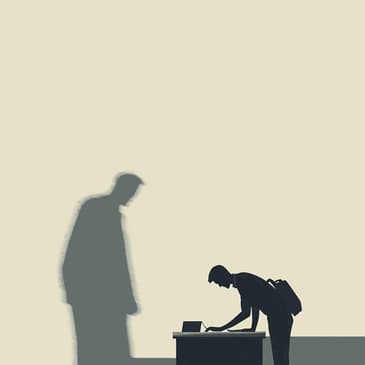
[00:01:07] The surprising hardness of the symbol. I just observed something distressing about my behavior.
[00:01:14] The absolute most simple component to my productivity repertoire is to keep a notebook and a pen
[00:01:20] within reach at all times. In the standard GTD Canon this allows me to immediately capture any
[00:01:26] tasks or ideas that pop to mind. In theory, this basic behavior taking a notebook out of my backpack when I sit down
[00:01:34] should present no difficulty. What tasks could be more simple? All I have to do is move my arm
[00:01:40] literally just a few feet from my bag to my desk. No thinking is required. No more than three to five seconds
[00:01:47] transpire. No sweat. Many times however, I can't stand the thought of it. In fact as I write this,
[00:01:56] such an occasion just occurred. I returned to my office after a lunch sat down and found that every
[00:02:02] ounce of my being was resisting this trivial act. I had to fight to rally the energy to get out
[00:02:08] that notebook and this is a fight I often lose. The problem with the hardness assumption.
[00:02:15] This observation contradicts a lot of what we assume about productivity. We like to imagine that
[00:02:21] the difficulty of starting something is in linear proportion to the difficulty of a task.
[00:02:28] When we see right turn paper on a to-do list, we know that we have our work cut out for us to overcome
[00:02:34] the urge to procrastinate. Something simple on the other hand like taking notebook out of your backpack
[00:02:40] should be a breeze. But it's not. To my continual consternation, the simple and hard at times
[00:02:48] can be equally difficult to get started. In this causes trouble. The core of most modern workflow
[00:02:55] management systems depend on the use of easy habits to support and simplify the hard.
[00:03:02] If these gradated designations fail, so does perhaps many of the claimed benefits of these systems.
[00:03:09] Toward a more realistic theory of motivation. The obvious question remains,
[00:03:15] what does explain our varying motivation levels? I don't really know, but it's likely quite complicated.
[00:03:23] One thing I have noticed, however, is that I tend to move between grooves and slumps.
[00:03:29] When I'm in a groove on a certain type of work, it's relatively painless to switch between tasks
[00:03:34] within this same type. For example, if I'm in a blog groove, it's easy to knock off tasks related
[00:03:41] to the blog. This is similar to Mihai Chixen Mihai's flow state, but not quite the same.
[00:03:47] In a groove you're able to move between many different tasks within a broad type,
[00:03:52] whereas flow typically refers to your concentration during a specific activity. The slump
[00:03:58] is the evil twin to the groove, it describes a general period of low energy where anything beyond
[00:04:04] desultory email checking seems impossibly distant. What's key is that in both situations,
[00:04:11] the hardness of the task at hand plays a minimal role in determining my motivation to tackle it.
[00:04:17] The key is not only that I'm not in a slump, but also that I'm in the right groove for the type
[00:04:22] of work I face. The important questions. If this general model holds universally, it begs
[00:04:30] some interesting questions. For example, how do you avoid slumps? How do you jump from a slump
[00:04:36] to a groove? How do you know what a groove you are in? Is it possible to jump from one groove
[00:04:42] to another? Do we have any control over what grooves we land in? And if not, does it hold
[00:04:48] that the optimal workflow is one in which you learn to identify and then extract the maximum amount
[00:04:54] of work out of whatever groove you happen to be in? From control to accommodation. I'm fascinated
[00:05:02] by these questions, but I have no real answers. It seems that the general paradigm shift at play
[00:05:08] here is one away from rigid control over your entire workday, and toward one where you acknowledge
[00:05:15] a big part of your motivation is out of your control. And the best you can do is be aware and
[00:05:21] leverage what you face each day. For future reading, there are no doubt relevant lessons in
[00:05:27] chicks and me high. There's probably also a lot to be learned from Jim Law and Tony Schwartz's
[00:05:32] work on energy management. I leave a more rigorous examination of these issues as future work.
[00:05:39] For now, however, as I sit and ponder the notebook that sits beside me and the Hercules struggle
[00:05:45] that preceded its arrival in this position, I can't help but feel a slight shiver of discomfort.
[00:05:51] Maybe the whole productivity game is much more elusive and much more non-deterministic than we
[00:05:57] would like to believe. You just listen to the post titled Dangerous Ideas. What if everything we
[00:06:07] thought was true about productivity was wrong by CalNewPort of CalNewPort.com? And I'll be right
[00:06:14] back with my commentary. Take it a call. You might come out of this thinking, what this post says
[00:06:20] I have no answers so what's to take away here? I really think it's important to simply know or be
[00:06:26] aware of what state you're in. Awareness I think plays a huge factor in our overall happiness
[00:06:32] and acceptance of life. After tracking my daily mood for six months personally, this is becoming
[00:06:39] more and more clear to me. Even when circumstances are amazing and I can't quote unquote complain,
[00:06:46] it's not sustainable to consistently have days that are like an 8 out of 10. And again,
[00:06:51] that's even when things are great. Life just doesn't work that way. There always will be those
[00:06:57] slumps that he talked about. They're not easy to get out of. And simply knowing what state
[00:07:02] we're in can change that from like a 2 out of 10 day to like a 5. We can say to ourselves,
[00:07:09] that's one of those days and simply not expect to finish everything on our to-do list at day,
[00:07:15] which is totally fine by the way. And of course, we're talking moderation because if we say that
[00:07:20] every day for months or years, then that's a bigger problem to be addressed. But day to day,
[00:07:27] if we can be aware of our current state or even season of life, well then that's a good place to be.
[00:07:33] So something to think about this week. Thank you for listening. Have a great rest of your day and
[00:07:38] I'll see you tomorrow. Wear optimal life. I'll wait.