


Discover all of the podcasts in our network, search for specific episodes, get the Optimal Living Daily workbook, and learn more at: OLDPodcast.com.
Episode 3329:
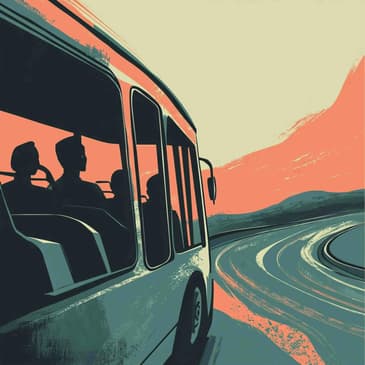
Keith Wilson uses the metaphor of a bus to illustrate how our emotions can take control of our lives if we let them. By strengthening our ego, the driver of the bus, we can ensure that our values, not impulsive feelings, guide our actions. This balance allows us to navigate life with integrity and purpose, ensuring we honor all our values without letting any single emotion dominate
Read along with the original article(s) here: https://medium.com/change-becomes-you/who-is-driving-your-bus-b811ebeda4d6
Quotes to ponder:
"That’s what it’s like when every new feeling you get takes over and drives you where it wants to go."
"Strength is one thing, but the ego needs a reason to use its strength."
"A strong ego works out by getting you up in the morning when you want to mope. Strong egos get stuff done."
Learn more about your ad choices. Visit megaphone.fm/adchoices
[00:00:00] [SPEAKER_01]: Liebe Eltern, willkommen beim Frosta Cowdown! In 0,x von Ich hab Hunger zu Boah, lecker!
[00:00:09] [SPEAKER_01]: Mit Frosta Fischstäbchen, 100% frei von Zusätzen, nur mit natürlichen Zutaten nach dem Frosta Reinheitsgebot.
[00:00:17] [SPEAKER_01]: Kurz, lecker Fisch ohne Haken. Frosta Fischstäbchen. Probiert den Testsieger von Stiftung Warentest. 3, 2, haut rein!
[00:00:26] [SPEAKER_00]: Before we start, please check out our new podcast, Good Sleep. Have you ever noticed how a calm mind can really set the stage for a good night's sleep?
[00:00:34] [SPEAKER_00]: That's the idea behind our new podcast, Good Sleep. Greg, our host from Optimal Relationships Daily, is here to help ease you into a peaceful night's rest with some positive affirmations.
[00:00:45] [SPEAKER_00]: And these affirmations aren't just comforting, they can help ease anxiety and nurture positive thoughts, setting you up for true good sleep.
[00:00:52] [SPEAKER_00]: So press play on Good Sleep tonight, because a good tomorrow starts with a good night's sleep.
[00:00:58] [SPEAKER_00]: Just search for Good Sleep in your podcast app and be sure to pick the one from Optimal Living Daily.
[00:01:05] [SPEAKER_00]: This is Optimal Living Daily. Who is driving your bus? By Keith Wilson of KeithWilsonCounseling.com and I'm Justin Malik.
[00:01:13] [SPEAKER_00]: Welcome back to a Sunday bonus episode where I give you a little extra content from a podcast in our network that I think will also help you live a life that's a bit more meaningful and happier.
[00:01:22] [SPEAKER_00]: And this episode is coming from Optimal Relationships Daily. So without further ado, here's Greg with the bonus post as we optimize your life.
[00:01:35] [SPEAKER_02]: Who is driving your bus? By Keith Wilson of KeithWilsonCounseling.com
[00:01:42] [SPEAKER_02]: Imagine an ordinary city bus. It stops and passengers get on board. Every passenger changes the atmosphere of the bus.
[00:01:50] [SPEAKER_02]: If it's a grieving old lady, she reminds everyone of loss. If young lovers get on board, the whole bus smiles a little because they're happy.
[00:01:58] [SPEAKER_02]: If a thug gets on looking for a fight, everyone gets ready for a fight. No matter who gets on, the bus still follows its route, and everyone gets off when they're ready to leave.
[00:02:08] [SPEAKER_02]: Now, imagine that instead of going to the back and finding a seat, every new passenger sat wherever the driver belonged and drove the bus to where they wanted to go, regardless of the route.
[00:02:20] [SPEAKER_02]: The grieving old lady would take everyone to the cemetery, the young lovers to their love nest, and the thug would take everyone to a fight. No one else's destination would matter.
[00:02:29] [SPEAKER_02]: The bus is a metaphor for you, and the passengers are your feelings. That's what it's like when every new feeling you get takes over and drives you where it wants to go.
[00:02:40] [SPEAKER_02]: If someone dies, and you're sad but you go on with your life, that's like the operation of an ordinary city bus.
[00:02:47] [SPEAKER_02]: But if you quit your job, never leave the house, and slit your wrists, then your sadness has taken over. If you meet someone you like and you're happy, then that's like the operation of an ordinary city bus.
[00:03:00] [SPEAKER_02]: But if you run away with him despite the fact that you have a husband and three kids and he's an axe murderer, then love has taken over.
[00:03:07] [SPEAKER_02]: If someone calls you a bad name and you get ready for a fight, that's like the operation of an ordinary city bus. But if you immediately jump on him and beat him up, then rage has taken you over.
[00:03:19] [SPEAKER_02]: In all those instances when feelings take over, you've got to ask, where's the driver? Why isn't the driver driving the bus?
[00:03:27] [SPEAKER_02]: The driver, in our analogy, is what we shrinks call the ego. We all need a big ego driving our bus. You've probably heard the ego referred to negatively, as in he has a huge ego.
[00:03:40] [SPEAKER_02]: It's true, egos can get too big just like bus drivers can get too big. But there are two ways of being big. An ego can be big and fat, or it can be big and strong.
[00:03:51] [SPEAKER_02]: Fat egos can be pushed around. They just as soon go to the back of the bus and eat donuts while letting the feelings drive. Strong egos stay in their seat and don't let feelings take over.
[00:04:02] [SPEAKER_02]: A fat bus driver becomes overweight by eating pastries, which are mostly sugar and air, just as a fat ego has blown itself up by bragging about imaginary accomplishments.
[00:04:10] [SPEAKER_02]: A bus driver gets strong by steering his huge bus. A strong ego works out by getting you up in the morning when you want to mope, getting you to ask for a date when you might get turned down, and standing up for your rights without losing control.
[00:04:24] [SPEAKER_02]: Strong egos get stuff done. They get strong by getting stuff done.
[00:04:28] [SPEAKER_02]: Strength is one thing, but the ego needs a reason to use its strength. The thing that makes the bus driver stay in his seat and not give it up to any passenger that climbs on board is that his integrity is more important than doing whatever else anyone wants him to do.
[00:04:43] [SPEAKER_02]: He could say the heck with it, loaf and eat donuts in the back seat, but he's responsible to his passengers and his employer. He has a route to cover, and no matter how monotonous it is to go up and down the same avenue day after day, he does it because everyone's counting on him.
[00:04:59] [SPEAKER_02]: This is the place where you, as a listener, are supposed to ask yourself, what is my route? Who is my employer? Who or what am I responsible for? I can't answer that for you. But I can say that if you don't know, then you are in a state called enemy.
[00:05:17] [SPEAKER_02]: Enemy is a condition in which you have or have accepted little moral guidance from others. You're like a bus driver without a route. If you grew up in a cult where they told you what your purpose was and every little thing you were supposed to do and not to do, and you have accepted this guidance, then you're not experiencing enemy.
[00:05:34] [SPEAKER_02]: But, if you left the cult and are going wild, having not replaced their moral code with another one, then you're in a state of enemy. Every emotion will take over your driver's seat because the driver no longer knows where he's supposed to go.
[00:05:49] [SPEAKER_02]: Cults dispel enemy. But I'm not recommending everyone join a cult. Cults repress feelings. It's like being on a bad bus route. The route doesn't take the passengers where they want to go and won't stop where they want to get off. Passengers feel like hostages on a bad bus route, just as feelings are held captive in a cult.
[00:06:06] [SPEAKER_02]: Luckily, there's an alternative if you don't want enemy. Adopt some values. They don't have to be a cult's values. They should be your values. Your authentic values are the route the bus should take.
[00:06:18] [SPEAKER_02]: If you want to know what your values are, just listen to your feelings. They'll tell you what's important. If you feel sad, grieving some loss, then sadness is telling you how vital what you lost was. If you're grieving a family member, then you value family. This is your chance to reach out to those who have survived and let them know how much you cherish them.
[00:06:39] [SPEAKER_02]: If you're in love with someone new, then obviously there's something about that relationship that's valuable to you. Perhaps your old relationship has been devalued or it has not met your needs. You still may not to run off with an axe murderer because you also value your safety, but you don't need to go back to a marriage that's unfulfilling.
[00:06:58] [SPEAKER_02]: Listen to all of your feelings and allow them to show you your values. If you're always going around looking for a fight, ready to jump someone for disrespecting you, then evidently you value respect. Act in a way that's respectable and you are fulfilling that value.
[00:07:14] [SPEAKER_02]: The guy that works for the bus company, if he's smart, will lay out a system of bus routes that take potential passengers where they want to go and drop them off close to their destinations. The responsible bus driver will follow those routes. This will fulfill the desires of all the passengers. The grieving old lady will get to go to the cemetery, the lovers will arrive at their love nest, and the thug will get off the bus to find a fight before he finds one on board.
[00:07:39] [SPEAKER_02]: They may not go directly there, they may have to wait till other passengers get what they need, but this way no one gets ignored. In the same way, if you're smart, you'll plan a life that accounts for your values. You'll sometimes have to balance those values so that none are forgotten, some may have to wait while others get served. Above all, you must have a strong ego that will still drive the bus no matter how urgently your feelings want to take the wheel.
[00:08:04] [SPEAKER_02]: You just listened to the post titled, Who is driving your bus? By Keith Wilson of KeithWilsonCounseling.com
[00:08:39] [SPEAKER_02]: But also where they come from. You see, oftentimes what we feel like are really healthy, purposeful values are still fueled by trauma. For example, you might grieve the loss of a friend, signaling that friendship is important to you and maybe becoming a main driver of your bus. You might then choose to spend as much time as possible with your friends, but eventually find out that it's coming at the expense of pursuing your dreams and starting a family or something like that.
[00:09:05] [SPEAKER_02]: In this case, what seems like a healthy value, like friendship, has taken over a bit too much and it's throwing other parts of your life off balance and may signify that this grieving is not necessarily ordinary grieving and instead is being taken to an extreme because of perhaps a childhood full of abandonment.
[00:09:27] [SPEAKER_02]: The more I articulate this, the more it kind of sounds like the plot of Good Will Hunting, which I apologize for. Great movie, of course. But the point is that our values have a lot underneath them and when we decide how much we want to base our lives or our bus routes off of them, it's worth the time to consider their foundations and whether or not there is any unhealthy attachment at play.
[00:09:52] [SPEAKER_02]: Okay, that's all for me everybody. As always, I thank you for coming today and listening until the end. Please do share this episode with anyone who you think it might be helpful to and do consider coming back again tomorrow where I will have another great post that can help you improve your relationships with yourself and others. That's where your optimal life awaits.