


Discover all of the podcasts in our network, search for specific episodes, get the Optimal Living Daily workbook, and learn more at: OLDPodcast.com.
Episode 3414:
Ali Cornish explores the duality of solitude and loneliness, emphasizing how embracing solitude can foster self-awareness and growth, while unchecked loneliness can lead to emotional and physical challenges. By reframing loneliness as a signal for change and reaching out to others, we can prioritize emotional well-being and rediscover joy. In another piece, she highlights the transformative power of conscious breathing, showing how a single mindful breath can ease anxiety, improve focus, and enhance our sense of presence.
Read along with the original article(s) here: http://everthrive.org/blog/2015/10/7/learn-from-loneliness & http://everthrive.org/blog/breathe
Quotes to ponder:
"Loneliness does not imply alone-ness. We can be lonely even when we are surrounded by people."
"Taking one deep breath helps us to consciously pause, reflect, and refocus our perceptions, removing us from the source of anxiety."
"Loneliness should be explored and understood before it is banished because it can inform us of behavior patterns that we need to change."
Episode references:
Death in Venice and Other Tales by Thomas Mann: https://www.amazon.com/Death-Venice-Stories-Signet-Classics/dp/0451526090
Learn more about your ad choices. Visit megaphone.fm/adchoices
[00:00:00] Brauchen wir wirklich noch einen Computer? Alle wahrscheinlich nicht. Aber wenn du Musik mit der Power eines Neuralprozessors neu erfindest oder unterwegs Migrationsmuster mit einem ganztägigen Akku analysierst oder deine Ideen mit dem KI-gesteuerten Co-Creator zum Leben erwächst, dann kann ein Co-Pilot Plus PC einen Unterschied machen. Nicht alle brauchen einen leistungsstärkeren KI-Computer. Aber wenn du versuchst, die Welt zu verändern, auch wenn es nur deine eigene ist, haben wir einen für dich entwickelt. Microsoft Co-Pilot Plus PC mit Snapdragon. Die bisher schnellsten und intelligentesten Windows-PCs. Die Akkulaufzeit variiert hier nach Nutzung und Einstellungen.
[00:00:30] Before we start, please check out our new podcast, Good Sleep. Have you ever noticed how a calm mind can really set the stage for a good night's sleep? That's the idea behind our new podcast, Good Sleep. Greg, our host from Optimal Relationships Daily, is here to help ease you into a peaceful night's rest with some positive affirmations. And these affirmations aren't just comforting, they can help ease anxiety and nurture positive thoughts, setting you up for true good sleep. So press play on Good Sleep tonight because a good tomorrow starts with your sleep.
[00:01:00] Good Sleep starts with a good night's sleep. Just search for Good Sleep in your podcast app and be sure to pick the one from Optimal Living Daily.
[00:01:34] Learn from Loneliness by Ali Cornish of Everthrive.org.
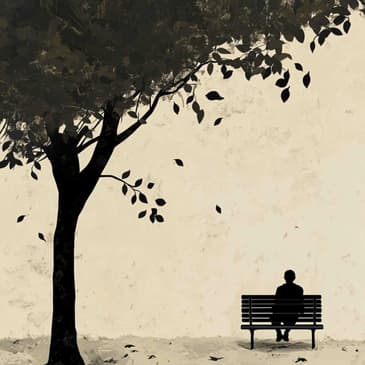
[00:01:40] Do you like to be alone? Oftentimes I do. When I'm alone, I'm at ease. In my solitude, I'm free to be my authentic self.
[00:01:49] And even though I could just be comfortably hanging out in my living room, I feel like I'm away from the constraints of society.
[00:01:56] When we are comfortable and happy in our aloneness, we can use the situation to reflect on life and use it as an opportunity to experience growth.
[00:02:06] However, many people aren't happy being alone. Instead of feeling alone, they feel lonely.
[00:02:14] Loneliness is something very different than being alone.
[00:02:18] When we are lonely, we are not reflecting on our lives with growth and mindfulness.
[00:02:23] We are not at ease with ourselves and we are not free.
[00:02:27] Loneliness, when allowed to take hold and fester, can cause anxiety and depression,
[00:02:32] as well as an array of physical ailments leading to poor health and a shorter life expectancy.
[00:02:38] Instead of encountering truths and experiencing growth, loneliness gives way, quote,
[00:02:43] to the perverse, the illicit, the absurd.
[00:02:47] That's by Thomas Mann in Death in Venice and Other Tales.
[00:02:51] Loneliness does not imply aloneness.
[00:02:55] We can be lonely even when we are surrounded by people.
[00:02:59] Loneliness is an emotion that can be experienced suddenly or over time.
[00:03:04] The abrupt loss of a loved one, a job, or a marriage can initiate sudden feelings of isolation and hopelessness.
[00:03:12] Gradual loneliness is caused by our tendency to self-isolate because our expectations of others may be too high,
[00:03:19] or we might not be able to withstand the social stress of communicating with others.
[00:03:24] If, after a period of self-isolation, we do not initiate contact or have the occasion to,
[00:03:30] we sometimes end up scrutinizing others' behaviors towards us.
[00:03:33] We think that their benevolent interactions are fake or forced.
[00:03:38] This produces anger and fear, causing us to withdraw in our loneliness even more.
[00:03:44] In this way, loneliness has the potential to alter our perception.
[00:03:48] It is very difficult to climb out of a pit of despair when we are emotionally raw
[00:03:53] and feel that we do not deserve the contact of others.
[00:03:56] In our loneliness, we begin to see the world as a negative place.
[00:04:01] According to Thomas Wolfe, in his essay entitled God's Lonely Man,
[00:04:06] loneliness is a, quote,
[00:04:08] central and inevitable fact of human existence, end quote.
[00:04:12] When experienced, this emotion can be devastating.
[00:04:15] However, loneliness should be explored and understood before it is banished,
[00:04:21] because it can inform us of behavior patterns that we need to change.
[00:04:26] Loneliness forces us to make decisions about our lives.
[00:04:30] It is important to be aware of our emotional well-being
[00:04:33] and acknowledge when we are feeling lonely.
[00:04:35] In order to stop our descent into the abyss of loneliness,
[00:04:39] we have to understand that change needs to occur.
[00:04:43] Loneliness should be explored and understood.
[00:04:46] We owe it to ourselves to take action when we feel cast aside
[00:04:50] or unnecessarily isolated, even when we are surrounded by people.
[00:04:54] We should push ourselves and reach out to those who care for us.
[00:04:57] We need to reinsert ourselves into the work of friendship,
[00:05:00] where our social needs will be satisfied and pangs of loneliness will subside.
[00:05:06] When we force ourselves out of loneliness by prioritizing our emotional health,
[00:05:11] the quality of our lives will improve and we will inevitably thrive.
[00:05:20] Give Yourself Permission to Breathe, by Allie Cornish of everthrive.org.
[00:05:26] Has anyone ever told you just to slow down and take a breath?
[00:05:30] How did it make you feel?
[00:05:32] Depending on your outlook, maybe you reacted with confusion or frustration.
[00:05:36] You breathe all day.
[00:05:37] You'd be dead if you weren't breathing.
[00:05:39] Why is this person telling me to breathe?
[00:05:41] That's dumb.
[00:05:43] Or maybe you paused and really thought about the advice.
[00:05:46] Sure, my breathe, but I'm rarely aware of how I'm breathing
[00:05:51] since my awareness is acutely focused on other things.
[00:05:54] Like everyone else, I'm sometimes anxious.
[00:05:57] I often stress about work tasks, my to-do lists,
[00:06:01] and infinite personal and family obligations.
[00:06:04] Provoked by the constraints of an average workday,
[00:06:06] I often stress about my productivity.
[00:06:09] I'm always tormented by the lure of technology
[00:06:11] and the seemingly urgent notifications of my iPhone.
[00:06:15] All this builds up and creates anxiety.
[00:06:18] Research shows that anxiety can restrict our breathing,
[00:06:23] leading us to take quicker, shallow breaths,
[00:06:26] resulting in limited oxygen absorption and a spike in blood pressure.
[00:06:30] Cortisol levels increase,
[00:06:33] leading to restricted circulation and decreased immunity.
[00:06:36] In searching for quick fixes,
[00:06:38] I've found that meditative practices such as yoga
[00:06:41] can lower anxiety levels.
[00:06:43] I've belonged to at least three yoga studios in the last 15 years.
[00:06:47] Each time I tried yoga, I was initially open to it.
[00:06:51] But mid-pose, instead of breathing,
[00:06:53] I began stressing about when I should breathe or not breathe.
[00:06:58] When should I breathe in?
[00:06:59] What should I do while I'm breathing?
[00:07:02] Am I even doing this pose correctly?
[00:07:04] My mentality towards yoga as a cure for anxiety
[00:07:07] has never really worked for me.
[00:07:08] I was forcing myself to breathe
[00:07:10] and measuring my effectiveness against others in the mirror.
[00:07:14] I needed to change my mindset.
[00:07:16] I needed to grant myself permission to breathe.
[00:07:20] Henrik Edberg, in his article,
[00:07:22] The Power of Breathing,
[00:07:23] suggests taking two minutes away from the anxiety-inducing situation
[00:07:27] to focus on breath.
[00:07:29] I found that two minutes is more than enough
[00:07:32] to find space when my world closes in.
[00:07:35] Anytime I encounter stress or feel overwhelmed,
[00:07:38] I simply take one large breath in and out.
[00:07:41] I do this alone or in the midst of a work presentation
[00:07:45] or a lively gathering.
[00:07:47] No one can tell.
[00:07:48] I do this when I'm cooking, writing,
[00:07:50] or when I find myself stuck in an endless social media loop.
[00:07:55] Now, I practice conscious breathing.
[00:07:58] Taking one deep breath helps us to consciously pause,
[00:08:02] reflect, and refocus our perceptions,
[00:08:05] removing us from the source of anxiety.
[00:08:07] After taking one breath,
[00:08:10] whatever was bothersome
[00:08:11] becomes a little less annoying
[00:08:13] and definitely more approachable.
[00:08:15] We never have anything to lose
[00:08:17] by just taking one conscious, full breath.
[00:08:21] There's so much to gain
[00:08:22] by granting ourselves permission to breathe.
[00:08:29] You just listened to the post titled
[00:08:31] Learning from Loneliness
[00:08:32] and Give Yourself Permission to Breathe,
[00:08:36] both by Allie Cornish of everthrive.org,
[00:08:39] and I'll be right back with my commentary.
[00:08:41] The holidays can really strain your wallet.
[00:08:44] We've all been there, me included.
[00:08:46] It could take months to rebuild those savings,
[00:08:48] but holiday spending doesn't have to derail
[00:08:50] your financial progress.
[00:08:52] With Chime, you can actually stay ahead of your expenses.
[00:08:55] I discovered their Spot Me feature
[00:08:57] when I nearly overdrafted buying last-minute gifts.
[00:09:00] Instead of getting hit with a $35 fee
[00:09:02] like my old bank would charge,
[00:09:04] Chime spotted me up to $200 with zero fees.
[00:09:08] Plus, with no monthly fees
[00:09:09] and early direct deposit access,
[00:09:11] you're set up to maintain healthy finances year-round.
[00:09:15] Enjoy the holidays
[00:09:16] while keeping your financial goals on track with Chime.
[00:09:19] Open your account in two minutes
[00:09:21] at chime.com slash old.
[00:09:24] That's chime.com slash OLD.
[00:09:27] Chime feels like progress.
[00:09:30] Banking services and debit card
[00:09:31] provided by the Bancorp Bank, N.A.,
[00:09:33] or Stride Bank, N.A., members FDIC.
[00:09:36] Spot Me eligibility requirements
[00:09:38] and overdraft limits apply.
[00:09:39] Direct deposit timing depends
[00:09:40] on submission of payment file.
[00:09:42] Booths are available to eligible Chime members
[00:09:44] enrolled in Spot Me
[00:09:45] and are subject to monthly limits.
[00:09:47] Fees apply at out-of-network ATMs
[00:09:49] and for OTC withdrawals.
[00:09:52] Thank you to Ali.
[00:09:53] The breath is certainly tied to our feelings.
[00:09:57] It kind of reminds me of the study
[00:09:58] where forcing yourself to smile
[00:10:00] actually then makes you feel happier.
[00:10:03] It's really interesting stuff.
[00:10:04] And I think that's the case with breathing.
[00:10:07] To me, it's pretty intuitive.
[00:10:08] If you force yourself to slow your breath,
[00:10:11] everything else sort of has to follow suit in your body.
[00:10:14] I'm not gonna say that's easy,
[00:10:16] especially in moments of panic.
[00:10:18] It's hard to even think about it and go,
[00:10:20] okay, time to breathe slowly
[00:10:21] when things are spiraling out of control.
[00:10:24] And honestly, that can sometimes lead
[00:10:26] to more panic in certain situations.
[00:10:28] But with practice, I strongly believe it can work.
[00:10:32] There's a trick called box breathing
[00:10:34] where you breathe in for four seconds,
[00:10:36] hold for four seconds,
[00:10:38] breathe out for four seconds,
[00:10:40] and then hold again for four seconds.
[00:10:42] That's a tactic endorsed by Navy SEALs
[00:10:45] in moments of high stress,
[00:10:46] and it could work for you.
[00:10:47] But again, I think it does take practice.
[00:10:49] And just doing it once and not having results
[00:10:52] might not be the best test.
[00:10:54] But all that said,
[00:10:55] even just paying attention to your breath,
[00:10:57] which really is the main practice of meditation,
[00:11:00] has been proven to have benefit.
[00:11:03] I like to do it before falling asleep,
[00:11:05] even counting my breaths sometimes.
[00:11:07] By the time I'm at around 30,
[00:11:08] I'm usually falling asleep.
[00:11:10] It's done well for me,
[00:11:12] not to mention the amount of time
[00:11:13] I've spent meditating over the years.
[00:11:14] I wouldn't take any of that back.
[00:11:16] So I'd agree and say that if you have a moment today,
[00:11:19] check on that breath,
[00:11:21] take some deep breaths,
[00:11:22] or even just one like she mentioned in this article,
[00:11:24] and then see how you feel.
[00:11:26] Have a great day and week full of deep breaths,
[00:11:29] and I'll be back tomorrow for the Friday show,
[00:11:32] where your optimal life awaits.
[00:11:33] I'll be back tomorrow for the Friday show,
[00:11:34] Thank you.